

Choosing A And B Silicone for global sourcing is not simply a price comparison. It is a material decision shaped by hardness, curing speed, viscosity, tear strength, packaging, and production conditions. A formulation that works well in a warm workshop may fail in a humid factory. Small differences matter. A cloudy Part A, a leaking cap, or an inaccurate mixing ratio can affect an entire production batch.
Dr. George Wypych, a recognized polymer materials specialist, has emphasized, “Material selection must begin with the end use.” That principle remains practical for A And B Silicone buyers. Start with the finished product. Will it form a flexible mold, an electronic seal, a medical prototype, or an industrial gasket? Each application demands different performance. Check technical data sheets carefully. Compare Shore hardness, elongation, cure time, shrinkage, operating temperature, and shelf life. Do not rely on a supplier’s single sample.
Global sourcing adds another layer. Buyers should review batch consistency, container quality, labeling, technical support, and documented quality controls. Ask how the supplier manages temperature during storage and shipment. Silicone may appear stable, but poor handling can still create problems. Request recent test reports and a small production trial. It feels slower. It is usually cheaper than correcting a failed order.
Some purchasing decisions remain imperfect. Data sheets cannot show every factory reality. Supplier communication may also reveal gaps. That is a warning, not a minor inconvenience. The strongest sourcing choice balances verified performance, transparent communication, realistic logistics, and long-term reliability. A low quotation is useful only when the material performs consistently after delivery.
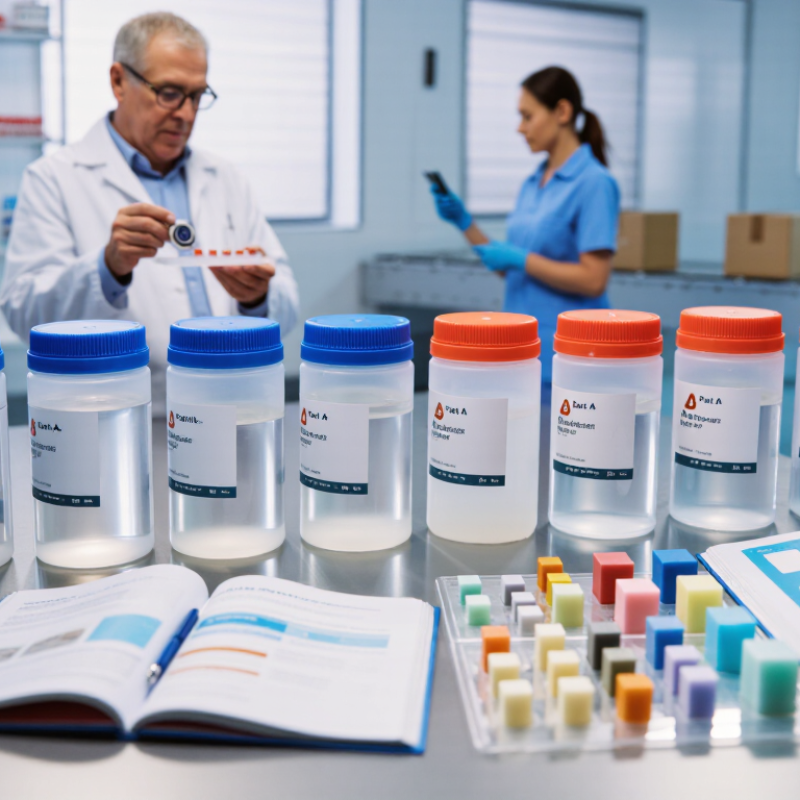
When sourcing A and B silicone, define the system before comparing prices. “A” and “B” are separate components designed to react after mixing. In addition-cure silicone, one side commonly contains a platinum catalyst, while the other provides reactive hydride groups. The reaction links silicone chains without releasing by-products. This supports clean surfaces and accurate molded parts. Ratio matters. A 1:1 system is convenient, but some industrial grades use different ratios.
Condensation-cure systems follow a different path. Their catalyst reacts with moisture-sensitive ingredients and may release alcohol or another small molecule during curing. This can create shrinkage, odor, or surface concerns in enclosed molds. Cure chemistry also affects working time, demolding speed, hardness, tear strength, and electrical performance. Ask for the technical data sheet, safety data sheet, mixing ratio, viscosity, cure schedule, and recommended storage temperature. Do not rely on a color code alone. Packaging colors can vary between suppliers.
For global sourcing, request a retained sample from the same production lot as the shipment. Test it at the real room temperature and humidity. Check mixing by weight, not guesswork. A small trial can reveal inhibition from sulfur, amines, tin residues, or dirty tooling. An experienced buyer also confirms batch traceability and change-notification procedures. A neat specification may still miss practical issues. We sometimes overvalue fast curing and overlook air release or operator skill. That is a mistake worth documenting. Compare cured results, not only catalog numbers, before approving the A and B silicone system.
Choosing A and B silicone starts with the application, not the supplier’s catalog. Define the working temperature, hardness, elongation, tear strength, viscosity, and curing time. For skin-contact parts, request biocompatibility evidence under ISO 10993. For food-contact use, verify the relevant local migration requirements. These documents matter more than a polished sales sheet.
Measure the real conditions. A seal exposed to 180°C needs more than a high temperature claim. Check compression set after heat aging, because silicone can soften or lose recovery. ASTM D395 supports compression-set testing, while ASTM D2240 measures Shore hardness. ASTM D412 and D624 help compare tensile and tear performance. A 2024 Grand View Research market analysis estimated the global silicone market at more than 20 billion U.S. dollars, reflecting broad industrial demand but not automatic product suitability.
Confirm the mixing ratio, pot life, demolding time, and storage stability. A small ratio error can create tacky surfaces or weak edges. Ask for batch-level certificates and independent test results. I have seen sourcing teams compare only hardness and price, then discover poor adhesion during production. That shortcut is expensive. Some specifications also look overly precise. Recheck them with pilot samples, especially when humidity, pigments, or complex molds may affect curing. Performance data should describe your process, not merely the material in isolation.
Choosing A and B silicone requires more than comparing quoted prices. The two components must match accurately in mixing ratio, viscosity, cure speed, hardness, and final elasticity. Request technical data sheets, safety data sheets, certificates of analysis, and recent batch records. A reliable supplier should explain storage temperatures, shelf life, packaging seals, and lot traceability. Small details matter. A leaking drum can delay production.
Compare suppliers through samples and controlled tests. Mix both components using the stated ratio, then record working time, curing time, surface feel, tensile strength, elongation, and compression recovery. Test results should come from repeatable methods, not one attractive sample. Ask whether the supplier controls raw material changes between batches. An on-site or video audit can reveal weighing procedures, cleanliness, and labeling practices.
I once treated a low price as strong evidence. It was not.
Materials must suit the application. Medical, food-contact, electrical, mold-making, and industrial uses may require different purity levels and performance data. Review applicable global requirements, such as REACH, RoHS, food-contact rules, or medical quality systems, based on the destination market. Certifications should be current, verifiable, and linked to the correct factory and product grade. ISO certification supports process control, but it does not prove every silicone grade is suitable. Ask for compliance statements, test reports, and manufacturing addresses. Standards can differ across countries. Local review remains necessary.
When sourcing A and B silicone globally, verify the mixing ratio before comparing prices. A 1:1 system is not automatically easier than a 10:1 system. It may require different metering equipment. Confirm the ratio by weight or volume, since these values can differ. Ask for viscosity, working time, cure time, and recommended temperature ranges. Request a small production trial with the intended mixer. Test it. Record the batch temperature and curing result.
Packaging should protect both components from moisture, heat, and accidental cross-contamination. Pails, cartridges, and drums suit different production scales. Check net weight, tare weight, lot number, shelf life, and seal condition. For sea transport, use stable pallets and secondary containment where appropriate. High temperatures can shorten storage life, even when containers look undamaged. I once underestimated warehouse heat; the material still flowed, but curing became less predictable. Build a temperature plan for transit, port storage, and final delivery.
Import conditions require more than a commercial invoice. Prepare the SDS, COA, packing list, technical data, origin details, and accurate product classification. Confirm destination labeling, language, chemical checks, and importer registration requirements before shipment. Clarify Incoterms and responsibility for customs questions, duties, and inspection delays. Do not assume supplier paperwork fits every destination. A local customs broker can review the file before booking. Keep records. Recheck documents when the formulation, packaging, or destination changes.
Choosing A and B silicone for global sourcing requires more than a competitive quotation. Start with production samples from the exact formulation and factory line. Check the mixing ratio, viscosity, pot life, cure time, Shore hardness, tensile strength, and tear resistance. Record results at room temperature and after heat aging. A small change in catalyst balance can create soft edges, bubbles, or incomplete curing.
Grand View Research valued the global silicone market at about USD 18.5 billion in 2022 and projected continued growth through 2030. This expansion increases supplier choices, but it also increases quality variation. ASTM D2240 supports hardness testing, while ASTM D412 measures tensile properties. For sensitive applications, request extractables, odor, and chemical-resistance data. I have seen a beautiful sample fail after 72 hours of heat exposure. Samples can mislead.
Tips: Ask for three production-lot samples, not one. Seal and label every container. Test the A:B ratio with calibrated scales. During a supplier audit, inspect batch records, storage temperature, expiry controls, calibration certificates, and complaint records. ISO’s 2023 Survey shows more than one million ISO 9001 certificates worldwide, yet certification alone does not prove silicone performance. Walk through the mixing room. Check whether operators actually follow written procedures. Take photos where permitted. Keep retained samples for future comparison. One weakness remains: laboratory results may not represent your final mold, pressure, or climate. Repeat testing after pilot production, and make acceptance limits part of the purchase contract.
| Verification Dimension | A Silicone: Typical Requirement | B Silicone: Typical Requirement | Recommended Evidence | Acceptance Guidance |
|---|---|---|---|---|
| Product Type | Base component, commonly containing vinyl-functional silicone polymer and fillers | Catalyst or crosslinker component, commonly containing hydride-functional silicone or platinum-compatible additives | Technical data sheet, safety data sheet, product specification, batch records | The chemical role and recommended mixing system should be clearly defined and consistent across documents |
| Mixing Ratio | Often supplied for a fixed system ratio such as 1:1 by weight or volume | Must match the specified ratio and dispensing equipment calibration | Supplier instructions, gravimetric ratio check, calibrated dual-cartridge or metering equipment | For a 1:1 system, verify the measured ratio is within the agreed tolerance, commonly ±2% unless a tighter limit is specified |
| Viscosity at 25°C | Common product ranges may be approximately 500–100,000 mPa·s, depending on grade and application | Should be compatible with the A component and the intended dispensing process | Rotational viscometer test using a documented spindle, speed, temperature, and method | Use the approved specification range; compare samples from multiple production lots rather than relying on one measurement |
| Color and Appearance | Uniform color or translucent appearance, free from visible particles, skin, separation, or excessive air | Uniform appearance with no sediment, gel particles, or phase separation | Visual inspection in a clear container under consistent lighting; retain approved reference samples | No visible contamination or abnormal separation; color should remain within the agreed visual or instrumental limit |
| Working Time | Often specified in minutes at a defined temperature, commonly around 5–60 minutes depending on formulation | Contributes to the working-time profile after mixing with A silicone | Timed cup-life, flow, or viscosity-rise test at controlled temperature and humidity | Set a target range based on the production cycle and verify it using the same test method for every lot |
| Cure Time | May cure at room temperature or with heat, depending on the addition-cure system | Must provide the required crosslinking response without excessive inhibition or delay | Shore hardness development, tack-free time, and full-cure test under production conditions | Define both demolding time and final cure time; do not approve a sample based only on surface dryness |
| Hardness | Silicone elastomer grades commonly range from very soft materials to approximately Shore A 70, depending on formulation | The final mixed material must achieve the specified hardness after complete cure | Shore A or Shore OO measurement according to ASTM D2240 or ISO 7619-1 | Measure after a defined cure time and conditioning period; use the same durometer type and test location |
| Tensile Strength | Typical cured silicone values may fall approximately between 3 and 10 MPa, depending on grade and reinforcement | Evaluated on the final mixed and cured elastomer rather than on B silicone alone | Dumbbell specimen testing according to ASTM D412 or ISO 37 | Specify minimum tensile strength and report specimen type, cure condition, thickness, and test speed |
| Elongation at Break | Many flexible silicone elastomers provide approximately 100–600% elongation, depending on formulation | Contributes indirectly through the final crosslink density and cure balance | Tensile testing according to ASTM D412 or ISO 37 | Compare with the approved sample and application requirement; investigate sharp reductions between lots |
| Tear Strength | Common cured silicone ranges may be approximately 10–40 kN/m, depending on reinforcement and grade | Final performance depends on the complete A/B formulation and cure conditions | Trouser, angle, or crescent tear test according to ASTM D624 or ISO 34-1 | Select the test method before qualification and use a defined minimum value for production approval |
| Density | Unfilled or lightly filled silicone systems may be close to 1.0 g/cm³; filled grades are often higher | Should remain consistent with the approved formulation and dispensing calibration | Density measurement using a calibrated pycnometer, balance method, or supplier-approved procedure | Set a product-specific tolerance because filler loading can materially affect density |
| Adhesion and Substrate Compatibility | Adhesion varies significantly with glass, metal, plastics, coatings, and surface preparation | Must cure without causing inhibition, staining, corrosion, or unacceptable substrate interaction | Peel, lap-shear, or pull-off testing on actual production substrates; visual failure-mode review | Test production materials, surface treatments, and aging conditions rather than relying only on generic data sheets |
| Volatile Content and Odor | Low-volatility addition-cure systems are often preferred where odor, shrinkage, or contamination is critical | Check for abnormal odor or volatile release that may indicate contamination or formulation change | Loss-on-heating or supplier-specific volatile-content method; controlled odor comparison | Use a documented limit appropriate to the application and local regulatory requirements |
| Packaging and Traceability | Sealed, compatible containers with lot number, manufacturing date, net weight, and storage conditions | Separate identification and matching lot information are required for controlled mixing | Label inspection, packing-list review, lot-to-batch traceability, and retained samples | Reject unidentified or damaged containers and require traceability from raw material through shipment |
| Storage and Shelf Life | Follow the supplier’s defined temperature range and shelf-life period; heat can accelerate degradation | Storage conditions may differ from A silicone and should be separately documented | Warehouse temperature logs, first-expiry-first-out records, and accelerated or real-time aging checks | Do not use expired material without documented requalification and written technical approval |
| Supplier Quality System | Documented incoming inspection, process controls, calibration, nonconformance handling, and change control | The same controls should apply to catalyst, crosslinker, and finished-component batches | Remote or on-site audit using an ISO 9001-aligned checklist and corrective-action review | Approve only suppliers that can provide consistent records, defined responsibilities, and evidence of corrective action |
| Global Regulatory Documentation | Current safety data sheet and composition or regulatory declarations appropriate to the destination market | Documentation must cover the complete A/B system and any restricted substances | SDS review, restricted-substance declaration, transport classification, and destination-market compliance check | Documents should be current, consistent with labels, and reviewed before commercial shipment |
QUICK LINKS
CONTACT US
Office: (+86) 755 23040566
Tel: (+86) 158 9965 5195
E-mail: sale@pcbledmodule.com
Skype: Hans@Rocket-PCB
Whatsapp: 86 1589965 5195
Office Address: 2207,Bid 4,He Gu Shan Hui Cheng,35#,Guang Tian RoYanluo street, Song Gang Town,518105 SHENZHENG, CHINA
Plant ADD.: No 69, Lianfeng North Road, Xianxi Area, ChangAn Town, Dongguan, China.


Copyright © 2025 Rocket PCB Solution Ltd. | All Rights Reserved Sitemap Friendship link: CNC machining heat sink