

loading

BLOG

How to Choose the Best Smoke Alarm for Your Business?

Choosing the best Smoke Alarm for your business is not a simple equipment purchase. It is a practical decision about people, property, downtime, and trust. A small office, busy restaurant, warehouse, and childcare center face very different fire risks. Heat, dust, cooking vapors, ceiling height, and operating hours can all affect alarm performance.

John Drengenberg, a longtime consumer safety expert at UL Solutions, has offered a useful reminder: “A smoke alarm is only as good as its installation and maintenance.” That principle deserves attention. A high-quality alarm may still fail when batteries are ignored, sensors are blocked, or testing is treated as an occasional task. Real experience often reveals these gaps. A device can look reliable on a clean showroom shelf, yet behave differently beside a commercial kitchen.

This guide examines the details that should shape your decision. We will consider sensing technology, power sources, connectivity, audible coverage, environmental conditions, and maintenance access. Certification matters. So does compatibility with your existing fire safety plan and local requirements. Price matters too, but the cheapest option may create higher replacement and disruption costs later.

There is no universal winner. That is worth admitting. The right Smoke Alarm depends on your building, staff, contents, and risk profile. Walk through the premises before comparing models. Notice blocked ceilings, noisy rooms, dusty storage areas, and places where alarms may be difficult to test. Careful observation can prevent a confident but unsuitable choice.
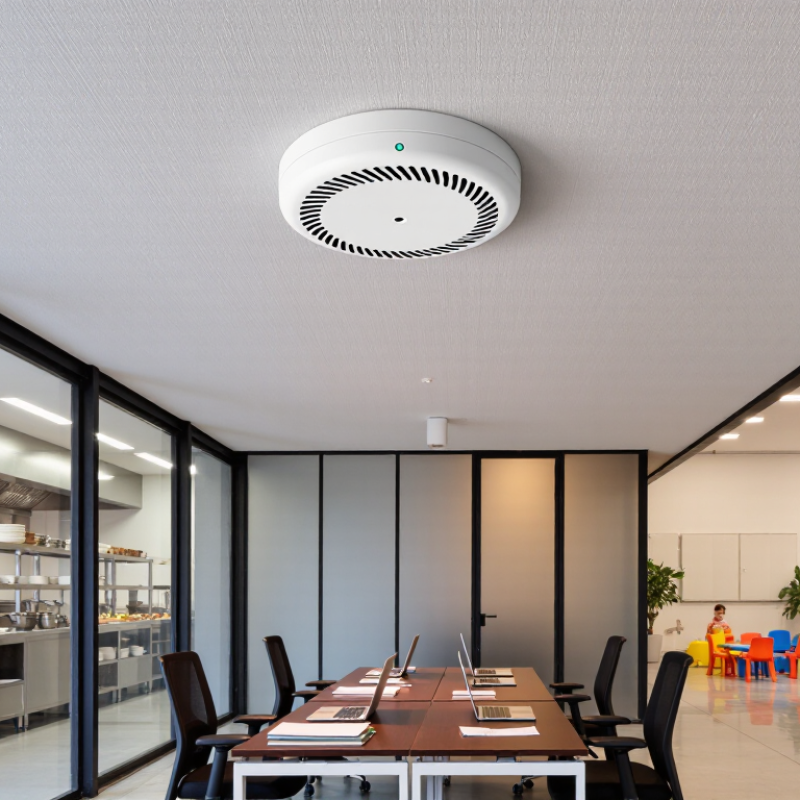
How to Choose the Best Smoke Alarm for Your Business?

Business Fire Safety Needs and Smoke Alarm Types

How to Choose the Best Smoke Alarm for Your Business?

Business fire safety begins with the building’s risks, not with a product label. A small café faces steam, grease, and heat. A warehouse may have dust, tall ceilings, and blocked airflow. Offices need reliable coverage near electrical rooms, corridors, and sleeping areas. A perfect device does not exist.

Photoelectric alarms usually respond well to slow, smoldering fires. Ionization sensors can react faster to some fast-flaming fires, but they may create more nuisance alarms. Dual-sensor units combine both methods. For server rooms or valuable equipment, aspirating systems continuously sample air through small pipes. High ceilings may require beam detection or carefully designed spacing. Kitchens often need heat detection nearby, because steam can trigger smoke sensors.

NFPA’s Smoke Alarms in U.S. Home Fires report found alarms were present in 74% of reported home fires from 2018 to 2022. However, some alarms failed because of power problems or missing maintenance. That lesson applies to workplaces too. NFPA estimated 1,388,500 fires in the United States during 2023, showing why routine testing matters. Appoint a trained person to inspect alarms, document faults, and check audibility in noisy areas. Local fire codes still control final placement. This is easy to overlook. A practical risk assessment may reveal that the cheapest alarm is the wrong alarm.

How to Choose the Best Smoke Alarm for Your Business?

Business fire safety depends on the fire risks, environmental conditions, and maintenance requirements in each area. The chart compares common smoke alarm technologies using a practical suitability index from 1 to 5.

Photoelectric alarms are generally well suited to offices and areas where smoldering fires may occur. Ionization alarms respond quickly to rapidly flaming fires but can be more susceptible to nuisance alarms. Dual-sensor alarms provide broader fire-signature coverage, while aspirating systems are commonly considered for high-value or mission-critical spaces because they can provide very early smoke detection. Final selection and placement should follow applicable fire codes, risk assessments, and professional system design requirements.

Key Features to Evaluate in a Commercial Smoke Alarm

How to Choose the Best Smoke Alarm for Your Business?

Choosing a commercial smoke alarm requires more than checking its price. Start with detection performance, certification, and suitability for each room. Optical sensors can respond well to slow, smoky fires, while heat and multi-sensor models may reduce unwanted alarms. Kitchens and dusty workshops need careful planning.

Look for clear alarm signals, strong sound coverage, and visible warning lights. A busy warehouse should not depend on one ceiling device. Check battery life, backup power, tamper protection, and remote monitoring options. The system should also support regular testing and simple maintenance records. Choose equipment tested against recognized standards, such as UL 268 or EN 54, when applicable locally.

Placement matters as much as hardware. A qualified fire professional should review ceiling height, airflow, machinery, and evacuation routes. I have seen alarms installed near vents, where smoke may arrive too late. That mistake is easy to miss. Test each device according to the manufacturer’s schedule and local fire requirements. Keep replacement parts available, but do not ignore false alarms. They may reveal dust, poor placement, or a deeper design problem. My own checklist has changed after reviewing real inspection reports. The cheapest option rarely remains cheap after repeated service calls.

Choosing the Right Alarm for Different Business Environments

How to Choose the Best Smoke Alarm for Your Business?

Choosing the right alarm starts with the environment, not the product catalogue. A quiet office needs sensitive smoke detection, clear sound coverage, and reliable backup power. Open-plan spaces also need devices positioned around airflow, ceiling height, and potential smoke paths. In a restaurant kitchen, steam and cooking vapour can create false alarms. A heat detector may suit the cooking area better, while smoke detection remains important nearby. It should never be treated as a simple replacement.

Dusty warehouses require careful selection. Dust can contaminate sensing chambers and increase maintenance needs. Cold storage rooms may need equipment rated for low temperatures. Server rooms demand early warning, controlled airflow analysis, and professional system design. Hotels and care facilities require stronger attention to sleeping areas, audibility, and evacuation planning. Different risks need different responses.

The National Fire Protection Association reported in Smoke Alarms in U.S. Home Fires, 2015–2019 that smoke alarms operated in 89% of reported home fires when present. However, alarms failed in 11% of cases, often because of power or maintenance problems. That finding matters in business settings too. A technically suitable alarm is not enough. Scheduled testing, battery replacement, cleaning, and documented inspections keep protection dependable. The U.S. Fire Administration also advises placing alarms according to building conditions and maintaining clear notification coverage. No checklist is perfect. A site walk-through can reveal blocked sounders, unusual heat, or ventilation patterns that plans miss. One overlooked corner can matter.

Installation, Testing, and Maintenance Requirements

Choosing the best smoke alarm for a business starts with the building, not the price. Offices, kitchens, warehouses, and workshops create different fire risks. A qualified fire-safety professional should assess occupancy, ceiling height, dust, steam, and emergency access. Photoelectric alarms may suit many office areas, while other spaces may require different detection technology. Follow local building codes and the manufacturer’s installation instructions.

Mount alarms where smoke can reach them quickly, usually on ceilings or high walls. Keep them away from vents, fans, cooking equipment, and dusty machinery. Interconnected alarms can warn people in distant rooms at the same time. However, poor wiring or weak network coverage can reduce reliability. That detail is often overlooked. Every installed unit should have clear access for testing and battery replacement.

Test each alarm using its test button at least monthly, and record the date, result, and person responsible. A brief alarm is expected. Never test with candles, smoke cartridges, or burning materials. Replace batteries according to the instructions, even when the alarm appears quiet. Clean vents gently with a vacuum, and inspect for paint, dust, corrosion, or physical damage. Schedule professional inspections based on local requirements and site conditions.

A useful maintenance log should include alarm locations, serial numbers, faults, repairs, and replacement dates. Staff should know what a real alarm sounds like and how to report a fault. Do not silence repeated alarms without investigating the cause. False alarms may reveal steam, poor placement, or a changing workplace risk. Recheck the layout after renovations, storage changes, or new equipment. Controls should improve with experience.

Compliance, Budget, and Long-Term Reliability Considerations

How to Choose the Best Smoke Alarm for Your Business?

Compliance, Budget, and Long-Term Reliability Considerations

Compliance should guide the purchase, not just the price tag. Check local fire codes, occupancy rules, ceiling layouts, and the building’s existing alarm system. NFPA guidance recommends documented inspection, testing, and maintenance by qualified personnel. A small office, warehouse, and commercial kitchen may need different detection methods.

Budget decisions should include installation, battery replacement, testing, and false-alarm disruption. NFPA research found that smoke alarms operated in only 53% of reported home fires from 2017 to 2021. Missing or disconnected power sources caused many failures. This is a residential benchmark, not a direct business statistic, but it exposes a practical risk. Cheap units can become expensive when staff ignore repeated alerts.

Reliability depends on more than sensor sensitivity. Look for clear fault indicators, sealed long-life power options, tamper resistance, and compatibility with scheduled inspections. Place alarms where smoke can reach them, while avoiding dust-heavy or steamy areas unless the equipment is designed for those conditions. Keep written test records near the maintenance panel. That detail matters.

Do not trust labels blindly. Confirm certification, service availability, and replacement dates through independent documentation. Some businesses overinvest in advanced features while neglecting routine testing. That is a flawed trade-off. The best choice is the one employees can understand, technicians can maintain, and managers can afford to keep operational for years.

How to Choose the Best Smoke Alarm for Your Business? - Compliance, Budget, and Long-Term Reliability Considerations

Alarm Type Typical Business Applications Main Detection Method Relative Purchase Cost False-Alarm Considerations Typical Service Life Compliance and Selection Notes
Photoelectric Offices, retail areas, hotels, classrooms, corridors, and general commercial spaces Light scattering caused by smoke particles Low to medium Generally better suited to slow, smoldering fires; steam, dust, and aerosol products can cause nuisance alarms Approximately 10 years for the sensing unit, subject to local requirements and manufacturer instructions Confirm listing or approval required by the local authority having jurisdiction. Check compatibility with the building fire-alarm control panel.
Ionization Areas where rapid-flaming fire risk is identified and permitted by local regulations Change in electrical current within an ionization chamber Low to medium More susceptible to nuisance alarms from cooking particles, dust, and some airborne contaminants Approximately 10 years for the sensing unit, subject to local requirements and manufacturer instructions Use only where allowed and appropriate. Battery disposal and radioactive-source requirements may apply depending on the jurisdiction.
Dual-Sensor Mixed-use facilities requiring broader response to both smoldering and flaming fires Combination of photoelectric and ionization sensing, or equivalent multi-criteria technology Medium Can improve coverage, but nuisance alarms remain possible in kitchens, workshops, dusty areas, and high-humidity locations Approximately 10 years for the sensing unit, subject to local requirements and manufacturer instructions Check the applicable product standard, alarm-control compatibility, testing procedure, and whether multi-criteria approval is required.
Addressable System Detector Large offices, hospitals, warehouses, campuses, hotels, and multi-zone facilities Smoke sensing with an individual device address communicated to a fire-alarm control panel Medium to high Advanced diagnostics and event history can help identify contamination, maintenance needs, and location-specific causes Approximately 10 years for the sensing unit; system components may have different replacement cycles Requires a compatible system architecture, professional installation, documented testing, and maintenance in accordance with local fire codes.
Wireless Commercial Detector Heritage buildings, leased premises, temporary structures, and locations where cabling is difficult Photoelectric or multi-criteria sensing with radio communication Medium to high Radio interference, signal obstructions, environmental conditions, and low batteries must be monitored Approximately 10 years for the sensing unit; batteries may require replacement every 1–5 years depending on design and use Verify radio certification, maximum communication distance, battery supervision, network redundancy, and acceptance by the local authority.
Special-Environment Smoke Detector Cold stores, dusty warehouses, loading bays, industrial spaces, and areas with high airflow Application-specific smoke sensing, often combined with environmental compensation or aspirating sampling High Requires careful placement and maintenance because dust, condensation, airflow, and temperature extremes can affect performance Commonly around 10 years for detectors, but filters, sampling pipes, batteries, and other components may require earlier service Select equipment rated for the actual environmental conditions and have the design reviewed by a qualified fire-protection professional.
Evaluation guidance: Confirm the requirements of the local authority having jurisdiction, applicable building and fire codes, product listing or certification, installation conditions, inspection intervals, battery requirements, and total cost of ownership before purchase. Common reference frameworks include NFPA 72 in the United States and EN 54-7 for point smoke detectors in applicable European markets.
Chat Online
Chat Online
Leave Your Message inputting...
Thank you for your attention. Please kindly describe your question first, or please send your inquiry to our email sale@pcbledmodule.com, and we will reply to you ASAP. Welcome, what can I help you?
Sign in with:



