English


Choosing a Meditation Drum is less about finding the loudest instrument and more about finding a sound you can return to comfortably. A deep, steady tone may suit slow breathing, while a brighter ring can help mark transitions between meditation sessions. Size, weight, playing technique, and sound decay matter, too. A drum that looks beautiful but feels awkward in your lap may not become part of your routine. Small details count.
Interest in meditation has grown. The U.S. National Center for Health Statistics reported that 14.2% of adults practiced meditation in 2017, up from 4.1% in 2012. This finding tracks meditation use, not demand for meditation drums, so it should not be treated as proof of a drum-market trend. Still, it points to a wider audience exploring contemplative practices. The right instrument can make a session feel more grounded, but no drum guarantees focus or calm.
Meditation teacher Jon Kabat-Zinn offers a useful reminder: “You can’t stop the waves, but you can learn to surf.” His words are not a drum-buying rule, and that distinction matters. A drum is a tool, not a shortcut. Before choosing one, consider where you will play, how much volume the space can handle, and whether you prefer a soft, warm pulse or a crisp, lingering note. Try one in person if possible. Listen closely. Does the sound invite you to stay—or make you want to stop?
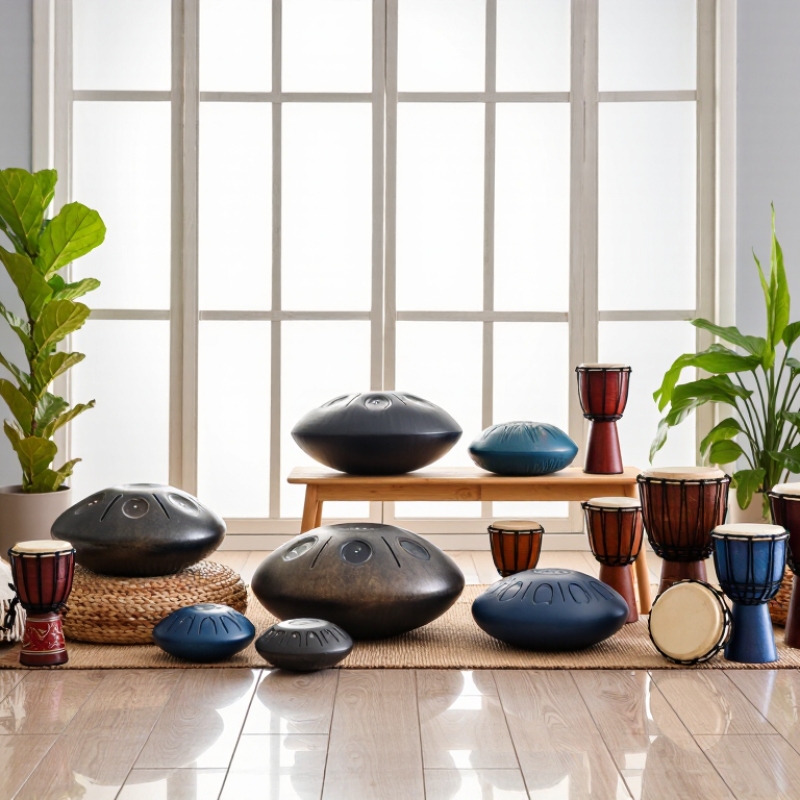
Meditation drums create a steady sound that can help mark the beginning or end of a quiet practice. Their tones may give attention something simple to follow, especially when thoughts keep wandering. Some people use a soft frame drum with slow, spaced beats; others prefer a tongue drum with clear, lingering notes. The sound is personal. Try listening in a quiet room before choosing, and notice whether the tone feels calming or distracting.
A drum’s size, material, and playing method affect its sound and feel. A small hand drum is easier to store, while a larger one may produce deeper tones but require more space. If you plan to play gently, check that the instrument responds without hard strikes. Sit comfortably and test a few slow patterns. Keep the volume low enough to hear your breathing. Less can be enough.
Meditation drums can support breath awareness, group sessions, or a brief pause between daily tasks. They do not guarantee focus or relaxation, and some people find rhythmic sound unsettling. That matters. Consider where you will use the drum, how easily you can carry it, and whether its tone remains pleasant after several minutes. I have found that a sound that seems beautiful at first can feel tiring with repetition; a short trial may reveal more than a quick demonstration.
QUICK LINKS
CONTACT US
Office: (+86) 755 23040566
Tel: (+86) 158 9965 5195
E-mail: sale@pcbledmodule.com
Skype: Hans@Rocket-PCB
Whatsapp: 86 1589965 5195
Office Address: 2207,Bid 4,He Gu Shan Hui Cheng,35#,Guang Tian RoYanluo street, Song Gang Town,518105 SHENZHENG, CHINA
Plant ADD.: No 69, Lianfeng North Road, Xianxi Area, ChangAn Town, Dongguan, China.


Copyright © 2025 Rocket PCB Solution Ltd. | All Rights Reserved Sitemap Friendship link: CNC machining heat sink