
loading

BLOG

How to Choose the Best Flexible Printed Circuit Board for Your Needs?

Choosing the right Flexible Printed Circuit Board (FPCB) is crucial for your project. This decision impacts functionality, cost, and overall performance. FPCBs are lightweight and adaptable, making them ideal for modern electronics. However, not all FPCBs are created equal. Understanding their specifications is key.

Look for the board's material, thickness, and flexibility. These factors influence durability and performance in tight spaces. Brands vary widely in quality and manufacturing processes. It is essential to verify their reliability and reputation in the industry. Avoid making choices based solely on price; this can lead to future issues.

Reflect on your specific needs. Consider the application, environment, and potential lifespan of the FPCB. Ask yourself: Are you prioritizing flexibility or strength? Each factor plays a vital role in the end product. Take the time to research and consult experts. Ensure you select a Flexible Printed Circuit Board that aligns with your project's requirements. Your due diligence can save you from costly mistakes later on.
How to Choose the Best Flexible Printed Circuit Board for Your Needs?

What is a Flexible Printed Circuit Board and Its Applications?

Flexible printed circuit boards (FPCBs) are crucial in modern electronics. They enable size reduction and flexibility in design. These circuits can bend, twist, and fold, making them ideal for gadgets like smartphones and wearables. Their lightweight nature plays a significant role in enhancing device portability.

FPCBs find applications in various fields. In consumer electronics, they connect components efficiently. In automotive systems, they provide reliable connections in tight spaces. Medical devices also rely on FPCBs due to their biocompatibility and ease of integration. This adaptability makes FPCBs essential for innovation in technology.

Choosing the right FPCB can be challenging. Evaluating specific requirements is essential, such as operating conditions and dimensions. It’s also vital to consider conductivity and material options. Overlooking these factors may lead to unreliable performance. Designers must ensure their choices align with the intended application.


Key Factors to Consider When Selecting a Flexible Printed Circuit Board

How to Choose the Best Flexible Printed Circuit Board for Your Needs?

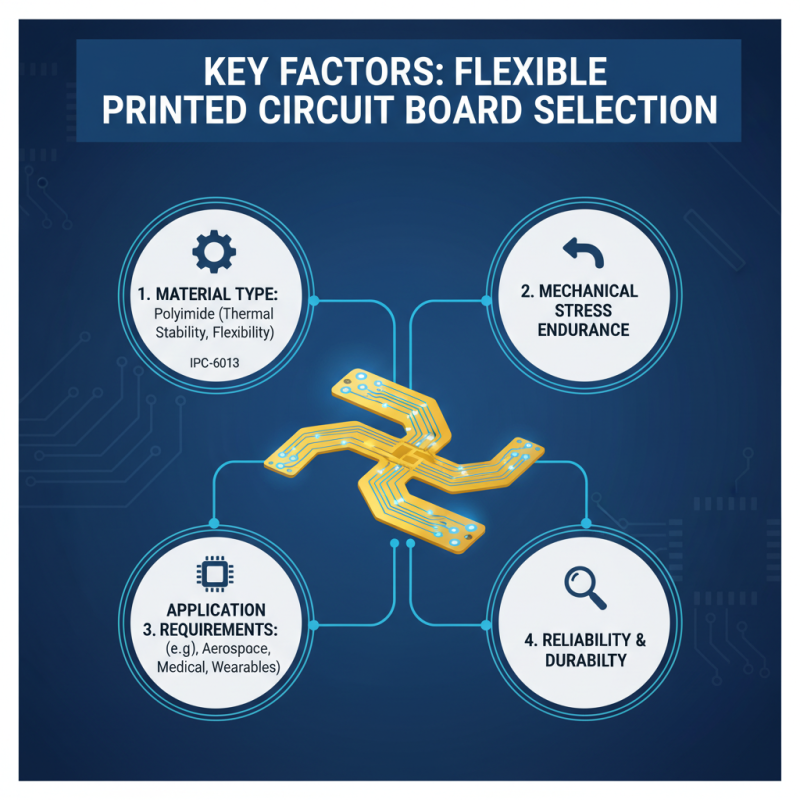
When selecting a flexible printed circuit board (FPCB), certain key factors play a significant role. One crucial element is material type. Polyimide is commonly used due to its thermal stability and flexibility. According to IPC-6013 standards, flexible circuits must endure mechanical stress without losing functionality. Understanding the specific application requirements allows for informed decisions on materials.

Another key factor is manufacturing process. The method directly influences the board's reliability and performance. Studies reveal that high-quality etching processes can minimize defects. Reports indicate that 35% of FPCB failures result from poor manufacturing techniques. Exploring industry certifications, such as ISO 9001, can enhance the credibility of manufacturers.

Design complexity is also vital. Tailoring the design to match space limitations and application demands ensures efficiency. Reports show that about 70% of design failures stem from inadequate planning. Complex designs may require advanced features like blind vias or embedded components. Analyzing the end-use environment can help prevent costly mistakes. These considerations can help steer clear of potential pitfalls in selecting the right FPCB for your needs.

Understanding Material Types and Thickness for Flexible Circuit Boards

When selecting a flexible printed circuit board (FPCB), understanding the material types is crucial. Common materials include polyimide and polyester. Polyimide offers excellent thermal stability, while polyester is more cost-effective but can be less durable. These choices impact not only durability but also the board's flexibility.

Thickness is another essential factor. Standard thickness options range from 0.1 mm to 0.2 mm. Thicker boards may offer more protection but can reduce flexibility. Conversely, thinner boards enhance flexibility but may require careful handling. Each application has unique needs. It's vital to assess the balance between flexibility and durability to fit your design requirements.

Designers often overlook these technical details, leading to performance issues. Sometimes, a thicker material seems safer, but it may affect the board's overall functionality. It’s worth reflecting on these choices to ensure the right fit for your project. Choose wisely and consider how each factor aligns with your specific application.

Evaluating Electrical Performance and Reliability in Flex Circuits

When selecting a flexible printed circuit board (FPCB), understanding electrical performance and reliability is crucial. Flex circuits must handle thermal cycling and mechanical stresses. Materials must insulate against electric malfunctions. Design features should also ensure that the circuit can endure.

Tips: Always inquire about minimum and maximum operating temperatures. High temperatures can degrade materials. Make sure to check flex lifetimes too, especially for dynamic applications.

Another factor is the circuit's impedance control. Ensure the design accommodates required specifications. Poor impedance control can lead to signal integrity issues. This is particularly vital for high-speed data applications. Mistakes in this area might lead to costly performance failures.

Tips: Collaborate with experienced designers. They can aid in identifying potential pitfalls during the design stage. A fresh perspective can often reveal unseen vulnerabilities in the circuit design.

Electrical Performance and Reliability of Flexible Printed Circuit Boards

Cost Analysis: Balancing Quality and Budget for Your Flex PCB Needs

When selecting a flexible printed circuit board (Flex PCB), cost is a critical factor. A well-executed cost analysis balances quality with your budget. Industry reports indicate that production costs for high-quality Flex PCBs can range between $0.30 to $1.00 per square inch, depending on complexity and materials used. Meanwhile, compromised quality can lead to higher long-term expenses due to failures and replacements.


Flex PCBs provide unique advantages, but quality should not be sacrificed for lower prices. For instance, a cheaper alternative may save upfront costs, but it might not withstand rigorous usage. A study by IPC reveals that flexible circuits with superior durability can reduce warranty claims by up to 40%. Investing in reliability minimizes future costs, creating a net benefit.


Conducting thorough market research is essential. Evaluate different manufacturers and their certifications to ensure reliability. Price alone is insufficient; look for a strong track record in quality. While cheaper options exist, they may raise other issues, such as longer lead times and poor performance in critical applications. Balancing your immediate budget with the long-term value is vital for a successful project.

Chat Online
Chat Online
Leave Your Message inputting...
Thank you for your attention. Please kindly describe your question first, or please send your inquiry to our email sale@pcbledmodule.com, and we will reply to you ASAP. Welcome, what can I help you?
Sign in with: