
English


China has a broad motor industry, from established factories to specialist engineering firms. For buyers, the challenge is not simply finding a supplier. It is finding one whose motor fits the load, duty cycle, control system, and production needs.
This guide introduces ten Chinese manufacturers associated with high-torque brushless DC motors. A High Torque Brushless Dc Motor may suit equipment that needs strong starting force, steady speed control, or compact power. Yet torque figures alone can mislead. Check whether a rating is continuous or peak, and note the speed, voltage, cooling method, and test conditions behind it. Small details matter.
The comparison is intended as a starting point, not a certified ranking or an endorsement. Product ranges and factory capabilities can change. Before requesting a quotation, review current datasheets, certifications, customization options, and delivery terms. Ask for test reports where relevant, and compare sample performance under realistic operating conditions. A motor that looks impressive on paper may behave differently in a warm enclosure or under repeated starts. That is worth checking.
The manufacturers included here represent different capabilities and market positions. Some may focus on customized designs, while others offer broader product catalogs or established export experience. The right fit depends on your application and verification process. No list can replace that work. Use these profiles to narrow your search, then confirm the details directly with each supplier.
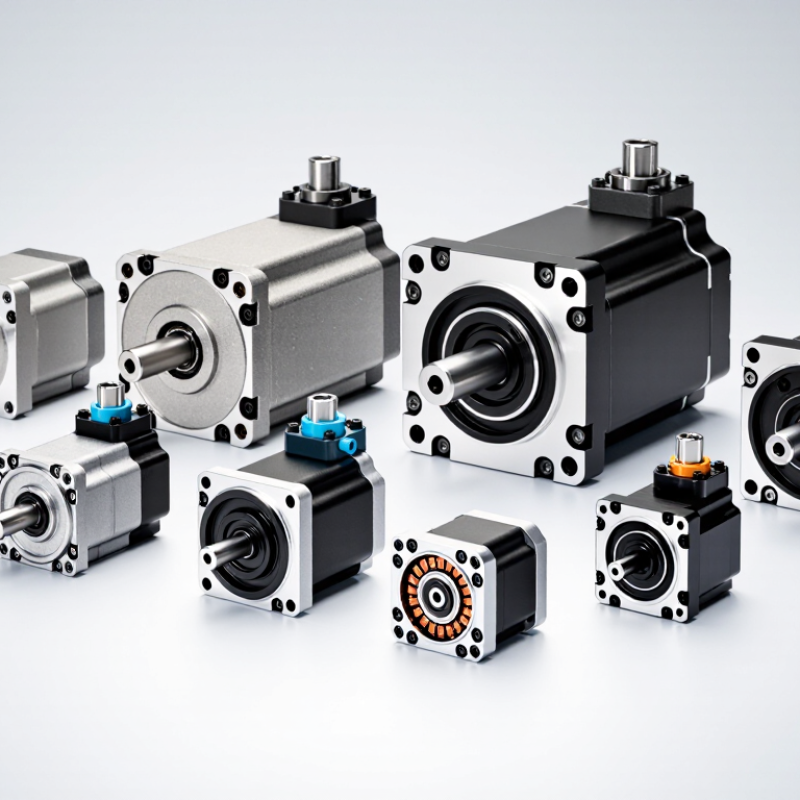
High-torque brushless DC motors produce rotation through the interaction of magnetic fields. Current flows through stator windings, while permanent magnets on the rotor respond to the changing field. An electronic controller switches current between winding phases in sequence. This commutation keeps the rotor moving and determines how smoothly torque is delivered. Hall sensors can report rotor position; sensorless controllers estimate it from electrical signals. Neither method is perfect under every load.
Several components shape real-world performance. Copper windings carry current, laminated steel guides magnetic flux, and rotor magnets provide the field. Bearings support the rotating shaft, while the housing helps dissipate heat. More current can increase torque, but it also raises winding temperature. Heat matters. A motor that feels strong during a brief test may overheat during sustained operation, especially with limited airflow. A well-matched controller, supply voltage, and load are therefore essential. Even careful calculations can miss vibration or temperature changes in a particular machine, so testing under realistic conditions remains important.
QUICK LINKS
CONTACT US
Office: (+86) 755 23040566
Tel: (+86) 158 9965 5195
E-mail: sale@pcbledmodule.com
Skype: Hans@Rocket-PCB
Whatsapp: 86 1589965 5195
Office Address: 2207,Bid 4,He Gu Shan Hui Cheng,35#,Guang Tian RoYanluo street, Song Gang Town,518105 SHENZHENG, CHINA
Plant ADD.: No 69, Lianfeng North Road, Xianxi Area, ChangAn Town, Dongguan, China.


Copyright © 2025 Rocket PCB Solution Ltd. | All Rights Reserved Sitemap Friendship link: CNC machining heat sink

