
English


China has become a major sourcing destination for global energy storage projects. Its manufacturers offer Solar Pv Battery products for homes, commercial buildings, microgrids, and utility-scale installations. Yet supplier selection requires more than comparing factory prices. Cell quality, battery management systems, thermal control, and after-sales support can determine long-term performance.
Real-world purchasing experience shows that specifications may look similar on paper. They often are not. Buyers should request verified cycle-life data, safety test reports, warranty terms, and production records. A dependable supplier should explain whether its batteries use LFP cells, how modules are balanced, and how abnormal temperatures are controlled. Factory audits can reveal details that brochures omit, including storage conditions, testing equipment, and quality checkpoints.
Certifications matter. So does traceability.
This guide examines leading Chinese Solar Pv Battery suppliers through practical and professional criteria. It considers product consistency, engineering capability, customization, export experience, compliance awareness, and communication quality. Supplier reputation is useful, but it should not replace independent verification. Some companies advertise ambitious cycle counts without clearly defining operating conditions. That deserves careful questioning.
Buyers should also assess shipping preparation, installation guidance, spare-part availability, and local service coverage. A battery delivered quickly may still create problems if technical support is weak. Pricing remains important, but the lowest quotation can hide integration costs, replacement risks, or unclear warranty exclusions. The following outline aims to help global buyers compare suppliers with greater confidence, while recognizing that market information changes and every project needs its own technical review.
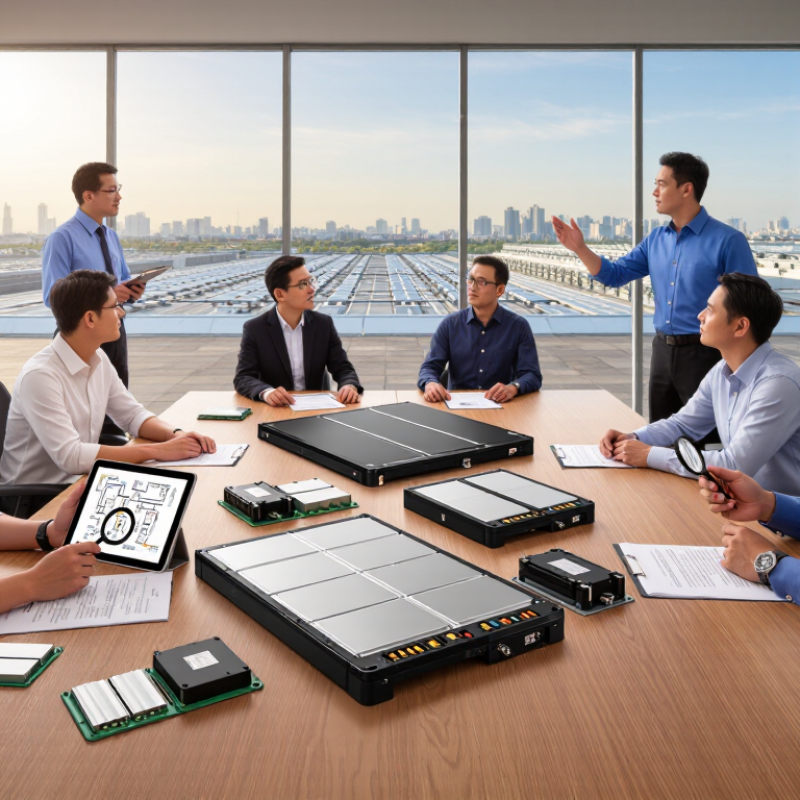
Solar PV batteries store electricity generated by panels for later use. During daylight, they charge from surplus solar power. After sunset, they supply homes, factories, or microgrids. Most current systems use lithium-ion cells, especially lithium iron phosphate chemistry. It offers strong thermal stability and long cycle life, but lower energy density. Not just a box. A complete system also needs battery management, thermal control, protection, and an inverter.
China leads this supply chain through deep manufacturing integration. The International Energy Agency’s Batteries and Secure Energy Transitions 2024 report estimated that China held about 85% of global battery cell manufacturing capacity in 2023. Domestic access to cathode materials, cells, electronics, and assembly supports faster production. It can also reduce transport between production stages. BloombergNEF reported that average lithium-ion pack prices fell 20% in 2024, reaching 115 dollars per kilowatt-hour. Scale helped drive that decline, although price comparisons can be imperfect.
Global buyers should examine usable capacity, cycle-life testing, operating temperature, and warranty conditions. A 100-kilowatt-hour nameplate battery may provide less after reserve limits and conversion losses. Field checks should confirm cell consistency, fire protection, software alarms, and installation records. Relevant testing may include IEC 62619 and UL 9540A evaluations. One uncomfortable point remains: low cost can hide weak documentation. A battery is never perfectly predictable. Real performance depends on heat, charging habits, maintenance, and grid conditions.
| Battery Technology | How It Works | Typical Energy Density | Typical Round-Trip Efficiency | Typical Cycle Life | Best-Fit Solar Application | Key Buying Considerations |
|---|---|---|---|---|---|---|
| Lithium Iron Phosphate (LFP) | Lithium ions move between a graphite anode and an iron-phosphate cathode during charging and discharging. | Approximately 90–180 Wh/kg at cell level | Approximately 85–95% | Typically 3,000–8,000 cycles, depending on depth of discharge, temperature, and operating conditions | Residential storage, commercial and industrial systems, microgrids, and utility-scale solar-plus-storage | Strong safety profile, long service life, cobalt-free chemistry, thermal management, battery-management system quality, warranty terms, and local service capability |
| Nickel Manganese Cobalt (NMC) | Lithium ions move between a graphite anode and a nickel-manganese-cobalt cathode. | Approximately 150–250 Wh/kg at cell level | Approximately 85–95% | Typically 1,500–4,000 cycles, depending on design and operating profile | Applications where compact size and higher energy density are priorities | Higher energy density but greater attention is required for thermal controls, fire protection, operating temperature, and raw-material price exposure |
| Lead-Acid | Electrochemical reactions between lead dioxide, lead, and sulfuric-acid electrolyte store and release electrical energy. | Approximately 30–50 Wh/kg | Approximately 70–85% | Typically 500–1,500 cycles, highly dependent on depth of discharge | Low-cost backup systems and off-grid installations with limited cycling requirements | Lower upfront cost, heavier system, lower usable capacity, ventilation requirements for some designs, and shorter cycle life than most lithium systems |
| Sodium-Ion | Sodium ions move between a sodium-based cathode and an anode during the charge and discharge process. | Approximately 90–160 Wh/kg at cell level, depending on design | Approximately 80–95% for early commercial systems | Often projected or demonstrated at approximately 2,000–5,000 cycles, depending on chemistry and conditions | Stationary storage where lower material-cost exposure and wide operating-temperature capability are valuable | Commercial maturity, bankability, independent test results, warranty coverage, energy density, and long-term spare-parts availability |
| Vanadium Redox Flow | Electrical energy is stored in liquid electrolytes held in external tanks and pumped through an electrochemical stack. | Approximately 10–35 Wh/kg at system level | Approximately 65–85% | Often more than 10,000 cycles with appropriate maintenance | Long-duration commercial, industrial, and utility storage with frequent cycling | Large footprint, pump and stack maintenance, electrolyte management, project-specific economics, and site engineering requirements |
| Supply-Chain Dimension | What China Offers | Practical Meaning for Global Buyers |
|---|---|---|
| Integrated Manufacturing Base | A broad domestic ecosystem covers cathode and anode materials, separators, electrolytes, cells, modules, racks, inverters, and energy-management systems. | Buyers can source more components through coordinated supply chains and reduce integration complexity. |
| Manufacturing Scale | Large-scale battery and electric-vehicle production has supported high factory utilization, process automation, and manufacturing learning effects. | High-volume projects may benefit from competitive pricing, standardized designs, and shorter production lead times, subject to market conditions. |
| LFP Expertise | China has extensive experience manufacturing lithium iron phosphate cells and complete stationary-storage systems. | LFP is widely available for solar storage where safety, cycle life, and cost are key requirements. |
| Export and Port Infrastructure | Established industrial ports, container networks, and export logistics support shipment of battery cells, modules, racks, and related equipment. | International buyers can often arrange consolidated shipments, although dangerous-goods rules and destination regulations still apply. |
| Product Customization | Manufacturers commonly provide different voltage levels, enclosure formats, capacities, communication protocols, and grid-code configurations. | Projects can be adapted to local installation conditions, inverter interfaces, climate requirements, and certification needs. |
| Engineering and Cost Competition | A large number of manufacturers and system integrators compete on cell quality, system design, delivery, software, and after-sales service. | Buyers should compare total cost of ownership rather than relying only on quoted battery price. |
| Evaluation Area | Recommended Data to Request | Why It Matters |
|---|---|---|
| Usable Capacity | Nominal capacity, guaranteed usable capacity, permitted depth of discharge, and capacity-retention curve | Nominal capacity alone does not show how much energy the system can reliably deliver. |
| Safety and Certification | Applicable transport documents, electrical and functional safety certificates, fire-testing evidence, and country-specific approvals | Compliance affects customs clearance, insurance, interconnection, permitting, and project acceptance. |
| Performance | Continuous and peak power, response time, round-trip efficiency, operating-temperature range, and auxiliary consumption | These factors determine whether the battery can meet backup, peak-shaving, frequency-control, or energy-shifting requirements. |
| Warranty and Lifecycle | Calendar period, cycle or throughput limit, minimum retained capacity, exclusions, response time, and replacement process | A clear warranty helps quantify financial risk over the project life. |
| Integration and Support | Inverter compatibility, communication protocols, remote monitoring, software access, spare-parts plan, commissioning support, and local service arrangements | System availability depends on successful integration, monitoring, maintenance, and timely technical support. |
Note: Performance ranges are general industry values and vary by cell design, system architecture, operating temperature, depth of discharge, and test method. Buyers should verify project-specific figures through independent test reports and contractual guarantees.
QUICK LINKS
CONTACT US
Office: (+86) 755 23040566
Tel: (+86) 158 9965 5195
E-mail: sale@pcbledmodule.com
Skype: Hans@Rocket-PCB
Whatsapp: 86 1589965 5195
Office Address: 2207,Bid 4,He Gu Shan Hui Cheng,35#,Guang Tian RoYanluo street, Song Gang Town,518105 SHENZHENG, CHINA
Plant ADD.: No 69, Lianfeng North Road, Xianxi Area, ChangAn Town, Dongguan, China.


Copyright © 2025 Rocket PCB Solution Ltd. | All Rights Reserved Sitemap Friendship link: CNC machining heat sink

