

loading

BLOG

China Best PCR Cosmetic Tube Manufacturer for Global Buyers

Global beauty brands are rethinking packaging as shoppers and regulators demand clearer environmental evidence. OECD’s Global Plastics Outlook reports that global plastic waste reached 353 million tonnes in 2019, with packaging representing about 40% of total use. This pressure is moving cosmetic packaging toward recycled materials, lighter designs, and stronger supply-chain verification.

A China-based Pcr Cosmetic Tube manufacturer can support this shift through scalable production, export experience, and access to PCR polyethylene materials. Grand View Research valued the global cosmetic packaging market at approximately USD 32.86 billion in 2023. It also forecasts continued growth through 2030, driven by skincare, personal care, and premium beauty products. These figures show why reliable tube sourcing matters to global buyers.

A professional supplier should provide resin documentation, PCR-content evidence, dimensional inspection, leakage testing, and controlled color matching. ISO 14021 offers guidance for credible environmental claims, while ISO 9001 systems can improve manufacturing consistency. Buyers should also review tube shoulder strength, cap fit, decoration adhesion, and compatibility with formulas such as creams, gels, and cleansers.

No tube is automatically sustainable.

Higher PCR content may affect color, odor, barrier performance, or surface finish. That trade-off deserves testing, not optimistic wording. A responsible manufacturer should explain these limitations clearly and recommend practical validation samples before mass production. For international buyers, the strongest China Pcr Cosmetic Tube partner combines engineering experience, transparent documentation, stable capacity, and responsive quality control. The “best” choice is rarely the cheapest offer. It is the supplier that can prove performance, compliance, and repeatability shipment after shipment.
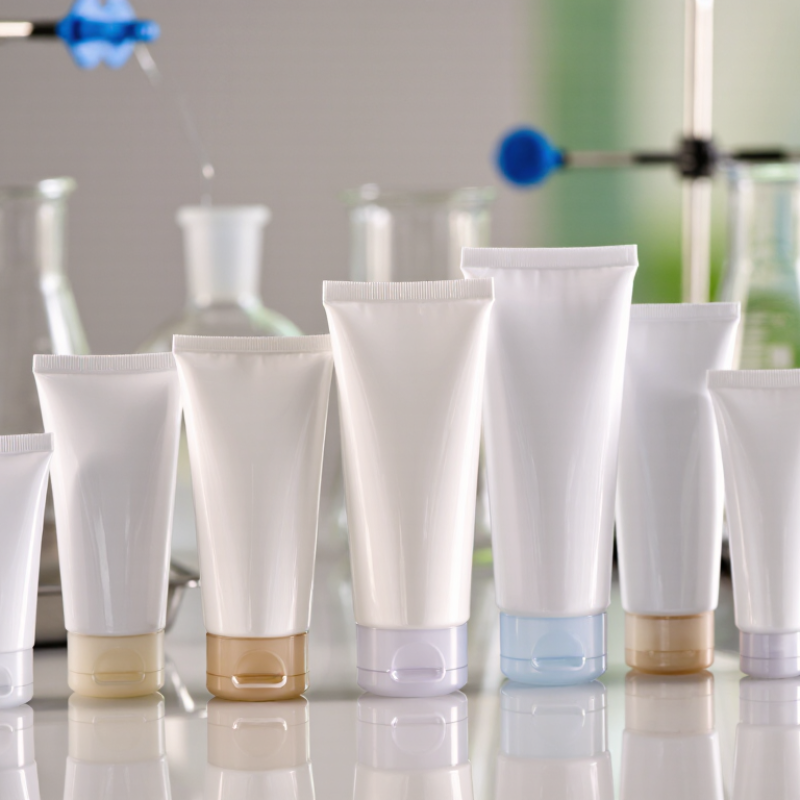
China Best PCR Cosmetic Tube Manufacturer for Global Buyers

PCR Cosmetic Tubes: Definition, Materials, and Environmental Benefits

PCR cosmetic tubes are packaging tubes made partly from post-consumer recycled plastic. Consumers return, sort, clean, and reprocess used plastic before it enters new production. Common materials include recycled polyethylene, recycled polypropylene, or carefully controlled blends with virgin resin.

In practical production checks, PCR content can affect color, odor, flexibility, and surface finish. A tube may look slightly gray or less uniform. That is normal. Manufacturers should test wall thickness, sealing strength, cap fit, and product compatibility. Migration testing also matters, especially for creams, gels, and oils. Recycled content does not automatically make a tube recyclable. Local collection systems and material combinations still influence its end-of-life path.

PCR tubes can reduce demand for newly extracted fossil resources and help keep used plastic in circulation. They may also lower packaging waste when designed with simple, compatible components. Yet the environmental benefit depends on verified recycled content, efficient manufacturing, transport distance, and actual recovery rates. Numbers need evidence. A responsible supplier should provide material declarations, batch records, and quality-control results. Small design choices matter, too. A lighter tube uses fewer resources, but excessive lightweighting can cause leakage or customer complaints. The balance is not perfect, and it deserves regular review.

PCR Cosmetic Tubes: Recycled Resin and Virgin Plastic Displacement

Post-consumer recycled (PCR) plastic is made from plastic products collected after consumer use, cleaned, processed, and converted into new resin. This chart uses a 20 g cosmetic tube as a simple material-allocation example. As PCR content increases, the same mass of virgin plastic is displaced, helping reduce demand for newly produced resin. Actual environmental benefits depend on collection systems, recycling technology, energy sources, tube design, and end-of-life conditions.

Calculation basis: PCR resin plus virgin resin equals 20 g per tube; values represent material content scenarios rather than company or market-share data.

Key Manufacturing Processes for High-Quality PCR Cosmetic Tubes

China Best PCR Cosmetic Tube Manufacturer for Global Buyers

High-quality PCR cosmetic tubes begin with controlled feedstock. The OECD’s Global Plastics Outlook reported that only 9% of plastic waste was recycled globally in 2019. This gap makes sorting accuracy essential. Recovered plastic is separated by polymer type, washed, dried, and shredded. Infrared sorting and metal detection help remove unsuitable material. The flakes then pass through extrusion, melt filtration, and pelletizing. Small process errors can create black specks, odor, or weak seals.

Tube production requires equal discipline. Technicians check pellet moisture before extrusion. Excess moisture may cause bubbles and unstable walls. During tube forming, temperature, pressure, and cooling speed must remain consistent. A camera system can inspect diameter, surface marks, and color variation. The shoulder is molded separately, then welded to the tube body. Seal strength, drop resistance, torque, and leakage tests follow. Cosmetic compatibility testing also matters, especially with oils, acids, and alcohol-based formulas.

The United Nations Environment Programme estimated in 2023 that plastic pollution could be reduced by 80% by 2040 through existing solutions. PCR tubes support that direction, but recycled content is never perfectly uniform. Color matching may drift between production batches. That reality needs honest specifications, traceable records, and agreed tolerance ranges. A reliable manufacturer documents incoming material, PCR percentage, production parameters, and finished-tube test results. More testing does not remove every risk. It makes the remaining risks visible.

China Best PCR Cosmetic Tube Manufacturer for Global Buyers - Key Manufacturing Processes for High-Quality PCR Cosmetic Tubes

A practical manufacturing and quality-control reference for post-consumer recycled (PCR) cosmetic tubes, covering material preparation, tube forming, decoration, assembly, testing, and compliance.

Manufacturing Stage Process and Technical Focus Typical Control Parameters Quality Risks to Monitor Recommended Verification Relevant Standards or References
1. PCR Material Sourcing Obtain post-consumer recycled resin from controlled waste streams. The resin should be identified by polymer type, recycled content, color, and intended cosmetic-contact application. Material identity: HDPE, LDPE, PP, or compatible multilayer structure.
Traceability: supplier lot, recycled-content declaration, and certificate of analysis.
Inconsistent melt behavior, odor, color variation, contamination, and inaccurate recycled-content claims. Incoming inspection, resin identification, moisture measurement, odor screening, and lot-based documentation review. ISO 14021 for self-declared environmental claims; ISO 22095 for chain of custody; applicable local packaging regulations.
2. Material Compounding and Filtering Blend PCR resin with approved virgin resin, color concentrates, or additives where required. Melt filtration helps remove solid contaminants before tube extrusion or molding. Control points: blend ratio, melt temperature, filtration condition, additive dosage, and residence time.
Target: stable melt flow suitable for the selected tube process.
Black specks, gels, weak weld areas, excessive odor, unstable extrusion, and poor appearance. Melt-flow testing, visual contamination inspection, color measurement, and process-capability checks. ASTM D1238 or ISO 1133 for melt mass-flow rate; ASTM D542 for color evaluation where applicable.
3. Tube Extrusion Extrude the plastic body through a calibrated die, control wall thickness, cool the tube, and cut it to the specified length. Typical controls: die temperature, extrusion speed, vacuum sizing, cooling temperature, tube diameter, and wall-thickness profile. Uneven walls, ovality, pinholes, surface lines, dimensional drift, and insufficient compression resistance. Dimensional inspection, wall-thickness mapping, visual inspection, and sample compression testing. ISO 4593 for plastic film or sheeting thickness measurement where applicable; customer-approved dimensional drawings.
4. Shoulder and Head Molding Form the shoulder and neck area by injection molding, compression molding, or a compatible tube-head process. The head must match the closure and dispensing system. Control points: mold temperature, injection or compression pressure, cycle time, neck dimensions, orifice geometry, and cooling time. Flash, short shots, blocked orifices, poor neck fit, stress cracks, and leakage around the shoulder joint. Gauge inspection, closure-fit testing, visual examination, and leak testing after tube-body assembly. ISO 8611 principles may support packaging load testing where relevant; project-specific closure and neck specifications are required.
5. Tube-Body and Shoulder Assembly Join the extruded tube body to the molded shoulder using controlled heat sealing, ultrasonic welding, or another validated joining method. Typical controls: sealing temperature, pressure, energy or dwell time, alignment, and joint cooling time. Incomplete fusion, deformation, weak joints, internal flash, misalignment, and product leakage during use. Peel or burst testing, vacuum leak testing, positive-pressure leak testing, and visual inspection of the joint. ASTM F2096 for internal pressurization bubble testing of flexible packages; test conditions should be defined for the package design.
6. Surface Treatment and Decoration Apply printing, labeling, hot stamping, varnish, or other decoration after confirming compatibility with the PCR surface and the intended cosmetic formula. Control points: surface cleanliness, treatment energy where used, ink adhesion, registration accuracy, curing conditions, and decoration coverage. Ink rub-off, poor adhesion, color mismatch, registration errors, odor transfer, and reduced recyclability from incompatible components. Cross-hatch adhesion testing, rub resistance, color comparison, barcode verification, and migration or compatibility review. ISO 2409 for cross-cut adhesion classification; ISO 7724 for paint and varnish color measurement principles where applicable.
7. Cap and Closure Installation Install flip-top, screw, disc-top, or other closures. Closure material and decoration should be compatible with the tube and the recycling strategy. Typical controls: closing torque, hinge function, cap alignment, orifice clearance, tamper evidence, and opening force. Loose or over-tight closures, hinge breakage, poor resealing, blocked dispensing openings, and cap-to-tube mismatch. Torque measurement, opening and closing cycle tests, leak testing, hinge testing, and functional dispensing trials. ASTM D2063 for torque retention of continuous-thread closures where applicable; packaging-specific functional specifications.
8. Cleaning and Line Clearance Remove loose particles and production residues. Verify that the line is free from materials, labels, components, and documents from the previous order. Control points: cleaning procedure, compressed-air quality, foreign-particle limits, line-clearance checklist, and batch segregation. Particle contamination, mixed components, incorrect artwork, residual odor, and batch traceability failures. Visual cleanliness inspection, particle checks, line-clearance verification, and documented batch reconciliation. ISO 14644 concepts may be used for controlled environments when required; hygiene controls should match the product risk.
9. Cosmetic Compatibility Testing Evaluate the finished tube with the intended cosmetic formula under representative storage and use conditions before commercial release. Study variables: formula type, fill level, storage temperature, duration, orientation, and number of dispensing cycles. Stress cracking, swelling, discoloration, odor transfer, formula leakage, delamination, and changes in dispensing performance. Accelerated and real-time compatibility studies, weight-loss checks, visual inspection, and formula quality testing. ISO 175 for chemical resistance of plastics may provide a reference method; cosmetic stability protocols should be product-specific.
10. Mechanical and Seal Testing Confirm that the filled or empty package withstands handling, transport, squeezing, stacking, and repeated opening and closing. Typical tests: leak test, burst or pressure test, drop test, compression test, squeeze-cycle test, and closure-cycle test. Microleaks, seam failure, cap detachment, body collapse, paneling, and loss of product protection. Sampling plan based on risk, documented test conditions, calibrated equipment, and retained samples. ASTM D4169 for distribution-cycle performance; ASTM D5276 for drop testing of loaded containers where applicable.
11. Recycled-Content and Claim Verification Verify that the declared PCR percentage is supported by material records, mass-balance calculations, and an appropriate chain-of-custody system. Documentation: bill of materials, supplier declarations, production batch records, yield data, and claim approval workflow. Overstatement of PCR content, unsupported environmental claims, unclear calculation boundaries, and missing records. Document review, production reconciliation, supplier audit, and third-party certification when required by the buyer or market. ISO 14021 for environmental claims; ISO 22095 for chain-of-custody models; market-specific labeling rules.
12. Final Inspection and Release Release only conforming tubes after reviewing appearance, dimensions, functionality, decoration, cleanliness, packaging, and traceability records. Inspection items: critical dimensions, color, print accuracy, closure function, leakage, quantity, carton identification, and retained samples. Mixed specifications, cosmetic defects, incomplete records, damaged cartons, and nonconforming units entering shipment. Approved sampling plan, final quality report, certificate of conformity, batch traceability, and corrective-action process. ISO 2859-1 for attribute-based sampling plans; acceptance criteria should be agreed before mass production.

Note: The stated control points and standards are general industry references. Final specifications, test conditions, acceptance limits, recycled-content percentage, and regulatory requirements should be confirmed according to the tube structure, cosmetic formula, filling process, and destination market.

Design, Performance, and Customization Options for Global Brands

China Best PCR Cosmetic Tube Manufacturer for Global Buyers

Design, Performance, and Customization Options for Global Brands

For global beauty brands, a PCR cosmetic tube must balance appearance, usability, and responsible material choices. PCR resin can create slight color variation. That variation should be discussed early.

Experienced manufacturers review the formula, filling method, cap design, and storage conditions before production. A soft shoulder can improve squeezing comfort. A wider opening may support thicker creams. Flip-top and screw caps offer different user experiences.

Closure testing helps reduce leakage during transport. Drop tests, torque tests, and compatibility checks provide practical evidence. Visual inspection alone is not enough.

Customization can include tube diameter, wall thickness, surface finish, printing, and recycled content percentage. Matte surfaces hide minor handling marks. Gloss finishes create stronger shelf visibility.

Digital printing suits smaller, changing orders, while offset printing may support larger volumes. Decoration samples should be checked under natural and retail lighting. Color can shift between the sample and mass production. This remains a common, sometimes overlooked issue.

Reliable project communication matters as much as machinery. Buyers should request material documentation, production samples, inspection records, and clear tolerance ranges. A technically attractive tube may still feel awkward in the hand. Testing with real users can reveal that problem early. Not every customization improves performance. Some choices increase cost without adding meaningful value.

Quality Standards and Compliance Requirements for International Markets

China Best PCR Cosmetic Tube Manufacturer for Global Buyers

Quality Standards and Compliance Requirements for International Markets

A reliable PCR cosmetic tube manufacturer must prove more than attractive recycled content claims. Global buyers should request the PCR source, recycled-content percentage, batch number, and certificate of analysis. Material traceability matters.

Each production batch needs practical inspection. Check wall thickness, sealing strength, cap torque, leakage resistance, and print adhesion. Drop tests and squeeze-cycle tests can reveal failures before shipment. Compatibility testing with oils, acids, alcohol, and active ingredients is also essential. Some formulas change color or soften the tube over time.

International compliance requires careful documentation. Manufacturers should control restricted substances, heavy metals, odor, and contamination risks. Safety data, technical specifications, test reports, and declarations of conformity should match the actual material. Requirements may differ across the European Union, North America, and other regions, so buyers should confirm local rules before approval. Production controls based on documented quality procedures improve consistency, while cosmetic good manufacturing practices support disciplined handling.

PCR material is not always visually uniform. Slight color variation can occur. That is real. Rejecting every variation may increase waste, yet ignoring uncontrolled changes can weaken consumer trust. A stronger approach defines acceptable color ranges, testing frequency, and corrective actions in writing. I have found that clear records often prevent more problems than impressive certificates alone. Small details matter.

How to Choose the Best PCR Cosmetic Tube Manufacturer for Global Buyers

How to Choose the Best PCR Cosmetic Tube Manufacturer for Global Buyers

Choosing a PCR cosmetic tube manufacturer requires more than comparing prices. PCR means post-consumer recycled material, so its quality can vary between production batches. Ask for the exact PCR percentage, material source, and traceability records. Claims need evidence. An experienced manufacturer should provide test reports for sealing, drop resistance, printing adhesion, and product compatibility. These details matter when tubes travel through hot warehouses or cold delivery routes.

Request production samples before signing a large order. Check the tube’s softness, shoulder strength, cap fit, and dispensing control by hand. Samples matter. Fill them with your actual formula and observe changes over several weeks. A tube that looks attractive may still collapse, leak, or affect the formula’s smell. I have seen buyers focus on recycled content while overlooking barrier performance. That choice can create avoidable losses.

Review the manufacturer’s quality system, inspection process, and production capacity. Reliable suppliers explain how they control color differences, wall thickness, recycled resin, and decoration during mass production. Ask about minimum order quantities, lead times, packaging protection, and corrective actions. Clear answers usually reveal operational maturity. A high PCR percentage is not automatically better if the tube becomes unstable. Some suppliers may also overpromise delivery speed. Build a realistic schedule with inspection time included. No factory is perfect, so transparent communication and documented improvements deserve more trust than polished sales language.

Chat Online
Chat Online
Leave Your Message inputting...
Thank you for your attention. Please kindly describe your question first, or please send your inquiry to our email sale@pcbledmodule.com, and we will reply to you ASAP. Welcome, what can I help you?
Sign in with:



