

loading

BLOG

Best Welding Positioners in 2026 for Global Buyers

In 2026, choosing Welding Positioners is not simply a matter of comparing load capacity. Global buyers must consider the parts they weld, the access their operators need, and the support available after delivery. A compact bench unit may suit small brackets, while a powered positioner can turn a heavy pipe section smoothly into a more comfortable working angle. Details matter. A low maximum speed, awkward controls, or a poorly placed foot pedal can slow a busy cell.

Welding scholar Dr. John C. Lippold is a useful reference for understanding welding process control. The line below is an editorial paraphrase, not a verified quotation: “Repeatable setup and steady access help make quality welds easier to achieve.” That principle applies when assessing rotation range, tilt adjustment, control response, and fixture compatibility. Buyers should also check rated capacity in the actual operating orientation, not just the headline figure. Ask for duty-cycle data, electrical specifications, manuals, and clear information about service and spare parts.

This guide compares options for varied workshops, budgets, and production demands. It looks at manual and powered models, practical features, and questions to raise with suppliers. A polished specification sheet is not proof of reliable performance. Nor does one machine fit every shop. That is an inconvenient truth. A positioner that performs well with a balanced fixture may struggle with an uneven load. Treat the shortlist as a starting point, then confirm the intended setup with the manufacturer. Safety, repeatability, and local service deserve attention alongside price.
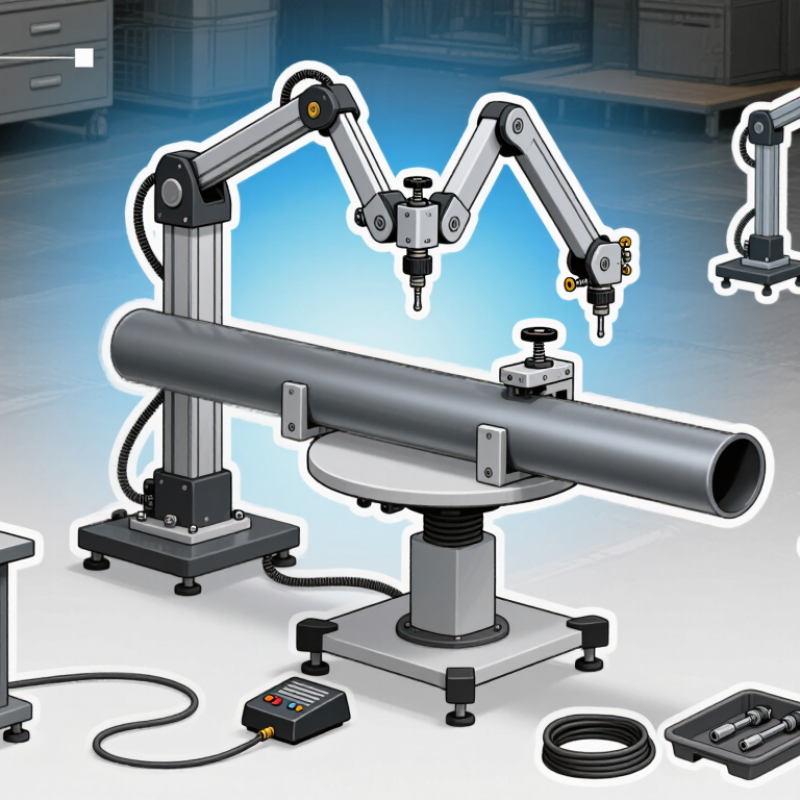
Best Welding Positioners in 2026 for Global Buyers

Understanding Welding Positioners and Their Role in Welding

A welding positioner holds and turns a workpiece so welders can reach the joint at a more suitable angle. It may rotate a part horizontally, tilt it, or combine both movements. Instead of repeatedly walking around a large frame, an operator can bring the seam closer and keep a steadier working posture. That matters on circular components, brackets, and fabricated assemblies with hard-to-reach joints.

Better access can support consistent weld quality, but a positioner does not correct poor fit-up, incorrect settings, or weak technique. Capacity is more than the workpiece’s total weight: its center of gravity and clamping arrangement also affect safe operation. Check the required rotation range, table size, speed control, and duty cycle against the actual jobs in your shop. A machine that looks suitable on paper may feel awkward once a bulky fixture is mounted. That detail is easy to overlook.

Tips: Secure the workpiece before movement, and test the balance at low speed. Keep hands clear of pinch points. Confirm that the fixture cannot shift as the table tilts. For repeat jobs, record useful angles and speeds, then review them with the welding team. Small adjustments can help, though they will not make every setup perfect.

Main Types of Welding Positioners Available in 2026

Rotary-table positioners are common for compact parts and repeatable welds. The workpiece sits on a rotating plate, allowing the operator to keep the joint near a comfortable working angle. This can reduce awkward reaches on brackets, flanges, and small frames. Tilting models add a second axis, so the table can turn and incline. They suit parts that need several weld angles without repeated clamping.

Not always. Headstock-and-tailstock positioners support long or heavy work between two ends. They are useful for shafts, tanks, and fabricated frames, but the load must be balanced and secured correctly. Pipe welding rotators use powered rollers to turn cylindrical sections beneath a fixed torch or welding head. They are designed for round work, not irregular assemblies.

The right type depends on part geometry, weight, weld access, and production volume. Check the rated capacity at the intended tilt angle; it may differ from the capacity with the table level. A shop handling a 40-centimeter flange may value smooth rotation more than high load capacity. For a long vessel, roller spacing and stable support matter more. A common mistake is choosing by maximum capacity alone. Controls, floor space, and loading access deserve attention too. Manual positioning can be practical for occasional jobs, though it may slow repeated setups.

Key Specifications for Comparing Positioner Performance

A welding positioner’s rated payload is only a starting point. Check whether the figure applies to a centered load or an offset workpiece. A long frame can create substantial torque even when its total weight appears modest. Ask for the permitted load moment and compare it with your fixture and part dimensions. Small details matter.

Review tilt range, rotation speed, and speed control together. Smooth, low-speed rotation helps maintain a consistent weld pool on thin sections; higher speed may suit repetitive work. Confirm whether speed is adjustable under load, not only when the table is empty. Also inspect faceplate diameter, mounting-hole pattern, and runout. Poor alignment can cause visible wobble at the torch. Request test data or a demonstration using a comparable load.

Duty cycle, motor rating, and control options affect performance over a full shift. A unit that works well for brief trials may overheat during continuous production. Check emergency-stop access, guarding, and compatibility with the workshop’s power supply. For international purchasing, verify voltage and frequency requirements before comparing prices. Catalog specifications can be incomplete, and that is worth challenging. Ask suppliers to clarify test conditions, warranty coverage, and replacement-part availability in writing.

Best Welding Positioners in 2026: Key Specifications for Comparing Performance

This chart shows the calculated gravity moment for payloads with their center of gravity 0.3 m from the rotation axis, using moment = mass × 9.81 m/s² × offset. It is a load-planning reference, not a positioner rating. When comparing equipment, verify rated payload, allowable eccentricity, tilt capacity, rotation speed, and duty cycle; include fixtures and an appropriate safety margin in your calculations.

How to Choose the Best Positioner for Your Applications

Choosing a welding positioner starts with the workpiece, not the catalog photo. Record its weight, dimensions, and center of gravity, including clamps and fixtures. The rated capacity must cover the complete rotating load, with suitable margin for uneven or offset parts. A large table is not automatically better. It may consume floor space without improving access. Numbers can mislead.

Match the rotation and tilt range to the welds you make. Check whether operators can reach joints without awkward pauses, and whether the unit moves smoothly at the low speeds needed for controlled work. Confirm the control layout, foot-pedal response, and emergency stop are practical in your shop. For repeated production, ask about duty cycle and maintenance access. A spec sheet can still hide an awkward setup.

Consider your actual workspace: doorway width, available power, floor condition, and how the positioner will be loaded. For bulky assemblies, verify stability across the full tilt range, not just with the table level. If possible, test a representative part before ordering. That matters. A trial may reveal cable interference, poor torch clearance, or slower changeovers than expected. No selection is perfect; document the trade-offs and confirm capacity and operating details with the supplier.

Best Welding Positioners in 2026 for Global Buyers — How to Choose the Best Positioner for Your Applications

Compare common welding positioner configurations by indicative payload band, movement, and application. Use the guide to shortlist a machine, then confirm its capacity and operating limits with the supplier.

Positioner Type Indicative Payload Band Typical Movement Suitable Applications Key Selection Checks
Compact tabletop positioner Approximately 5–100 kg Rotating table; tilt may be fixed or adjustable, depending on configuration Small components, brackets, fittings, and short production runs Table size, workpiece clamping, rotation-speed range, and whether tilt is required
Single-axis rotary positioner Approximately 50–500 kg Powered 360° rotation; workpiece axis remains in a fixed orientation Round parts, flanges, rings, and circumferential welds Rated load at the specified center of gravity, speed control, and fixture clearance
Tilting rotary positioner Approximately 100–2,000 kg Powered rotation with powered or manual table tilt; tilt travel varies by design Fabrications that need multiple weld faces brought into a convenient position Payload at each tilt angle, center-of-gravity limits, tilt range, and operator access
Headstock-and-tailstock positioner Approximately 500–10,000+ kg Workpiece supported at both ends and rotated between headstock and tailstock Long shafts, frames, vessels, and large fabricated assemblies Distance between centers, tailstock adjustment, support alignment, and workpiece deflection
Floor-mounted heavy-duty positioner Approximately 2,000–20,000+ kg Powered rotation; tilting capability depends on the machine design Large vessels, heavy structures, and demanding production environments Foundation and anchoring, overturning moment, load distribution, guarding, and service access
Welding-column-and-boom-compatible positioner Selected to match the workpiece and welding-system configuration Rotary or rotary-tilt movement coordinated with a column and boom system Repeated welds on large components where a stable torch-to-work distance is important Interface compatibility, synchronized controls, torch access, and welding-cable management

Selection note: Payload bands are broad planning estimates, not standardized product classes. Actual capacity depends on the workpiece center of gravity, eccentric load, fixture weight, tilt angle, rotation speed, and duty cycle. Before purchasing, request the rated-load diagram and confirm electrical supply, control language, applicable local safety requirements, installation support, and spare-parts availability for the destination market.

Global Buying Factors: Standards, Shipping, Service, and Cost

For global buyers, a welding positioner’s rated capacity is only part of the decision. Check the load’s center of gravity, rotation speed, tilt range, and duty cycle against your actual workpieces. Ask suppliers which standards their equipment follows and request relevant test reports, electrical diagrams, and manuals. Requirements can vary by destination and application, so confirm them with your technical or compliance team before ordering. Paperwork matters.

Shipping details deserve equal attention. Confirm the packed dimensions, gross weight, crate protection, and delivery terms before comparing quotes. A compact unit may still need careful handling if its controls or rotating table are exposed. Check who arranges customs documentation and who pays duties and local charges. Delays happen. Build time for port congestion, inland transport, and installation into your production plan.

Service can decide whether a low purchase price stays low. Ask about spare-part availability, remote troubleshooting, response times, and training for operators and maintenance staff. Clarify warranty coverage in writing, including travel, labor, and shipping exclusions. Compare the total landed and operating cost, not just the unit price. A detailed spreadsheet helps, but it can miss downtime and awkward fit-up. Review your assumptions with the people who will use the positioner daily.

Chat Online
Chat Online
Leave Your Message inputting...
Thank you for your attention. Please kindly describe your question first, or please send your inquiry to our email sale@pcbledmodule.com, and we will reply to you ASAP. Welcome, what can I help you?
Sign in with: