
English


Choosing a Weigh Feeder manufacturer is about more than comparing catalog prices. The right system must deliver a steady, measurable flow of material under real operating conditions. That means considering product characteristics, required throughput, plant layout, and maintenance access.
Details matter. A dusty powder behaves differently from coarse granules, and a feeder that performs well in one process may struggle in another. Buyers should review stated accuracy, feed-rate range, belt or screw design, control options, and integration requirements. Ask how performance is tested, what calibration support is available, and whether spare parts can be sourced reliably. A polished brochure is useful, but it cannot replace clear technical answers.
This guide introduces seven Weigh Feeder manufacturers serving global buyers. It is intended as a practical starting point, not a universal ranking: suitability depends on the application, service needs, and project specifications. Not always an easy choice. Compare each supplier’s documented capabilities and request references or application examples where possible. Also confirm that quoted configurations match your material and operating environment. Small differences in installation conditions can affect results. With careful evaluation, buyers can narrow the field and choose a partner whose equipment, support, and communication fit the plant—not just the purchase order.
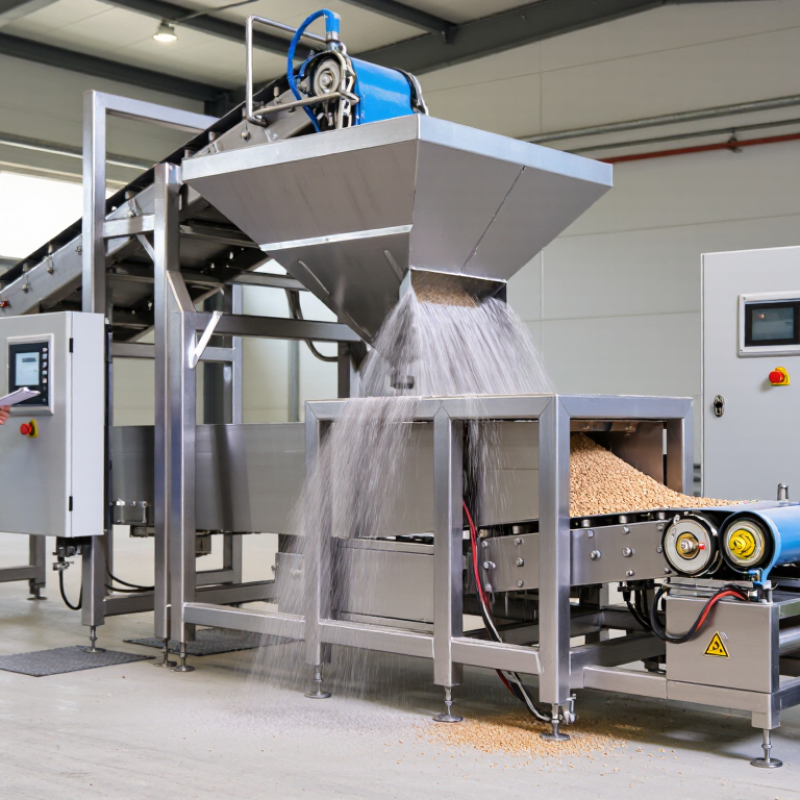
A weigh feeder measures and controls the flow of bulk material, such as powder, granules, or small pellets. Unlike a basic conveyor, it tracks how much material moves over time. A typical belt-type unit has a feed hopper, a moving belt, load cells, and a speed sensor. The load cells measure the material’s weight on a short section of belt. The sensor records belt speed. A controller combines these readings to estimate the feed rate.
The feeder compares the measured rate with the target set by the operator. If the flow drifts, the controller adjusts belt speed or another feed mechanism. For example, a dusty powder may bridge above the belt, causing uneven delivery. Material buildup can also affect readings. Small changes matter. Installation, calibration, and regular checks help keep measurements dependable, though actual accuracy depends on the material and operating conditions. Do not assume every material behaves alike.
Tips: Check that the feeder is level and the belt is clean before calibration. Test it with the actual material when practical. Record readings over time; a single good result may hide a recurring fluctuation.
QUICK LINKS
CONTACT US
Office: (+86) 755 23040566
Tel: (+86) 158 9965 5195
E-mail: sale@pcbledmodule.com
Skype: Hans@Rocket-PCB
Whatsapp: 86 1589965 5195
Office Address: 2207,Bid 4,He Gu Shan Hui Cheng,35#,Guang Tian RoYanluo street, Song Gang Town,518105 SHENZHENG, CHINA
Plant ADD.: No 69, Lianfeng North Road, Xianxi Area, ChangAn Town, Dongguan, China.


Copyright © 2025 Rocket PCB Solution Ltd. | All Rights Reserved Sitemap Friendship link: CNC machining heat sink