10 Best Types of Transformers for Global Buyers
Global transformer purchasing starts with a practical question: what must the equipment do at the installation site? The answer depends on voltage, load profile, available space, cooling, and operating conditions. Details matter. Stephen J. Chapman, author of Electric Machinery Fundamentals, describes a transformer as “a device that changes ac electric power at one voltage level to ac electric power at another voltage level through the action of a magnetic field.” That basic function supports many designs, but it does not make them interchangeable.
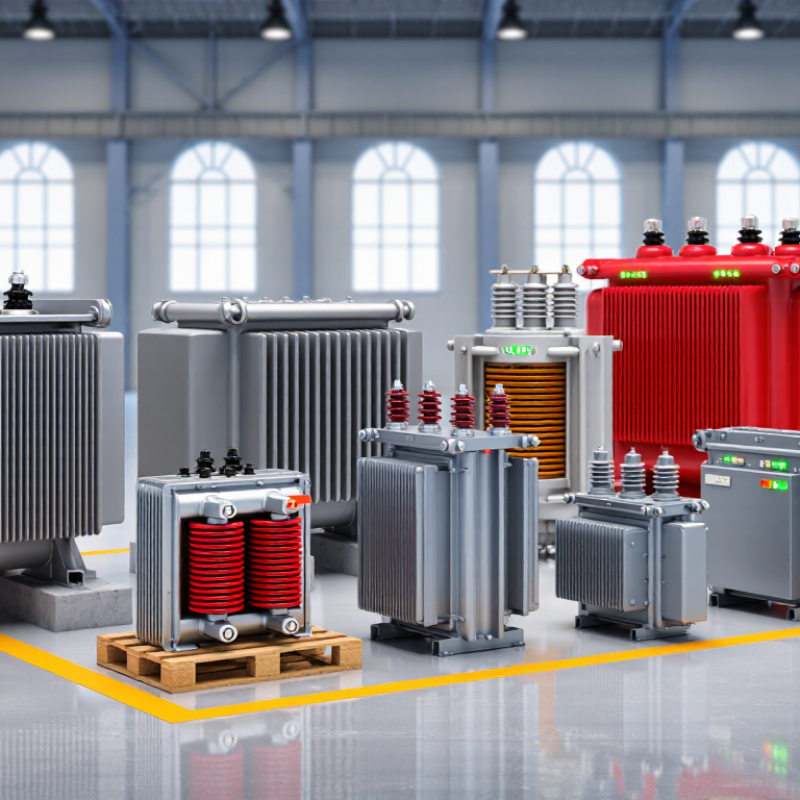
This guide explores 10 Types Of Transformers that global buyers may encounter, including power, distribution, isolation, autotransformers, and dry-type and oil-immersed units. It also considers instrument, rectifier, furnace, and traction transformers, where specialized duties shape the design. A compact dry-type unit may suit an indoor commercial building, while a large oil-immersed transformer may better fit a utility substation. The right choice is rarely decided by price alone. Cooling method, efficiency, maintenance access, and compatibility with the local grid all deserve attention.
No shortlist is perfect. Project details can change the ranking, and a familiar specification may still hide a mismatch. Buyers should compare verified nameplate data, test documentation, warranty terms, and the supplier’s service capability. Ask how the unit will behave under actual load, not only under ideal conditions. A careful review takes time. But it can prevent costly surprises after delivery.
Transformer Fundamentals and How Types Are Classified
A transformer transfers electrical energy between circuits through changing magnetic flux. Alternating current in the primary winding creates a changing magnetic field in the core. This field induces voltage in the secondary winding, usually without a direct electrical connection. In an ideal unit, the turns ratio predicts the voltage ratio. Real units differ because winding resistance, leakage flux, and core losses affect performance. Small details matter. Laminated steel cores help limit eddy-current heating at utility frequencies, while ferrite is common in many higher-frequency designs.
Transformer types are classified by several features, not by one universal ranking. Power and distribution transformers serve different roles in electrical networks; instrument transformers provide scaled signals for measurement and protection. Core-type and shell-type describe internal construction, while single-phase and three-phase identify the supply configuration. Cooling methods, insulation, and installation location offer further distinctions. Buyers can check the nameplate for rated power, voltage, frequency, and temperature limits. A unit rated for 50 Hz may not perform as expected on a 60 Hz supply. Classification is useful, but labels alone can hide important design differences. A site’s load pattern and ambient heat deserve equal attention.
Power, Distribution, and Autotransformers for Grid Networks
Power transformers move large amounts of energy between transmission voltage levels, often at substations. Their ratings must match expected load, cooling conditions, and future demand. A unit that looks adequate on a nameplate may run hot during long summer peaks. That matters. Check load profiles and site temperature, not just peak capacity.
Distribution transformers step voltage down for local feeders, commercial sites, and buildings. Placement affects cable length, voltage drop, noise, and maintenance access. A compact unit beside a service road may be practical, but flood exposure or restricted airflow can change the decision. Autotransformers can be smaller and more economical when voltage ratios are close. However, their windings share an electrical connection, so they do not provide galvanic isolation. Grounding and fault studies are essential. Not always.
Tips: Compare load records, fault levels, cooling needs, and installation space before choosing. Confirm protection settings with a qualified engineer. Leave room for inspection and future upgrades; those details are easy to overlook.
Isolation, Instrument, and Control Transformers for Safe Operation
Safe operation begins with choosing a transformer for the actual task, not just its voltage rating. An isolation transformer separates primary and secondary circuits, which can reduce certain shock hazards and electrical noise. It does not make every connected circuit safe. Enclosure condition, grounding, overcurrent protection, and correct wiring still matter. Small details count.
Instrument transformers provide measurement signals for meters and protective relays. Current transformers scale high currents, while voltage transformers reduce system voltage for monitoring. Their ratios and accuracy classes should match the connected instruments and expected load. A current transformer’s secondary must not be left open while energized; dangerous voltage can develop. This point deserves careful attention during maintenance.
Control transformers supply steady, appropriately rated voltage to contactors, relays, and other control devices. Check the coil voltage and account for the brief inrush current when equipment starts. A unit that works on a bench may sag when several coils energize together. That can cause chatter or unreliable switching. In real installations, drawings may not reflect later changes, so verify terminal labels and circuit conditions before connecting equipment. Ask a qualified electrical professional to review protection and installation details when the application is uncertain.
Rectifier, Welding, Furnace, and Traction Transformers for Specialized Loads
Rectifier, welding, furnace, and traction transformers serve loads that ordinary distribution units may not handle well. Rectifier transformers feed converter systems, often using phase-shifted windings to limit harmonics. Welding transformers deliver low voltage and high current through rapidly changing duty cycles. Furnace transformers face intense thermal stress and fluctuating arc conditions. Traction transformers must cope with vibration, limited space, and sharp changes in demand. Each design involves trade-offs; a rugged unit may still be inefficient at light load.
Tips: Match the transformer to the load profile, not just its peak rating. Check harmonic levels, cooling needs, duty cycle, and expected overloads. Ask for operating data before specifying a unit. Estimates can miss real-world variation.
Installation details matter too. Rectifier systems may need careful coordination with converters and power-factor equipment. Welding setups benefit from short, correctly sized secondary connections to reduce voltage drop. Furnace applications need cooling and insulation suited to heat and contamination around the installation. For traction service, consider mechanical mounting and the full range of operating conditions. No single rating tells the whole story. Review measured load data where possible, then confirm assumptions with a qualified electrical engineer.
How Global Buyers Compare Ratings, Standards, and Applications
Global buyers should compare transformer ratings before comparing prices. A distribution unit rated in kVA may serve a building, while a large power transformer rated in MVA connects utility networks. Check primary and secondary voltage, frequency, impedance, cooling method, and permitted temperature rise. These details affect capacity, losses, and installation needs. Fit matters.
Standards are not interchangeable labels. Depending on the destination market and project specification, buyers may need to assess IEC or IEEE requirements, plus applicable certification and test documents. Confirm the exact standard edition and scope with the supplier and an independent technical reviewer. A certificate alone may not show whether the tested design matches the offered unit. This is an easy detail to miss.
Application changes the comparison. Dry-type transformers are often considered for indoor sites where fire risk and access matter; liquid-filled designs may suit outdoor substations with suitable containment and maintenance plans. Isolation transformers can support electrical separation, while instrument transformers help measure high-voltage circuits. For each option, compare load profile, ambient temperature, altitude, noise limits, footprint, and service access. A renewable-energy project may need different voltage and duty-cycle choices than a factory. I would not rank units by efficiency figures alone; test conditions and real operating hours matter, and the comparison can still be imperfect. Keep the assumptions visible.






