
English


Choosing the right Tube Bending Machine is not simply a matter of comparing price tags. Global buyers must match machine capacity to tube material, diameter, wall thickness, bend radius, and daily production volume. A stainless-steel handrail shop has different needs from an automotive supplier running repeated bends across multiple shifts. Small details matter: the space around the machine, tooling changeover time, control clarity, and access to service support can shape the real cost of ownership.
Tube-forming specialist Alex Morgan sums up a useful buying principle: “Judge a bending machine by the consistency of its finished parts, not its specification sheet alone.” That is a practical lens, though it should not replace machine trials or verified technical data. Ask suppliers how they measure repeatability, what tooling is included, and whether sample parts can be checked against your drawings. Watch for springback, surface marks, and fit at the bend—not just a machine’s advertised speed.
This guide compares seven options for buyers with different budgets and production goals. It considers bending capacity, control systems, setup needs, automation, support, and likely shop-floor fit. No single model suits every operation. A fast machine may be excessive for a small workshop; a lower-cost unit may require more operator attention than expected. The trade-offs deserve a close look. Because supplier specifications and regional service coverage can change, confirm current details before purchasing.
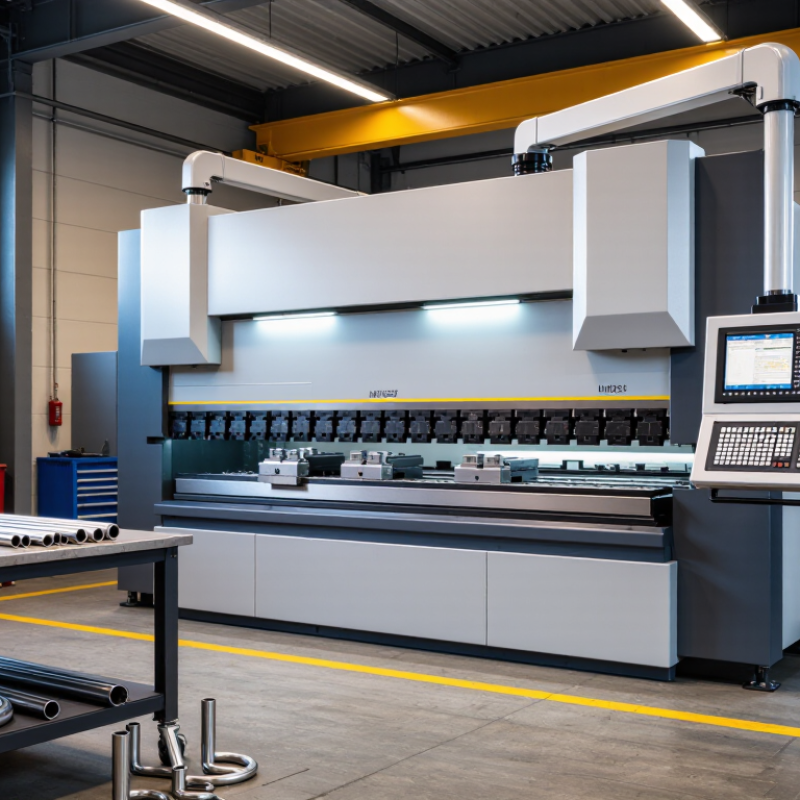
Tube bending machines differ mainly in how they form a curve and control the tube. Manual machines suit simple, low-volume work. Rotary-draw machines clamp the tube and pull it around a fixed-radius die, producing repeatable bends for frames and handrails. A mandrel inside the tube helps prevent wrinkles and flattening, especially on thin-wall material. Roll benders use several adjustable rollers to create large, gradual arcs. Compression benders press the tube against a form; they are straightforward but offer less control over distortion.
CNC describes the control system, not a separate bending method. It stores bend angles, feed lengths, and rotation settings, helping operators repeat complex parts. Setup still matters. Die clearance, material springback, and tube diameter can all change the finished angle. In practice, a few trial bends may still be needed. The International Federation of Robotics reported 4,281,585 industrial robots operating worldwide in 2023, up 10% year over year in World Robotics 2024. That figure signals wider factory automation, but it does not mean every shop needs a fully automated bender.
Tips: Match the machine to your tightest bend radius, tube wall thickness, and production volume. Check sample parts for ovality and wrinkles, not just angle accuracy. Keep a simple setup log; operators sometimes overlook springback changes between material batches.
QUICK LINKS
CONTACT US
Office: (+86) 755 23040566
Tel: (+86) 158 9965 5195
E-mail: sale@pcbledmodule.com
Skype: Hans@Rocket-PCB
Whatsapp: 86 1589965 5195
Office Address: 2207,Bid 4,He Gu Shan Hui Cheng,35#,Guang Tian RoYanluo street, Song Gang Town,518105 SHENZHENG, CHINA
Plant ADD.: No 69, Lianfeng North Road, Xianxi Area, ChangAn Town, Dongguan, China.


Copyright © 2025 Rocket PCB Solution Ltd. | All Rights Reserved Sitemap Friendship link: CNC machining heat sink

