

Choosing the China Best Thermal Break Aluminum System Windows requires more than comparing prices or polished catalog images. In real façade projects, performance depends on profiles, polyamide insulation strips, glass selection, hardware, and installation quality. A well-designed system can reduce heat transfer through the frame while improving indoor comfort near the window. However, no product is automatically the best for every building.
Experienced buyers should examine measurable evidence. Ask manufacturers for thermal transmittance results, air infiltration data, water resistance reports, and structural test records. Check whether testing followed recognized standards and whether the reported values match the proposed configuration. A sample corner joint can reveal more than a brochure. Look closely at gasket compression, drainage paths, screw placement, and the connection between the frame and wall.
China has many capable window manufacturers, but quality remains inconsistent. Some factories offer excellent extrusion control and reliable assembly; others depend heavily on manual adjustments. This difference matters. A strong profile may still perform poorly with weak seals or careless installation. Project teams should review factory experience, inspection procedures, coating quality, lead times, and after-sales support. Ask for finished samples, not only profile sections.
There is room for doubt. Laboratory results cannot fully predict every jobsite condition. Local climate, building orientation, glass shading, and installer skill can change outcomes. The most reliable choice combines verified data, practical inspection, and clear communication. When evaluating Thermal Break Aluminum System Windows from China, value should mean long-term performance, not the lowest initial quotation.
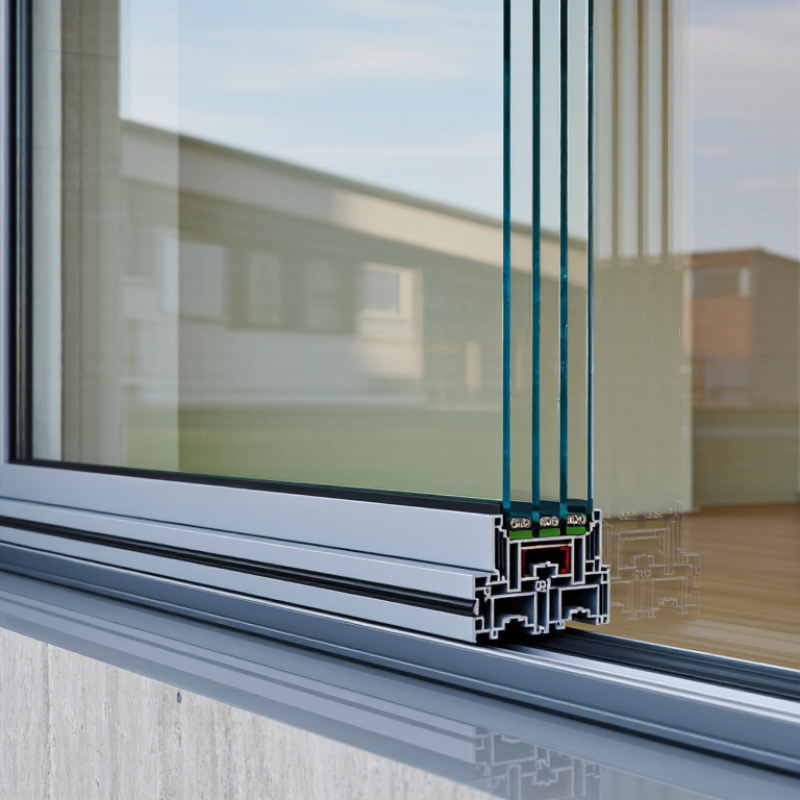
Thermal break aluminum system windows use a non-conductive barrier inside the frame. This barrier separates the exterior aluminum from the interior aluminum. Usually, the separator is made from reinforced polyamide. Aluminum remains strong outside, while indoor heat moves more slowly through the frame. The result is a warmer interior frame during winter and less heat entering during summer.
These windows are complete systems, not simple aluminum frames. The system may include profiles, insulated glass, gaskets, drainage channels, locks, and installation details. A reliable design manages heat transfer, air leakage, and rainwater together. Glass selection still matters greatly. A highly insulated frame cannot correct poorly specified glazing. Neither can it fix gaps around the opening.
The difference is easy to notice near a window. A standard metal frame may feel cold on a winter morning. A thermal break frame usually feels more stable. Condensation risk can also decrease, but it does not disappear. Indoor humidity, ventilation, glass temperature, and installation quality remain important. In practice, published U-values should be checked carefully because testing methods can differ. They are not magic. An overlooked gasket or weak corner joint may reduce real performance. For dependable results, review certified test data and inspect the installation details before choosing the system.
China Best Thermal Break Aluminum System Windows?
How Thermal Break Aluminum Windows Are Designed and Manufactured in China
Thermal break aluminum windows begin with a performance target, not a decorative profile. Engineers separate the exterior and interior aluminum sections with reinforced polyamide strips. This reduces conductive heat transfer through the frame. The International Energy Agency reports that buildings consume about 30% of global final energy. Window design therefore deserves serious attention. In China, engineers commonly use thermal simulation, CNC machining, and profile testing before mass production. The design should balance frame depth, glass thickness, drainage, and hardware load. More insulation is not always better.
Manufacturing quality depends on controlled details. Aluminum profiles are extruded, aged, cut, and assembled with thermal barriers. Knurling or mechanical crimping must hold the strips firmly. Factories then apply powder coating or anodizing after surface preparation. Air leakage, water resistance, wind pressure, and thermal performance require documented testing. ISO 10077-2 supports thermal transmittance calculations, while EN 14351-1 defines relevant window performance requirements. The U.S. Department of Energy estimates that windows can account for 25% to 30% of residential heating and cooling energy use. That figure is useful, but local climate and installation quality can change the result. A perfect window is unlikely.
Tips: Request full test reports, profile cross-sections, and installation drawings. Check the polyamide width, corner-joint method, gasket material, and drainage path. Ask whether testing used the final glass and hardware. Factory photos can mislead. Measured evidence matters more.
High-quality thermal break aluminum windows begin with measured thermal performance, not attractive frames. The U.S. Department of Energy reports that windows can represent 25–30% of residential heating and cooling energy use. A thermally separated frame reduces conductive heat flow through aluminum. Look for independently tested U-factors, not vague claims such as “energy saving.” Lower values usually indicate better insulation.
Air leakage deserves equal attention. The National Fenestration Rating Council evaluates U-factor, solar heat gain coefficient, visible transmittance, and air leakage through standardized procedures. A strong system should combine a low U-factor with controlled infiltration and reliable gaskets. On real projects, poor corner seals can undermine an otherwise advanced frame. Small gaps matter. Water resistance must also be verified under laboratory pressure testing, following applicable AAMA or EN standards.
Glass selection changes the result significantly. Low-emissivity coatings, warm-edge spacers, and insulated glazing can improve surface temperatures near the room edge. This helps reduce condensation risk during cold mornings. The U.S. DOE recommends considering climate, orientation, and solar heat gain rather than selecting insulation values alone. I would question any specification that gives only one number. Installation quality remains a weak point. Plumb frames, compressed seals, drainage paths, and correctly insulated perimeter joints are essential. Even excellent laboratory performance can decline on site.
| Performance Feature | Recommended High-Quality Target | Relevant Test or Standard | Why It Matters | Specification Checklist |
|---|---|---|---|---|
| Thermal Transmittance | Window U-value around 1.0–1.8 W/m²·K, depending on glazing, frame size, spacer, and climate. | ISO 10077-1/2, EN 14351-1, or NFRC 100. | A lower U-value means less heat flows through the complete window, improving indoor comfort and energy efficiency. | Request the tested or calculated whole-window U-value, not only the aluminum frame U-value. |
| Thermal Break Design | Continuous polyamide insulating strips, commonly 14–34 mm or more, selected according to structural and thermal requirements. | System design review and thermal calculations under applicable regional standards. | A properly designed thermal barrier reduces conductive heat transfer and limits interior surface condensation risk. | Check strip continuity, material compatibility, mechanical crimping, and insulation around corners and drainage zones. |
| Glazing Performance | Double or triple insulating glass with low-emissivity coating, inert-gas fill where specified, and a suitable warm-edge spacer. | EN 1279 series, ISO 20492, or ASTM E2190 for insulating glass units. | The glass area is often the largest part of a window; glazing selection strongly affects heat loss, solar gain, and condensation. | Confirm glass thickness, cavity width, coating position, gas-fill requirement, spacer type, and visible light transmittance. |
| Air Tightness | High-performance systems commonly target Class 3 or Class 4 under EN 12207, with Class 4 representing the highest classification. | EN 1026 and EN 12207; ASTM E283 may also be used. | Low air leakage reduces drafts, dust entry, energy loss, and the risk of moisture entering the frame system. | Ask for complete-window test results, including sash-to-frame seals, corners, hardware, and opening configuration. |
| Water Tightness | A practical target is at least Class 7A under EN 12208 for many exposed applications; higher classes may be appropriate for tall buildings or severe weather. | EN 1027 and EN 12208; ASTM E547 or ASTM E331 may also apply. | Adequate resistance helps prevent rain penetration at seals, joints, drainage paths, and pressure zones. | Review pressure level, test duration, drainage design, weep-hole protection, and the exact window configuration tested. |
| Wind Load Resistance | The required rating must be calculated from building height, exposure, location, opening size, and local wind code; many standard projects specify approximately 1.5–2.5 kPa design pressure. | EN 12210, EN 12211, ASTM E330, or the applicable national building code. | Correct structural performance limits deflection, glass stress, hardware damage, and long-term seal failure. | Verify mullion and transom calculations, maximum sash size, glass thickness, anchor spacing, and deflection limits. |
| Acoustic Insulation | Approximately 35–45 dB airborne sound reduction may be achievable with suitable laminated or asymmetric insulating glass and airtight seals. | ISO 10140 and ISO 717-1; ASTM E90 may also be used. | Higher sound insulation improves comfort near roads, airports, railways, and dense urban areas. | Specify the tested Rw or STC value for the complete window, including frame, glass, seals, and hardware. |
| Condensation Control | Aim for a high frame temperature factor and a low-temperature-factor design appropriate to the indoor humidity and local climate. | ISO 10077-2, ISO 13788, and local condensation assessment methods. | Warm interior surfaces reduce visible condensation, mold risk, and deterioration of adjacent finishes. | Check frame corners, glass edges, spacers, hardware zones, installation joints, and expected indoor relative humidity. |
| Frame Material and Finish | Aluminum profiles should use suitable alloy and temper, accurate extrusion tolerances, and a durable powder-coat or anodized finish. | AAMA 2603/2604/2605, Qualicoat, ISO 7599, or project-specific coating requirements. | Material and coating quality affect corrosion resistance, color stability, dimensional accuracy, and service life. | Confirm alloy, coating thickness, pretreatment, color tolerance, surface warranty, and coastal-environment suitability. |
| Seals and Gaskets | Multi-level EPDM or equivalent high-quality seals with continuous corners, correct compression, and UV-resistant formulation. | Product-system testing under the relevant air, water, wind, and durability standards. | Seals are essential for maintaining airtightness, watertightness, thermal performance, and acoustic insulation. | Inspect gasket joints, corner vulcanization or welding, compression settings, replacement availability, and compatibility with glazing. |
| Hardware Durability | Hardware should be sized for sash weight and tested for repeated operating cycles; corrosion-resistant components are recommended for humid or coastal conditions. | EN 1191, EN 12400, EN 13126 series, or applicable regional hardware standards. | Reliable hardware keeps the sash aligned and maintains seal compression throughout the product life. | Review cycle testing, load capacity, locking-point layout, corrosion grade, adjustment range, and spare-part availability. |
| Fabrication and Assembly Quality | Accurate corner joints, controlled drainage, consistent glazing blocks, correct sealant application, and documented quality inspections. | Factory quality procedures and complete-window performance testing. | Even a well-designed profile can perform poorly if cutting, crimping, sealing, glazing, or drainage is inconsistent. | Request inspection records, production drawings, sample approval, batch traceability, and pre-shipment checks. |
| Installation Performance | A continuous installation seal with correct structural fixing, drainage, insulation, and internal air-sealing layers. | Project installation specifications, ASTM E2112, EN монтаж requirements where applicable, and local building codes. | Poor installation can reduce air, water, thermal, and acoustic performance regardless of the window’s factory rating. | Define opening tolerances, fixing points, sill drainage, perimeter membranes, sealants, insulation, and site inspection procedures. |
| Documentation and Verification | Project-specific test reports, calculations, drawings, material certificates, installation instructions, and maintenance guidance. | Third-party laboratory testing and standards applicable to the destination market. | Independent evidence makes performance claims measurable and helps ensure that the tested product matches the supplied configuration. | Check report dates, specimen dimensions, opening type, glass build-up, test pressure, laboratory accreditation, and scope of application. |
Note: Actual performance depends on the complete window configuration, opening size, glazing, hardware, fabrication, installation, climate, and applicable building code. Values shown are practical specification targets rather than universal guarantees.
Choosing the best thermal break aluminum system windows from China requires more than comparing prices. Begin by checking the manufacturer’s technical experience, production controls, and project history. Ask how the thermal break is designed. Polyamide strips should fit tightly, with consistent crimping along the frame. Inspect a cut section, not only a polished showroom sample.
Request verified test reports for U-value, air permeability, water tightness, and wind resistance. Confirm the testing laboratory, report date, window configuration, and applicable standard. A report for one small window may not represent a large sliding unit. This detail is often overlooked. Check whether the glass, hardware, gaskets, and drainage design match your project drawings.
Factory evaluation also matters. Review extrusion storage, powder coating thickness, assembly tolerances, and quality inspection records. Ask for sample windows installed in a mock-up wall. Watch for corner gaps, uneven seals, and difficult handle movement. I have learned that a perfect sample can still hide weak installation practices. The manufacturer should explain packaging, replacement parts, lead times, and after-sales procedures in writing. Clear answers are valuable. Still, no supplier is flawless; even experienced teams can miss a drainage detail or misread a specification. Independent inspection before shipment can expose these practical problems.
Where Thermal Break Aluminum System Windows Are Commonly Used
Thermal break aluminum system windows are widely used in homes, offices, schools, and public buildings. Their insulated frame reduces heat transfer between indoor and outdoor surfaces. This helps maintain steadier room temperatures during winter and summer. In cold regions, they can limit condensation around the inner frame. In hot climates, they reduce unwanted heat entering through the window structure.
High-rise apartments often use these windows because they support large glass areas and resist strong wind pressure. Office buildings benefit from their clean lines, durable frames, and improved energy performance. Hospitals and schools may also select them for quieter interiors. A classroom beside a busy road feels noticeably different when the window system limits outside noise. Coastal projects need careful hardware and finish selection because salt air can accelerate corrosion.
Renovation projects are another common application. Replacing old metal frames can improve comfort without changing the building’s appearance completely. However, thermal break windows are not a universal answer. Poor installation can create air leaks, water penetration, or uneven frame pressure. I have seen specifications focus heavily on frame performance while overlooking drainage and sealing details. That approach needs reconsideration. Correct glass selection, accurate site measurements, and trained installation often matter as much as the aluminum profile itself. Even a high-performing window can disappoint when surrounding walls remain poorly insulated.
Thermal break aluminum system windows are commonly selected for building applications that require improved insulation, reduced condensation risk, weather resistance, and large glazed openings. The comparative suitability score reflects typical project requirements rather than market share or company performance.
QUICK LINKS
CONTACT US
Office: (+86) 755 23040566
Tel: (+86) 158 9965 5195
E-mail: sale@pcbledmodule.com
Skype: Hans@Rocket-PCB
Whatsapp: 86 1589965 5195
Office Address: 2207,Bid 4,He Gu Shan Hui Cheng,35#,Guang Tian RoYanluo street, Song Gang Town,518105 SHENZHENG, CHINA
Plant ADD.: No 69, Lianfeng North Road, Xianxi Area, ChangAn Town, Dongguan, China.


Copyright © 2025 Rocket PCB Solution Ltd. | All Rights Reserved Sitemap Friendship link: CNC machining heat sink


