

Choosing the best Smart Water Flow Meter for 2026 is not simply a matter of picking the newest sensor. Global buyers must match meter performance to local pipe conditions, water quality, communications coverage, and maintenance capacity. A unit tested in a clean laboratory may behave differently in a hot pump room or a narrow rural main. Small details matter.
The need for better measurement is clear. The UN World Water Development Report 2024 estimates that agriculture accounts for about 70% of global freshwater withdrawals. WHO and UNICEF reported that 2.2 billion people lacked safely managed drinking water in 2022. These figures describe broader water challenges, not the market size for smart meters. Still, they underline why dependable flow data matters. Dutch water envoy Henk Ovink has expressed a useful principle: “Water is not a sector; water is a connector.” Smart metering can connect consumption readings with leak alerts and utility decisions, but it cannot repair a pipe by itself.
This guide compares practical options for international buyers, including ultrasonic and electromagnetic designs, accuracy claims, battery life, pressure limits, and data protocols. It also considers installation access and after-sales support. A wireless feature is not valuable if a site has poor signal. And a low purchase price can become costly when calibration or replacement parts are difficult to obtain. There is no universal winner. The right Smart Water Flow Meter depends on the job, and product specifications deserve careful checking against field requirements.
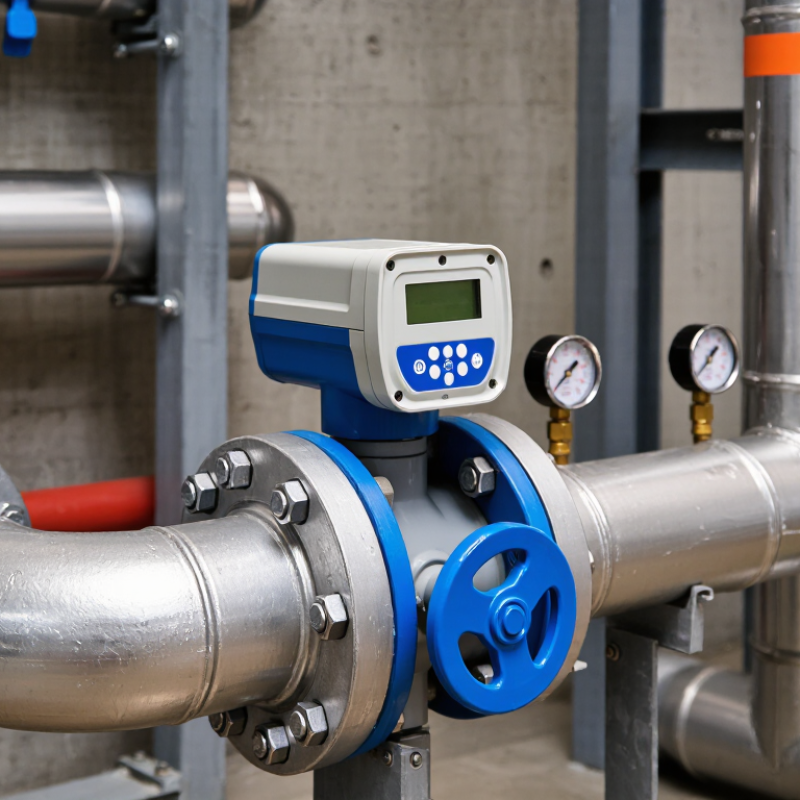
A smart water flow meter measures the volume of water passing through a pipe and converts it into usage data. Mechanical meters count turbine or piston movement. Ultrasonic models compare sound-pulse travel times through the water, while electromagnetic models measure voltage produced by moving conductive water. The method varies by meter design, pipe size, and installation conditions.
Many smart meters record readings at regular intervals and send them through radio or cellular networks. Users can view hourly patterns, overnight flow, or unusual continuous use. Small changes become visible. The U.S. EPA WaterSense program estimates that household leaks waste nearly 900 billion gallons of water annually nationwide, or about 10,000 gallons per household with leaks. This puts small, persistent drips in perspective.
Flow data is not magic. A meter measures water moving past its sensor; it cannot identify a leaking toilet by itself. Incorrect sizing, air in the line, or poor installation can affect readings. A steady overnight flow may suggest a leak, but someone still needs to check fixtures and site conditions. Not a diagnosis.
A smart water flow meter measures water moving through a pipe and accumulates the volume used. Depending on its design, it can send readings electronically for monitoring. This chart shows the exact unit conversion between flow rate in liters per minute and cubic meters per hour: 1 m³/h equals 16.667 L/min. It illustrates unit conversion, not readings from a specific meter or household.
Choosing a smart water flow meter starts with the pipe, not the dashboard. Mechanical positive-displacement meters suit smaller service lines and intermittent demand. Ultrasonic meters have no moving parts, while electromagnetic models suit full pipes carrying conductive water. Fit matters. Air bubbles, pipe vibration, and inadequate straight-run lengths can weaken readings. Pressure and temperature sensors add useful context when investigating bursts or unusual operating conditions. More sensors also mean more maintenance.
Connectivity should match site coverage, power limits, and reporting needs. LoRaWAN can connect distributed meters across a district; NB-IoT or LTE-M may simplify cellular reporting where coverage exists. Local optical or wired interfaces remain useful during commissioning.
The World Bank’s 2006 non-revenue-water report estimated 45 million cubic meters of daily water losses worldwide. That is an old estimate, not a current benchmark. UNESCO’s 2024 World Water Development Report states that 2.2 billion people lacked safely managed drinking water in 2022.
Reliable measurement matters, but a meter alone cannot repair a network. One uncomfortable detail: telemetry can look convincing before calibration and field checks are complete.
A smart water flow meter should be judged by how it performs in the buyer’s actual system, not by one accuracy figure on a sales sheet. Check the stated accuracy across the expected flow range, especially at low overnight flow. Ask whether testing includes the meter size, pipe position, and water conditions you expect. A reading can look precise and still drift after poor installation. Small details matter.
Durability deserves the same scrutiny. Compare wetted materials with the water’s mineral content and operating temperature. Review pressure limits, enclosure protection, and resistance to vibration or condensation. For outdoor sites, inspect the cable entry and display seal; these are easy places for trouble to begin. Ask about service intervals and replacement parts, too. A sturdy housing is not the whole story.
Data features should fit the way your team works. Check whether readings are stored locally during network outages, and how often data can be exported. Confirm that the interface works with your existing monitoring system, rather than assuming every connection is simple. Also review user access controls and data retention options. If possible, test a sample meter for several weeks under normal conditions. I would not rely on a short demonstration alone; it may miss slow leaks, signal gaps, or awkward reports.
Global Standards, Installation Needs, and Ongoing Maintenance
A smart water flow meter must fit both the pipe and the market where it will operate. Requirements for metrology, electrical safety, radio communication, and drinking-water contact materials can differ by destination. Ask for current test reports and installation documents for the exact model, not just a general product sheet. “Smart” does not automatically mean compliant. Small details matter.
Before installation, check pipe diameter, expected flow range, pressure, temperature, and the meter’s permitted orientation. Follow the manufacturer’s required straight-pipe lengths; nearby pumps, elbows, and valves can disturb readings. Leave enough room to isolate and remove the meter for service. For wireless models, test signal strength at the planned location, especially behind concrete walls or inside utility cabinets. After commissioning, compare readings with a suitable reference method and record the baseline. A meter can be accurate on paper yet perform poorly when it is oversized or badly positioned.
Tips: Inspect joints for leaks, clean strainers as specified, and check batteries or power connections during routine visits. Keep a simple log of readings, alarms, and service dates. If values drift, investigate deposits, air, and changed operating conditions before assuming the sensor has failed. Some checks take time. Don’t open sealed components unless the service instructions permit it.
A smart water flow meter should fit the actual duty, not just the pipe diameter. Identify minimum, normal, and peak flow rates, then compare them with the meter’s measuring range and stated accuracy. Check low-flow accuracy. An oversized unit may miss nighttime leakage. An undersized one can cause excessive pressure loss at peak demand. Also confirm water temperature, operating pressure, and whether sediment or bubbles are present.
Installation details matter just as much. Measure the straight-pipe lengths available before and after the sensor, and check whether the line stays full. Some technologies need a specific orientation or cleaner pipe conditions. Sites are rarely tidy. Leave space for valves, wiring, and maintenance, especially in cramped plant rooms. For a retrofit, verify connection type and pressure rating before ordering.
Choose communications to match the task. A local display supports quick checks; pulse output can serve simple controls, while a compatible network protocol enables remote monitoring. Ask how often readings are sent, what happens during outages, and whether data can be exported without extra service fees. Review calibration records, warranty terms, and measurement approvals for the destination market. A polished dashboard cannot fix poor sensor placement. Compare installation and upkeep costs as well as purchase price; quoted assumptions may need checking against the site.
| Selection factor | Electromagnetic | Ultrasonic | Turbine | Positive displacement |
|---|---|---|---|---|
| How it measures | Uses electromagnetic induction to measure the velocity of a conductive liquid. | Uses sound-wave transit time or Doppler shift; the suitable method depends on the liquid and meter design. | A flowing liquid turns a rotor; rotor speed is related to flow rate. | Measures liquid in repeated, defined chambers as internal elements move. |
| Best-fit applications | Conductive water in distribution, wastewater, process lines, and irrigation. | Clean-water lines, monitoring where a non-invasive clamp-on installation is useful, and some applications with suspended material when the meter supports Doppler measurement. | Relatively clean, low-viscosity water where a compact meter and suitable flow conditions are available. | Small flows, service connections, and applications where measuring lower flow rates is important. |
| Liquid requirements | The liquid must have sufficient electrical conductivity. Check the meter’s minimum conductivity and material compatibility. | Transit-time meters generally work best with liquids that transmit sound reliably. Bubbles, solids, pipe lining, and pipe condition can affect readings. | Particles and debris can affect the rotor and measurement. Confirm the permitted liquid condition and filtration requirements. | Liquid cleanliness and viscosity can affect performance; check the design’s limits for solids and fluid properties. |
| Moving parts | No moving parts in the measuring tube. | No moving parts in the measurement path; clamp-on versions mount outside the pipe. | Has a moving rotor, which can wear or be affected by debris over time. | Has moving internal elements and chambers. |
| Pressure loss | Typically very low because the measuring tube has no obstruction in the flow path. | Typically very low; clamp-on meters do not obstruct the pipe. | Flow passes through the rotor, so pressure loss may occur; consult the product’s pressure-drop data. | Internal measuring elements can create pressure loss; verify the manufacturer’s data for the selected size and flow. |
| Installation considerations | Requires a correctly grounded installation and suitable full-pipe conditions. Check straight-run and orientation requirements. | Clamp-on installation requires suitable access, pipe material, pipe dimensions, and surface condition. In-line designs have their own installation requirements. | Follow the specified flow direction, orientation, and straight-run requirements; protect the meter from unsuitable debris. | Check flow direction, orientation, operating pressure, and the required installation position. |
| Maintenance considerations | Inspect electrodes and liners where liquid deposits or corrosion may be an issue. | Clamp-on units avoid wetted sensor maintenance, but coupling, alignment, and pipe data still need attention. In-line units require model-specific checks. | Rotor condition and cleanliness may require inspection, particularly where water contains particles. | Internal moving components may require inspection or servicing according to water quality and operating conditions. |
| Smart data and integration | Depending on the model, outputs may include pulse, analog, or digital communications. | Depending on the model, outputs may include pulse, analog, or digital communications; clamp-on capability does not guarantee a particular protocol. | May provide pulse or other outputs, depending on the meter and transmitter configuration. | May provide pulse or other outputs, depending on the meter and transmitter configuration. |
| What to confirm before purchase | Conductivity, pipe size, liner and electrode materials, flow range, pressure rating, accuracy conditions, and required outputs. | Measurement method, pipe material and dimensions, liquid condition, installation access, flow range, accuracy conditions, and required outputs. | Minimum and maximum flow, water cleanliness, pressure loss, installation requirements, wear expectations, and output options. | Minimum flow, liquid cleanliness and viscosity, pressure loss, pressure rating, service needs, and output options. |
Buyer note: “Smart” describes data, communication, and monitoring capabilities—not a single flow-measurement principle. Confirm the required protocol, power supply, environmental rating, approvals, and local installation requirements for the exact model. Performance depends on the meter design, size, installation, and operating conditions.
QUICK LINKS
CONTACT US
Office: (+86) 755 23040566
Tel: (+86) 158 9965 5195
E-mail: sale@pcbledmodule.com
Skype: Hans@Rocket-PCB
Whatsapp: 86 1589965 5195
Office Address: 2207,Bid 4,He Gu Shan Hui Cheng,35#,Guang Tian RoYanluo street, Song Gang Town,518105 SHENZHENG, CHINA
Plant ADD.: No 69, Lianfeng North Road, Xianxi Area, ChangAn Town, Dongguan, China.


Copyright © 2025 Rocket PCB Solution Ltd. | All Rights Reserved Sitemap Friendship link: CNC machining heat sink


