

China’s Plate Heat Press market deserves careful evaluation, not a quick ranking. A polished catalog cannot show whether a platen heats evenly, holds pressure, or stays stable through a full production shift. Buyers should examine temperature consistency, frame rigidity, controller accuracy, safety features, spare-part access, and documented quality checks. Small details matter: a cold platen edge can leave a pale patch on a shirt, while uneven pressure may weaken a transfer.
The National Bureau of Statistics of China reported that manufacturing value added grew 5.0% in 2023. That figure describes the wider manufacturing sector, not plate heat presses alone. Grand View Research’s heat-press market coverage also offers broader market context, but such reports do not always separate plate models from other press types. The data helps frame the market. It does not prove that any individual factory is reliable.
Quality-management expert W. Edwards Deming is widely associated with the principle, “Quality is everyone’s responsibility.” For plate heat press buyers, that means checking more than the final machine: ask how suppliers test platen temperature, verify pressure, inspect wiring, and record defects. A factory tour or sample run can reveal more than a sales sheet. Imperfection is part of real production; the important question is how consistently a manufacturer finds and corrects it. This guide compares Chinese manufacturers through practical evidence, while recognizing that specifications and service quality can vary between models.
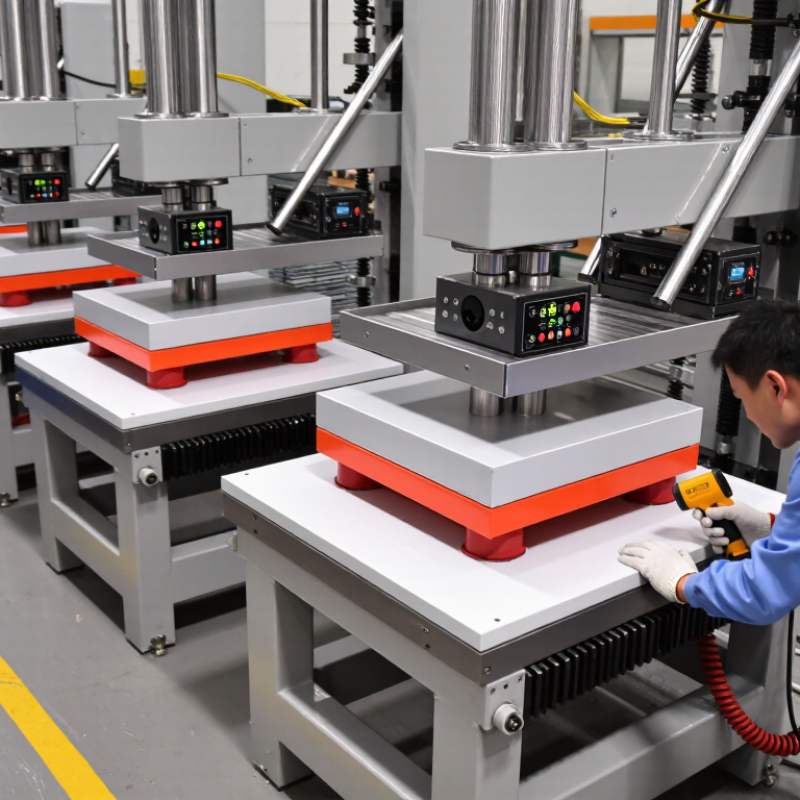
A plate heat press uses a flat, heated surface to transfer a design onto a compatible item. The operator places transfer paper and the material between the press’s platens. Heat softens or activates the transfer layer, while pressure keeps it in contact with the surface. A timer controls how long the material stays under heat. Pressure matters, too.
For sublimation, heat turns special ink into gas, allowing it to bond with polyester-coated or polyester-based surfaces. Other transfer materials need different temperature and timing settings. These values depend on the material and transfer supplier’s instructions, so one setting will not suit every job. The process sounds simple, but small test pieces can reveal uneven heating or poor contact before a full run.
Tips: Check the platen with a temperature tool if results vary across its surface. Use a pressing pad when seams or raised edges prevent even contact. Let the item cool as directed before checking the transfer. Keep hands clear of hot surfaces, and avoid guessing at settings. A slightly wrinkled test print can be useful feedback; it may show that pressure or placement needs adjustment.
A reliable plate heat press manufacturer should provide test evidence, not just catalogue claims. Ask for temperature uniformity measurements across the platen, pressure repeatability records, and calibration dates. A hot center with cool corners can leave uneven transfers. Check how the factory tests machines under repeated production cycles, and whether it documents electrical safety checks and component traceability.
NIST’s FY2023 Manufacturing Extension Partnership client impact report recorded $1.6 billion in cost savings among participating manufacturers. This is not a heat-press benchmark, but it underlines why disciplined production processes matter.
Tips: Request a sample test report for the exact platen size you plan to buy. Confirm spare-part availability, warranty terms, and response times in writing. Look closely at the pressure adjustment; it should move smoothly, not jump between settings.
A fair comparison weighs performance, service, and consistency together. Ask how operators verify temperature and pressure during assembly, and how failed units are handled. Review the manual for clear setup steps, maintenance intervals, and troubleshooting guidance. If possible, inspect a running unit and press the same test material several times. Record the results. One demonstration is not enough. No scorecard is perfect, and a polished factory tour can still hide weak after-sales support. Check references from buyers with similar workloads, while remembering that their operating conditions may differ from yours.
China’s plate heat press leaders are better identified by manufacturing discipline than by catalogue size. Look for suppliers that machine their own platens, document heating tests, and can explain how pressure is kept even across the working surface. Consistency matters. A useful check is to compare temperature readings at several points after the press has warmed up. Ask for evidence, not just a claimed maximum temperature.
Reliable manufacturers also make routine maintenance practical. Clear wiring diagrams, replaceable heating elements, and accessible spare parts can reduce downtime when a unit is used daily. Before choosing a supplier, review inspection records and ask how each press is tested before shipment. Request a sample test using the plate size and material you expect to process. Small differences in coating, thickness, or fit can affect results. That detail is easy to overlook.
There is no single public ranking that proves which Chinese producer leads this market, and export volume alone is an imperfect measure. A technically capable factory may still communicate slowly or provide uneven after-sales support. Compare response times, warranty terms, and the detail in written specifications. A cautious evaluation takes longer, but it reveals more than a polished brochure.
Brand-neutral comparison guide: there is no reliable, publicly comparable dataset here to support a factual ranking of Chinese manufacturers. Compare suppliers using verifiable machine specifications, documentation, and service commitments.
| Comparison dimension | Factual comparison point | What to verify with the supplier | Why it matters |
|---|---|---|---|
| Pressing mechanism | Plate presses may use manual, pneumatic, or hydraulic actuation. | Machine type, required utilities, pressure-adjustment method, and operating instructions. | The mechanism affects operation, installation requirements, and suitability for the intended workload. |
| Heated platen | Platen dimensions, heating layout, and temperature uniformity are machine-specific specifications. | Usable platen size, temperature range, and any documented temperature-uniformity test method or results. | The platen must fit the workpiece, and consistent heat is important for repeatable transfer results. |
| Temperature control | Controllers can display and regulate set temperature; controller features vary by model. | Controller model, calibration procedure, temperature display units, and over-temperature protection details. | Clear controls and documented calibration support consistent operation and troubleshooting. |
| Pressure adjustment | Pressure settings and adjustment methods depend on the press design; a displayed setting is not a universal pressure measurement. | Adjustment instructions, repeatability information, and whether pressure is measured or only mechanically adjusted. | Accurate interpretation of pressure settings helps operators reproduce process conditions. |
| Electrical and safety documentation | Electrical requirements and applicable conformity documentation depend on the model and destination market. | Rated voltage, frequency, power, wiring diagram, user manual, and certificates or declarations applicable to the exact model. | These details help confirm installation compatibility and support required compliance checks. |
| Build and inspection records | Frame construction, component selection, and inspection procedures differ among models and suppliers. | Material and component specifications, inspection checklist, and a test record for the unit being supplied. | Documented checks provide more useful evidence than general quality claims. |
| Spare parts and after-sales support | Warranty terms, spare-part availability, and technical support arrangements are supplier-specific. | Written warranty coverage, parts list, support channels, and stated response or delivery arrangements. | Clear support terms help assess serviceability over the machine’s working life. |
Chinese plate heat press manufacturers typically offer manual and pneumatic machines for transferring designs onto flat or gently curved blanks. Common features include interchangeable platens, adjustable pressure, and digital temperature and timer controls. These presses serve coated ceramic plates, metal plaques, souvenir pieces, and personalized home décor. Small print shops use them for short runs; promotional suppliers use them for event gifts and branded tableware.
The application depends on the blank’s coating, diameter, and rim shape. A plate may look flat but still need a matching platen to avoid uneven pressure near its edge. Fit matters. Operators commonly test transfer settings on spare blanks before production, since excess heat can dull colors or damage coatings. Grand View Research estimated the global digital printing market at USD 34.3 billion in 2023 and forecast 6.2% annual growth from 2024 to 2030. This broader market figure signals expanding demand for customized print products, but it does not measure plate presses alone. Buyers should compare usable platen sizes, pressure consistency, and service support, not just advertised output speed.
A representative capability map of common heat-press formats and the flat items they are typically used to decorate. A value of 1 indicates a common application fit; 0 indicates it is not a typical fit. This is not a manufacturer ranking or market-share data.
Choosing a suitable Chinese plate heat press supplier starts with the product, not the sales pitch. Share your plate size, target temperature, pressure needs, and expected daily output. Ask for a specification sheet showing heating range, temperature control method, platen material, and electrical requirements. A clear answer is useful. Vague claims are not. Request a sample or a live demonstration, and check whether heat spreads evenly across the plate. A simple test with temperature strips can reveal cold edges that a glossy product photo will not show.
Tips: Confirm lead time, spare-part availability, packaging, and warranty terms in writing. Ask how the supplier handles faults after delivery. Keep emails and approved drawings together; they help prevent mismatched expectations. If possible, inspect the factory or arrange a third-party quality check before shipment.
Compare suppliers against the same checklist. Look for consistent inspection records, clear operating instructions, and responsive technical support. Ask for references from buyers with similar production needs, while recognizing that references cannot guarantee your own results. Cost matters, but an unusually low quote may exclude useful items such as replacement heaters or safety features. The selection process is not perfectly predictable; even a careful review can miss a detail. Pay attention to how quickly the supplier addresses specific questions. That response often says more than a polished catalog.
QUICK LINKS
CONTACT US
Office: (+86) 755 23040566
Tel: (+86) 158 9965 5195
E-mail: sale@pcbledmodule.com
Skype: Hans@Rocket-PCB
Whatsapp: 86 1589965 5195
Office Address: 2207,Bid 4,He Gu Shan Hui Cheng,35#,Guang Tian RoYanluo street, Song Gang Town,518105 SHENZHENG, CHINA
Plant ADD.: No 69, Lianfeng North Road, Xianxi Area, ChangAn Town, Dongguan, China.


Copyright © 2025 Rocket PCB Solution Ltd. | All Rights Reserved Sitemap Friendship link: CNC machining heat sink


