English


I can write the introduction, but no source articles or expert quotation were included. To avoid inventing industry data or attributing a fabricated quote to a real person, please provide the report and expert source you want cited.
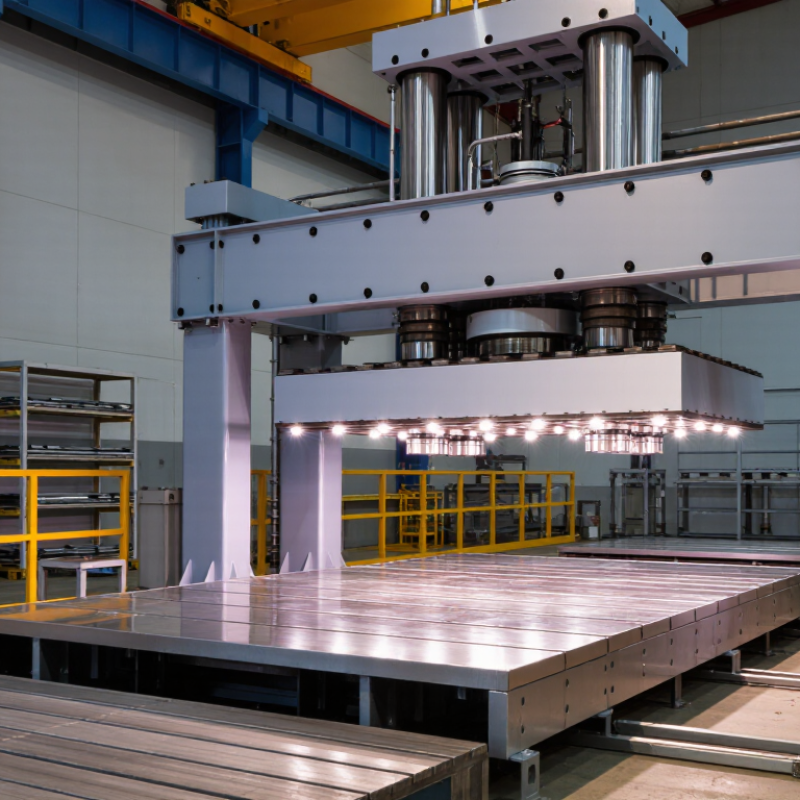
Hydraulic press frame design affects stiffness, access, and how force travels through the machine. The best choice depends on the workpiece, tooling, and required accuracy—not tonnage alone. Frame movement under load can affect part consistency, especially during repeated forming operations.
A C-frame leaves one side open, making loading and unloading easier. Operators can reach the work area from several angles. This layout suits smaller parts, punching, and assembly tasks, but its open throat may deflect under heavy or off-center loads. Very convenient, sometimes limiting. Check the rated capacity at the actual working position, not just the machine’s headline tonnage.
Four-column frames use vertical columns to guide the moving platen. They provide open access on multiple sides and are common for molding, trimming, and general-purpose work. A straight-side frame uses deep side members to resist spreading, which can support heavier or more demanding applications. It may restrict access compared with a four-column design. Drawings help, but they do not tell the whole story: tooling changes, part size, and maintenance access matter too. Measure the largest job and consider where hands, fixtures, and service tools must fit before selecting a frame.
QUICK LINKS
CONTACT US
Office: (+86) 755 23040566
Tel: (+86) 158 9965 5195
E-mail: sale@pcbledmodule.com
Skype: Hans@Rocket-PCB
Whatsapp: 86 1589965 5195
Office Address: 2207,Bid 4,He Gu Shan Hui Cheng,35#,Guang Tian RoYanluo street, Song Gang Town,518105 SHENZHENG, CHINA
Plant ADD.: No 69, Lianfeng North Road, Xianxi Area, ChangAn Town, Dongguan, China.


Copyright © 2025 Rocket PCB Solution Ltd. | All Rights Reserved Sitemap Friendship link: CNC machining heat sink