English


Choosing Dirt Tires for a ride is less about aggressive looks than about how the ground behaves under your wheels. Hard-packed trails, loose gravel, wet clay, and deep sand each place different demands on tread and tire construction. A pattern that grips well in soft soil may feel slow or vague on firm ground. Small details matter.
This guide compares common tire types by terrain, explaining how tread spacing, knob shape, rubber compound, and casing affect traction and control. Closely spaced knobs can roll smoothly on compact surfaces, while wider gaps help shed mud and bite into loose dirt. Sand often calls for a broader footprint and a tread that floats rather than digs too deeply. Wet roots and slick clay bring different challenges again.
It depends.
Terrain is rarely consistent from one mile to the next. A dry trail can hide damp patches beneath trees, and gravel can conceal sharp stones. Tire pressure, rider weight, bike setup, and riding style also change how a tire performs. Manufacturer guidance is a useful starting point, but specifications alone cannot promise the same feel on every trail. That matters.
The sections ahead will help match tire features to riding conditions and explain the trade-offs behind each choice. No single tire suits every surface. The goal is a practical fit for the terrain you ride most, with enough flexibility for the surprises along the way.
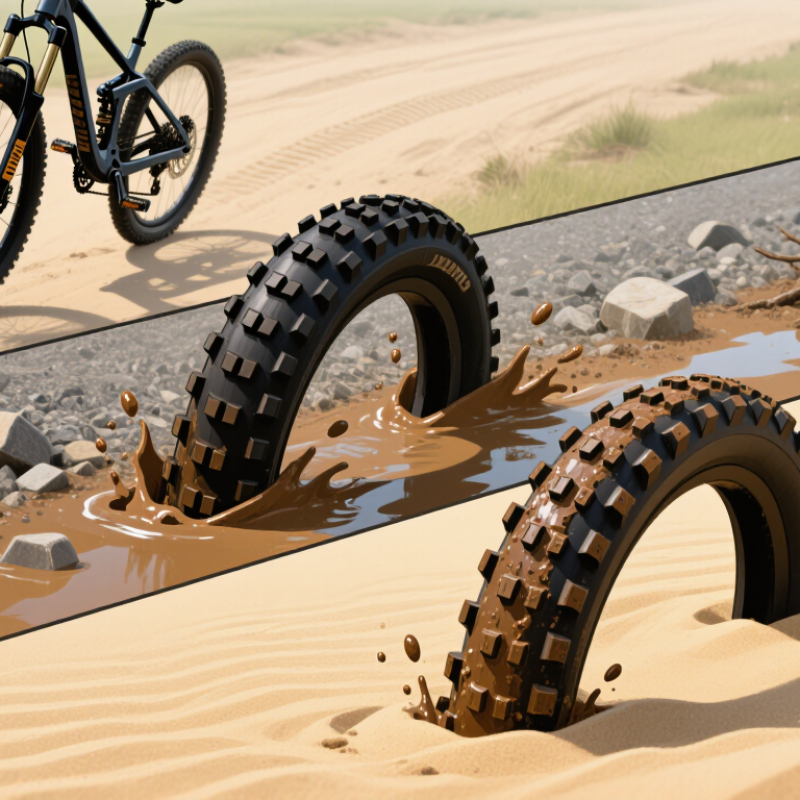
Dirt tires are shaped around the ground they need to grip, shed, or roll across. Their tread pattern, knob height, rubber flexibility, and internal construction all affect how they behave. On firm, dry trails, shorter knobs with closely spaced blocks can provide a steady contact patch and predictable cornering. Tall, widely spaced knobs can dig into soft soil and clear mud as the wheel turns. The trade-off is real.
Sand calls for a different balance. Wider tread and supportive shoulders help a tire float and hold a line, while overly aggressive knobs may feel vague on loose, deep sections. Rocky trails put more demand on casing strength and rubber grip. A flexible tread can conform to small edges, but it may wear faster on abrasive ground. Not always.
Tire choice also depends on speed, rider weight, bike setup, and how wet the trail is that day. A pattern that hooks up in damp clay may skate across baked dirt. Tire pressure matters, too: too high can reduce grip over roots, while too low risks rim impacts or unstable handling. Small adjustments can change the feel noticeably. I’d treat tread descriptions as a starting point, then assess traction, wear, and steering on familiar ground. Even experienced riders sometimes choose a tire for one terrain and find it compromises another.
QUICK LINKS
CONTACT US
Office: (+86) 755 23040566
Tel: (+86) 158 9965 5195
E-mail: sale@pcbledmodule.com
Skype: Hans@Rocket-PCB
Whatsapp: 86 1589965 5195
Office Address: 2207,Bid 4,He Gu Shan Hui Cheng,35#,Guang Tian RoYanluo street, Song Gang Town,518105 SHENZHENG, CHINA
Plant ADD.: No 69, Lianfeng North Road, Xianxi Area, ChangAn Town, Dongguan, China.


Copyright © 2025 Rocket PCB Solution Ltd. | All Rights Reserved Sitemap Friendship link: CNC machining heat sink