
English


Choosing a motor supplier is rarely just a price comparison. Global buyers must assess performance, production capacity, documentation, and support after delivery. A Complete Motor should match its intended duty, not merely its catalog description. A pump drive, conveyor system, and precision machine place different demands on a motor.
Henry Ford, the automotive and manufacturing pioneer, is widely associated with the reminder, “Quality means doing it right when no one is looking.” That principle matters when buyers compare manufacturers. Check how each company verifies winding quality, insulation, balancing, and operating performance. Ask for test reports, clear specifications, and realistic lead times. Small details count. A shaft tolerance or enclosure rating can affect installation and service life.
This guide examines ten manufacturers through practical questions: What motor types do they produce? Can they adapt designs to regional power requirements? Do they offer traceable quality processes and responsive technical support? Product pages do not always answer these questions. That is a limitation worth acknowledging. Buyers should confirm critical claims directly and request evidence before placing large orders. The strongest supplier is not automatically the largest or cheapest. It is the one whose capabilities, communication, and documented performance fit the application. A careful comparison can reduce surprises, though no shortlist replaces engineering review.
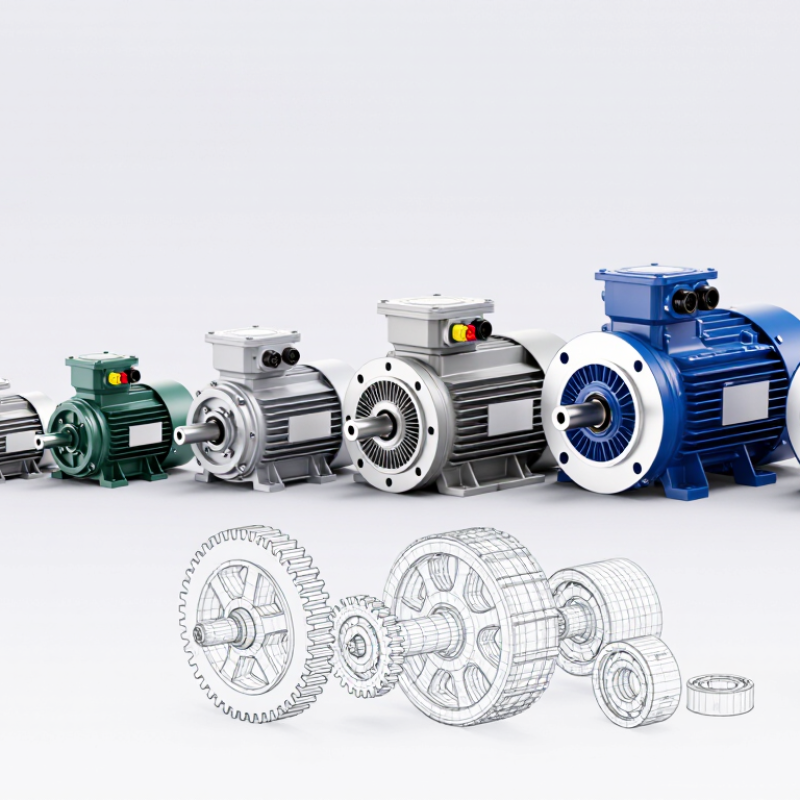
A complete motor manufacturer does more than assemble a motor from purchased parts. It should control or document key stages, including electromagnetic design, core processing, winding, insulation, balancing, and final testing. Buyers can ask who makes the rotor and stator, how winding quality is checked, and whether test records identify each unit. A polished catalogue is not proof of production capability. Details matter.
Testing is a practical dividing line. A capable supplier should explain how it verifies output, temperature rise, vibration, noise, and efficiency under stated conditions. IEC 60034-30-1 defines efficiency classes for many line-operated AC motors; it does not certify a factory’s overall quality. The U.S. Department of Energy’s 2014 motor-system sourcebook estimates that motor-driven systems account for about 68% of electricity use in U.S. manufacturing. That makes efficiency evidence commercially important, not merely technical paperwork.
Global buyers should also look for traceability, engineering support, spare-parts planning, and clear warranty terms. Ask for sample test reports and confirm that ratings match the intended voltage, duty cycle, mounting, and operating environment. No checklist is perfect. A factory visit can reveal winding benches, balancing equipment, and test bays, but one visit cannot establish long-term reliability. Judge claims against records, repeatable processes, and support after shipment.
QUICK LINKS
CONTACT US
Office: (+86) 755 23040566
Tel: (+86) 158 9965 5195
E-mail: sale@pcbledmodule.com
Skype: Hans@Rocket-PCB
Whatsapp: 86 1589965 5195
Office Address: 2207,Bid 4,He Gu Shan Hui Cheng,35#,Guang Tian RoYanluo street, Song Gang Town,518105 SHENZHENG, CHINA
Plant ADD.: No 69, Lianfeng North Road, Xianxi Area, ChangAn Town, Dongguan, China.


Copyright © 2025 Rocket PCB Solution Ltd. | All Rights Reserved Sitemap Friendship link: CNC machining heat sink