
English


The best cold brew setup is not always the biggest, sleekest, or most expensive. It is the one that fits your counter, your routine, and the coffee you actually enjoy. Coffee educator James Hoffmann is often credited with the advice, “The best coffee is the coffee you enjoy.” That idea matters here: cold brew can taste mellow and chocolatey, but grind size, steep time, and dilution still shape every glass.
A good Cold Brew Coffee Maker should make those steps easy to repeat. Look for a secure lid, a filter that keeps fine grounds out of your drink, and a container that fits neatly in the refrigerator door. Picture a jar steeping overnight beside the milk, ready for a quick pour before work. Small details count. A narrow filter may be tricky to clean; a large pitcher may hog shelf space. And no maker can rescue stale beans. There is no magic button.
This guide compares cold brew makers for different kitchens, budgets, and brewing habits. We consider capacity, materials, cleanup, filtering, and ease of use—not just glossy product claims. Some models are simple jars; others offer built-in filters or concentrate-friendly designs. A compact brewer may suit one person, while a larger household may want several servings ready at once. Trade-offs are real, and preferences vary. The picks ahead aim to make those differences clear, so you can choose a brewer that suits your counter and your morning—not an imaginary perfect kitchen.
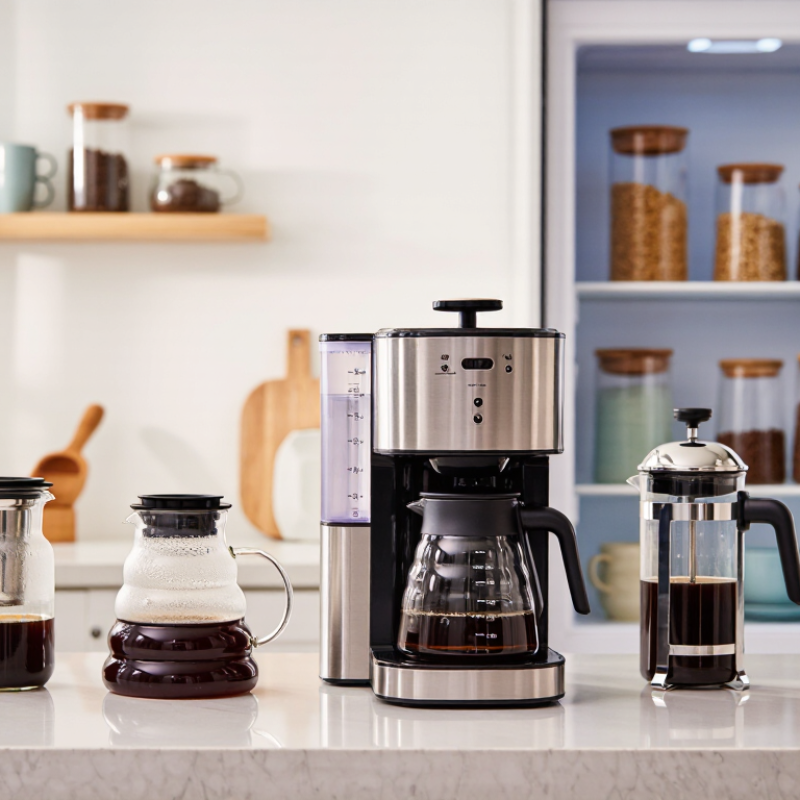
A cold brew maker should fit your usual batch, not just look roomy on a shelf. A 1-liter vessel can suit one or two daily drinkers, while households sharing coffee may prefer 1.5 liters or more. Check usable capacity: the filter basket and grounds take up space.
I find capacity labels a little misleading sometimes. A tall pitcher may hold less finished coffee than expected.
Material affects handling and upkeep. Glass does not retain coffee odors easily, but it can chip if knocked against a sink. Stainless steel is sturdy and blocks light, though you cannot see the brew level. Food-safe plastic is lighter and less fragile; inspect care instructions and avoid scratched interiors.
Small details matter. A wide opening makes it easier to add grounds and scrub residue from corners.
Filtration design shapes both texture and cleanup. Fine stainless-steel mesh is reusable and allows some oils and tiny particles through, giving coffee a fuller feel. Paper filters can produce a cleaner cup, but require replacements and careful fitting. Look for a basket that lifts out without spilling wet grounds. A tight lid helps contain refrigerator odors, yet it should not make pouring awkward.
I would not assume finer mesh always means better coffee; grind size and steep time still affect clarity.
QUICK LINKS
CONTACT US
Office: (+86) 755 23040566
Tel: (+86) 158 9965 5195
E-mail: sale@pcbledmodule.com
Skype: Hans@Rocket-PCB
Whatsapp: 86 1589965 5195
Office Address: 2207,Bid 4,He Gu Shan Hui Cheng,35#,Guang Tian RoYanluo street, Song Gang Town,518105 SHENZHENG, CHINA
Plant ADD.: No 69, Lianfeng North Road, Xianxi Area, ChangAn Town, Dongguan, China.


Copyright © 2025 Rocket PCB Solution Ltd. | All Rights Reserved Sitemap Friendship link: CNC machining heat sink

