
English


Choosing the best China Tissue Tape for global buyers requires more than comparing price lists. It demands evidence, testing, and practical application knowledge. Smithers’ reports on global nonwovens and adhesive materials identify packaging, hygiene, automotive, and construction as important demand areas. Grand View Research also reports continued growth in pressure-sensitive adhesives, supported by e-commerce packaging and lightweight assembly. These trends create opportunities for Chinese manufacturers. They also increase buyer expectations.
The right Tissue Tape should match the surface, temperature, load, and removal requirement. A carton sealing application may need strong initial tack. A foam mounting application may require high shear resistance. Outdoor use demands better aging and moisture performance. Buyers should request technical data sheets, sample rolls, coating weight details, and batch records. Test results should reference recognized methods, such as ASTM or ISO procedures, where applicable. Look closely at unwind behavior. A clean edge matters on a fast packing line. So does stable adhesion after storage.
No supplier is perfect. A polished brochure cannot replace a production audit. Some specifications may look impressive but lack real-use evidence. I have found that small details often expose larger risks, including uneven coating, telescoped rolls, or inconsistent release force. Responsible sourcing also requires checking factory quality systems, traceability, packaging safety, and export documentation. The best choice is not automatically the cheapest Chinese product. It is the tape that performs reliably across the buyer’s actual conditions. That judgment requires careful comparison, independent testing, and a willingness to question convenient claims.
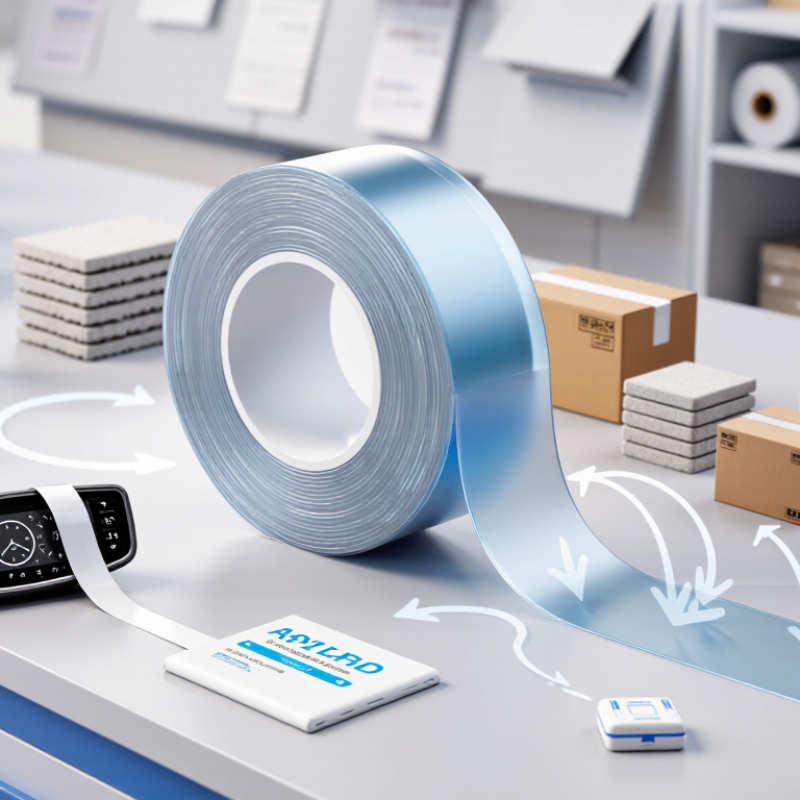
China tissue tape is usually a thin, double-sided adhesive tape built around a nonwoven tissue carrier. The carrier provides dimensional stability while remaining easy to tear and conform. Manufacturers coat both sides with pressure-sensitive adhesive layers. A release liner, often paper or film, protects the adhesive before use. This sounds simple. It is not.
The structure changes with the adhesive system. Acrylic adhesive can offer aging and temperature resistance, while rubber-based adhesive often gives quick tack and easier bonding. Water-based formulas may suit lighter indoor applications, but moisture and storage conditions still matter. Coating weight, carrier thickness, liner release, and winding tension affect performance. A tape may look smooth yet fail on a dusty carton. That detail is easy to miss.
For global buyers, evaluation should begin with the substrates, application temperature, load, and service period. Request technical data, safety information, roll dimensions, tolerance data, and samples from the Chinese supplier. Test peel, holding power, shear, residue, and liner removal under real conditions. Do not judge quality by thickness alone. A common sourcing lesson is that thicker tape can perform worse when its adhesive balance is poorly matched. Supplier claims also need independent verification. Batch consistency deserves attention during climate changes and long transport. A small pilot order can reveal more than a polished catalog.
QUICK LINKS
CONTACT US
Office: (+86) 755 23040566
Tel: (+86) 158 9965 5195
E-mail: sale@pcbledmodule.com
Skype: Hans@Rocket-PCB
Whatsapp: 86 1589965 5195
Office Address: 2207,Bid 4,He Gu Shan Hui Cheng,35#,Guang Tian RoYanluo street, Song Gang Town,518105 SHENZHENG, CHINA
Plant ADD.: No 69, Lianfeng North Road, Xianxi Area, ChangAn Town, Dongguan, China.


Copyright © 2025 Rocket PCB Solution Ltd. | All Rights Reserved Sitemap Friendship link: CNC machining heat sink