English


Choosing the best China Color Tft Lcd Screen supplier requires more than comparing prices. Display quality, production consistency, technical support, and delivery reliability all affect the final product. A bright screen may look impressive in a sample, yet show uneven backlighting after long operating hours. Careful evaluation matters.
The right supplier should understand resolution, viewing angle, brightness, touch integration, interface types, and operating temperature. Experience with industrial panels, medical equipment, automotive displays, or smart devices can reveal practical strengths. Ask for detailed datasheets, sample testing, quality inspection records, and clear warranty terms. Certifications can support credibility, but they do not replace real performance testing.
Small details often reveal supplier reliability. Check connector placement, frame dimensions, protective glass, and screen behavior under changing temperatures. Response speed also matters when engineers request a customization or solve a technical issue. A supplier that communicates clearly is usually easier to work with during production changes.
No supplier is perfect. Even an experienced manufacturer may face material delays, design limits, or occasional quality problems. The important question is how openly the company handles them. Does it provide traceable inspections? Does it explain corrective actions? Does it protect agreed specifications?
This guide examines the qualities that define a dependable Chinese Color Tft Lcd Screen supplier. It considers manufacturing capability, product consistency, customization, compliance, and long-term cooperation. The “best” choice depends on the application, budget, volume, and risk tolerance. A low quotation may save money today, but unstable quality can create expensive redesigns later. Careful judgment remains essential.
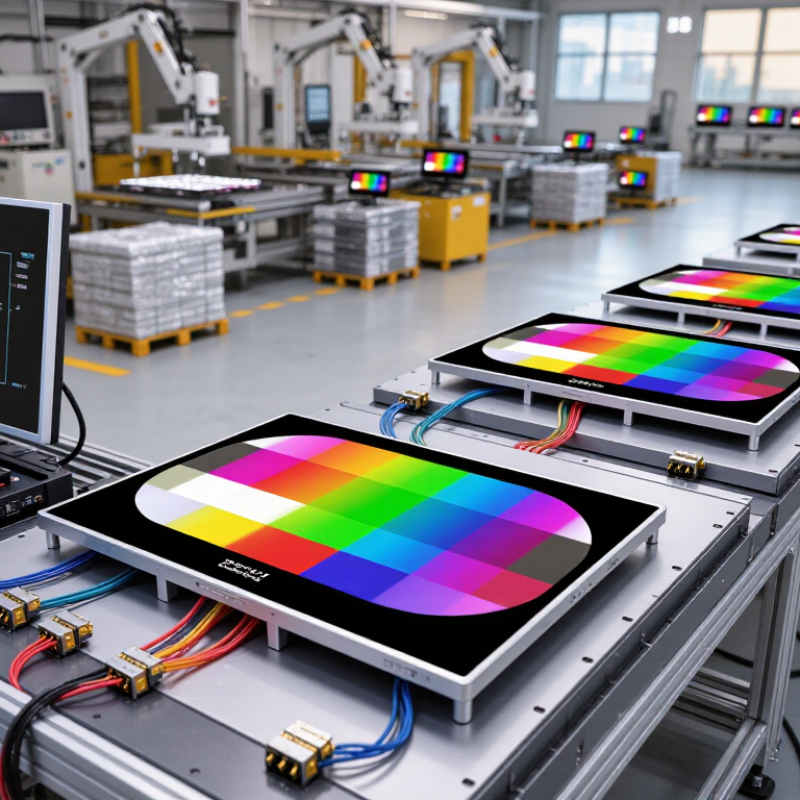
China’s TFT-LCD supply landscape is shaped by large production capacity, integrated component networks, and strong export logistics. Industry estimates often place China’s share of global LCD capacity above 70%, although figures vary by year and measurement method. Large plants support televisions, industrial panels, vehicle displays, medical equipment, and handheld devices. This scale can reduce unit costs, but it does not guarantee consistent quality.
Export data also requires careful reading. Customs records for liquid-crystal display modules may combine different sizes, technologies, and finished-product categories. A high export value can reflect larger panels, not necessarily better engineering. Buyers should compare shipment volume, average unit value, panel size, resolution, brightness, and rejected-sample rates. Supplier audits remain useful. Paper capacity is not always available capacity.
Tips: Request recent production photos, sample test reports, and monthly output data. Confirm whether glass cutting, bonding, backlight assembly, and final inspection occur in-house. Ask for export references by destination region, but verify them independently. A supplier with lower capacity may provide better communication and tighter control. That is easy to overlook. Also, specifications can change after sampling, especially for touch interfaces and outdoor brightness. Put every critical parameter into the purchase agreement, then test a pilot batch before scaling orders.
QUICK LINKS
CONTACT US
Office: (+86) 755 23040566
Tel: (+86) 158 9965 5195
E-mail: sale@pcbledmodule.com
Skype: Hans@Rocket-PCB
Whatsapp: 86 1589965 5195
Office Address: 2207,Bid 4,He Gu Shan Hui Cheng,35#,Guang Tian RoYanluo street, Song Gang Town,518105 SHENZHENG, CHINA
Plant ADD.: No 69, Lianfeng North Road, Xianxi Area, ChangAn Town, Dongguan, China.


Copyright © 2025 Rocket PCB Solution Ltd. | All Rights Reserved Sitemap Friendship link: CNC machining heat sink