What Is the Best Chandelier LED Lamp for 2026?
A chandelier can define a room before anyone notices its furniture. Choosing the best Chandelier Led Lamp for 2026, however, takes more than matching a fixture to a photograph. The right choice depends on ceiling height, room size, light output, color temperature, dimmer compatibility, and the bulbs your fixture accepts. Small details matter. A wide, bright chandelier may overwhelm a low dining room, while a beautiful fixture with poor downward light can leave the table dim.
Energy performance deserves equal attention. The U.S. Department of Energy’s LED Lighting guidance reports that LEDs use at least 75% less energy and can last up to 25 times longer than incandescent lighting. Those figures offer useful context, not a guarantee for every chandelier or bulb. Real results vary with product quality, operating hours, heat, and dimmer compatibility. I would not treat brightness alone as a verdict; that is an imperfect shortcut. Compare lumens rather than watts, check the manufacturer’s dimming guidance, and confirm the fixture’s dimensions before buying. This guide weighs those practical factors alongside design, maintenance, and overall value. A warmer glow may flatter a dining room, while a brighter, more neutral tone can suit an entryway. There is no universal winner. The best option is the one that fits the space, performs reliably, and still feels right after the first impression fades.
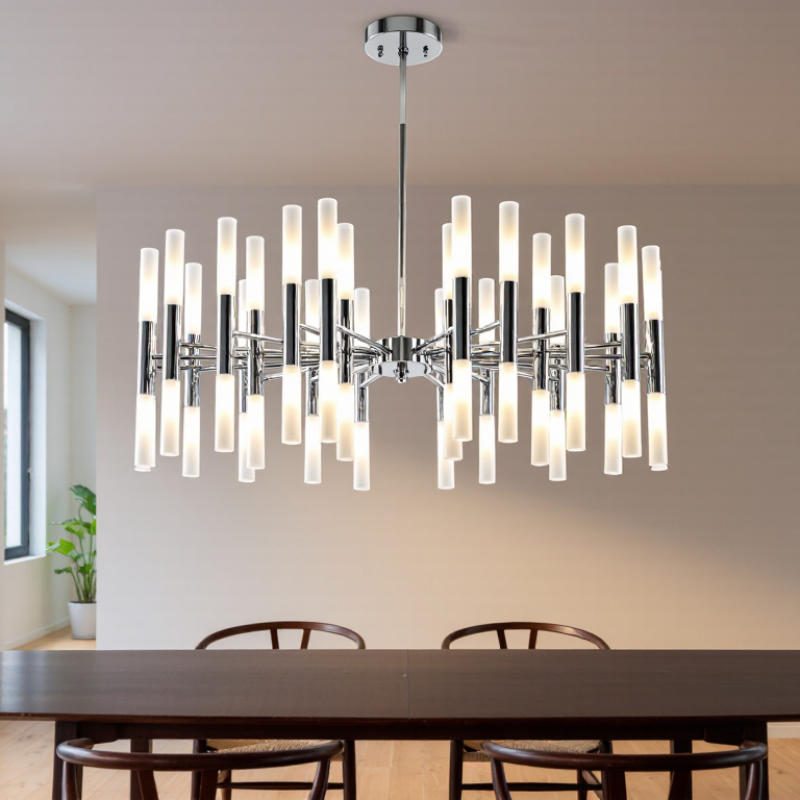
What a Chandelier LED Lamp Is and How It Produces Light
A chandelier LED lamp is an LED light source made for a chandelier, either as a replaceable candle-shaped bulb or as a built-in light array. The term can be confusing: a decorative fixture may use ordinary LED bulbs, while another has integrated LEDs that cannot be replaced individually. LEDs produce light when electric current passes through a semiconductor junction, releasing energy as photons. Most white LEDs combine blue light with a phosphor coating that changes part of it into a broader white glow. A small driver converts household alternating current into controlled direct current and regulates the flow. That part matters. Poor heat management can shorten an LED’s life, and enclosed shades may hold warmth around the lamp.
When choosing a lamp, check its base, length, and width against the chandelier’s sockets and shades. Compare lumens for brightness, not watts; watts mainly describe energy use. Color temperature affects the room’s feel: warmer light often suits dining spaces, while cooler light can look sharper. A high color-rendering index can help fabrics and food appear more natural. The label alone is not the whole story. Crystal drops, frosted glass, and ceiling height can change how bright the fixture feels. Confirm that the lamp and dimmer are compatible, since some combinations may flicker or dim unevenly. In a real room, the most impressive-looking bulb is not always the most comfortable one.
Which Features Matter Most in a Chandelier LED Lamp
Choosing a chandelier LED lamp starts with the room, not the fixture photo. In a dining area, warm light around 2700K to 3000K often makes wood and food look inviting. For a brighter kitchen, a neutral tone may feel more practical. Color rendering matters too: a CRI of 90 or higher can show paint, fabric, and skin tones more naturally.
Check the lumen output and dimming range before comparing decorative details. A large chandelier can look impressive yet leave the table dim. Dimmable LEDs help shift from cleanup to dinner, but the lamp and dimmer must be compatible. Flicker at low settings is a real nuisance. If possible, test the setup in person. Specs can mislead.
Fit and maintenance deserve equal attention. Measure the ceiling height, fixture width, and table clearance; leave enough room for people to move comfortably. Check the fixture’s weight against the ceiling support, and ask a qualified electrician if the wiring or mounting is uncertain. Replaceable LED bulbs are convenient, while integrated LEDs can offer a cleaner shape but may require replacing more of the fixture later. Dust also gathers on curved arms and glass shades, so choose a design you can actually clean. A slightly less dramatic lamp may work better every evening.
How to Match LED Bulbs to Chandelier Sockets and Fixtures
What Is the Best Chandelier LED Lamp for 2026?
Start with the socket, not the bulb’s appearance. Turn off the power, remove an existing lamp, and check its base marking or measure the metal screw. Common bases include E12, E14, E26, and E27, though availability varies by region. Not every bulb fits. Match the base exactly; never force a lamp into a socket. Check the fixture label for its maximum wattage and permitted bulb types. LEDs draw less power, but the fixture’s stated limit still matters.
Next, compare the bulb’s shape and dimensions with the chandelier’s cups, shades, and arms. A slim candle-style LED may suit exposed sockets, while a wider globe can touch a glass shade or sit awkwardly in a narrow holder. Measure the space from socket to shade before ordering. Product photos can mislead; dimensions may look generous on a screen and cramped in a real fixture. Check lumens for brightness and color temperature for tone: around 2700K gives a warm, candlelike glow, while higher values look cooler.
If the chandelier uses a dimmer, choose bulbs marked as dimmable and check compatibility with that control. Otherwise, flickering or a limited dimming range may result. Small details matter. For an older fixture, inspect sockets for looseness or discoloration before fitting new bulbs. If wiring looks damaged, stop and ask a qualified electrician to assess it.
What Is the Best Chandelier LED Lamp for 2026? - How to Match LED Bulbs to Chandelier Sockets and Fixtures
Match the bulb base to the fixture socket first, then check the fixture label, bulb dimensions, dimmer compatibility, and light output. | Socket marking | Common chandelier bulb shape | Typical LED output to consider | Good starting color temperature | What to check before buying |
E12
Candelabra screw base | Small candle or flame-tip bulb | About 300–500 lumens per bulb | 2700K for a warm, traditional look | Common in North American chandeliers. Check bulb length and width, especially with candle sleeves or narrow shades. |
E14
Small Edison screw base | Candle, golf-ball, or small decorative bulb | About 300–600 lumens per bulb | 2700K–3000K for warm residential lighting | Common in many European fixtures. E14 and E12 are different sizes and are not directly interchangeable. |
E26
Medium screw base | A-shaped, globe, or decorative filament-style bulb | About 450–800 lumens per bulb | 2700K–3000K for most dining and living areas | A common North American socket. Select a bulb shape that clears the fixture and does not protrude into a shade. |
E27
Standard screw base | A-shaped, globe, or decorative bulb | About 450–800 lumens per bulb | 2700K–3000K for a warm appearance | Common in many regions outside North America. Confirm the socket marking rather than assuming E26 and E27 are interchangeable. |
G9
Two-loop bi-pin base | Compact capsule bulb | About 200–500 lumens per bulb | 2700K–3000K for ambient light | Check capsule dimensions and fixture clearance. Some compact fixtures may require bulbs specifically rated for enclosed use. |
GU10
Two-pin twist-lock base | Reflector or spotlight bulb | About 300–600 lumens per bulb | 3000K for a balanced, focused appearance | Used in some directional or contemporary fixtures. Match the base and beam spread to the fixture’s intended lighting. |
Quick selection tips: - Use the socket marking on the fixture or the existing bulb to identify the base; bulb shape alone does not determine socket compatibility.
- Compare lumens rather than watts when choosing brightness. As a rough reference, about 450 lumens is similar in brightness to a traditional 40-watt incandescent bulb, while about 800 lumens is similar to a 60-watt incandescent bulb.
- For dimming, choose bulbs marked dimmable and verify compatibility with the installed dimmer. Dimming performance can vary between bulb and dimmer combinations.
- Follow the fixture’s maximum-wattage label and any enclosed-fixture or temperature requirements. LED bulbs use less power than comparable incandescent bulbs, but still need suitable operating conditions.
- Choose 2700K for a warm, cozy glow, 3000K for a slightly cleaner warm white, and a higher color-rendering index (CRI) when accurate color appearance is important.
How 2026 Chandelier LED Lamps Compare in Brightness and Efficiency
A chandelier’s brightness depends on its combined light output, not its number of bulbs. Compare total lumens across the fixture, then consider room size, ceiling height, and shade materials. Clear glass usually lets more light through than dense fabric or dark glass. Numbers need context.
Efficiency is measured in lumens per watt: more lumens from fewer watts generally means less electricity for similar brightness. For example, a 1,600-lumen fixture using 16 watts provides about 100 lumens per watt. Compare products using the same measurement, and check whether listed wattage covers the entire chandelier. Packaging can make this easy to misread.
Think about how the light will feel, too. A cool-white lamp may appear crisp over a kitchen table, while a warmer tone can feel gentler in a dining room. Dimming helps adjust brightness, but only when the lamp and dimmer are compatible. Not always. A fixture’s glass, bulb direction, and placement can change the result, so published figures cannot predict every room. Measure your space, and consider whether you need bright task lighting or a softer glow before choosing.
How to Choose the Best Chandelier LED Lamp for Your Space
Choosing a chandelier LED lamp starts with the room, not the fixture’s sparkle. Measure ceiling height, table size, and the distance from the fixture to seated eye level. Over a dining table, choose a shape that preserves clear sightlines. In a narrow entry, a shallow profile helps prevent bumps. For a quick scale check, add the room’s length and width in feet; use that number as an approximate fixture diameter in inches. It is a starting point, not a rule.
Tips: Compare lumens, not just watts, and choose a color temperature that suits the room. Check whether the LED lamp is replaceable and whether it works with your dimmer. The U.S. Department of Energy’s LED Lighting Basics reports that LEDs use at least 75% less energy and can last up to 25 times longer than incandescent lighting. These figures describe LED technology broadly, not every chandelier. If possible, test the light over your actual table.
Check the color-rendering index when food, artwork, or finishes need to look natural. Compare rated lifespan and warranty, too. A bright showroom can mislead. I would prioritize glare control and serviceable parts over dramatic size; even a well-chosen fixture may need adjustment after installation.






