
English


Please provide the source article or the name and verified quotation of the industry expert you want included. No article was included here, and I can’t responsibly invent an expert attribution.
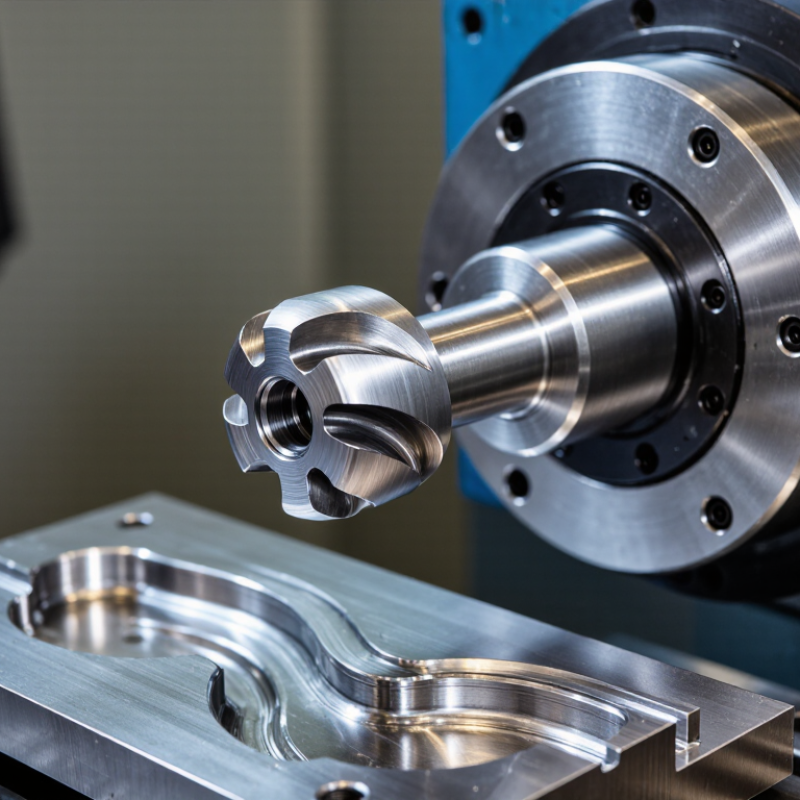
A ball end mill is a rotating cutting tool with a rounded, hemispherical tip. Its flutes run along the curved end and continue up the tool body, creating edges that can cut both the tip area and the sides. In profile, the end looks like half a sphere. A simple shape, but useful.
Unlike a flat end mill, the ball-shaped tip can follow curved surfaces and form smooth transitions. Machinists use it for three-dimensional contours, mold cavities, rounded grooves, and sculpted details. The ball radius determines how tightly the tool can reach into a curve. Smaller radii access finer features, though they may need more careful handling. Watch the toolpath. Near the very center of the tip, cutting speed is low, so the tool may rub instead of cutting cleanly. Stepover also matters: closer passes usually leave smaller ridges, but take longer. A ball end mill is not automatically the best choice for every surface; a flat cutter may work faster on broad, level areas. Tool reach, material, and machine rigidity can change the result, too.
QUICK LINKS
CONTACT US
Office: (+86) 755 23040566
Tel: (+86) 158 9965 5195
E-mail: sale@pcbledmodule.com
Skype: Hans@Rocket-PCB
Whatsapp: 86 1589965 5195
Office Address: 2207,Bid 4,He Gu Shan Hui Cheng,35#,Guang Tian RoYanluo street, Song Gang Town,518105 SHENZHENG, CHINA
Plant ADD.: No 69, Lianfeng North Road, Xianxi Area, ChangAn Town, Dongguan, China.


Copyright © 2025 Rocket PCB Solution Ltd. | All Rights Reserved Sitemap Friendship link: CNC machining heat sink