

loading

BLOG

7 Tips for Buying Venous Ulcer Dressings

Venous Ulcers are not simply surface wounds; they can persist for months, leak through dressings, and disrupt sleep, mobility, and work. Choosing a dressing therefore means looking beyond the product label. Comfort, exudate control, skin protection, and ease of removal all matter. Small details matter.

The scale of the problem is substantial. Guest and colleagues’ 2018 BMJ Open study estimated that wound care cost the UK National Health Service £8.3 billion annually in 2017–2018. Venous leg ulcers formed an important part of that burden. The European Society for Vascular Surgery’s 2022 clinical guidelines state: “For patients with active venous leg ulceration, compression therapy is recommended to improve ulcer healing.” The guideline was co-authored by vascular specialist Marianne De Maeseneer. Dressings support wound management, but they do not replace assessment or appropriate compression. Treatment choices should reflect the ulcer, surrounding skin, and the person’s health.

This guide introduces seven practical considerations when buying venous ulcer dressings: absorbency, contact layer, skin sensitivity, wear time, ease of application, cost, and availability. A dressing that works well for a heavily exuding wound may be uncomfortable or unnecessary for a drier one. Product claims can sound reassuring, yet real-world performance varies. That is worth remembering. Ask a qualified clinician how a dressing fits the care plan, and review it if pain, leakage, or skin irritation develops. No single product suits every wound.
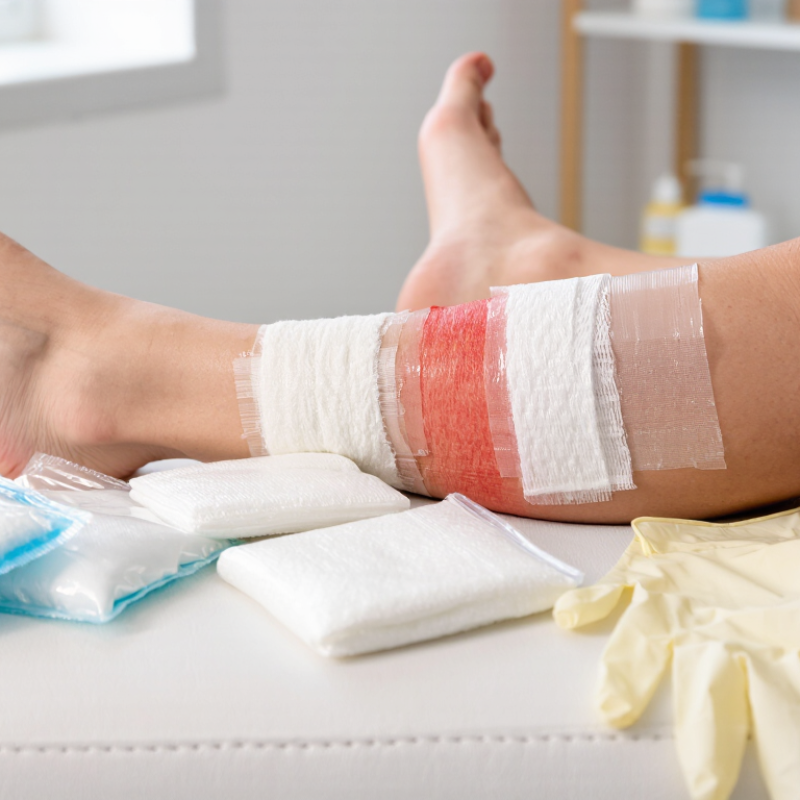
7 Tips for Buying Venous Ulcer Dressings

Assess the Ulcer and Follow Clinical Guidance

7 Tips for Buying Venous Ulcer Dressings

Assess the ulcer before comparing dressings. Measure its length and width, note depth, and record drainage, odor, pain, and surrounding skin changes. A wet wound may need an absorbent dressing; fragile skin may need gentle removal. These details can change between visits, so document them consistently. Venous ulcers are estimated to account for 70% to 90% of chronic leg ulcers, according to Society for Vascular Surgery and American Venous Forum guidelines (O’Donnell et al., Journal of Vascular Surgery, 2014).

Tip: Check circulation before compression. Ask a clinician to assess arterial blood flow, often using an ankle-brachial index, and follow local clinical guidance. Also review swelling, infection concerns, allergies, and the patient’s comfort. Dressing choice matters, but it does not replace assessment or appropriate compression when prescribed. An abnormal circulation result needs clinical review, not a guess based on appearance.

For a practical shortlist, look for a dressing that manages the wound’s drainage, protects surrounding skin, and can be changed without unnecessary trauma. Consider wear time and whether the patient or caregiver can apply it correctly. Keep notes on leakage, pain, and skin irritation after each change. I might favor a simple option, but convenience alone is not enough; reassess if the ulcer worsens or fails to progress.

Compare Dressing Types and Their Intended Uses

Tip: Match the dressing to the wound, not just its size. Venous ulcers often produce fluid, and the amount can change over time. Alginate or gelling fiber dressings may suit moderate to heavy drainage; foam can absorb fluid and cushion the area. A silicone contact layer may help protect fragile surrounding skin. Fit matters.

Tip: Consider the wound bed. A dry wound may need moisture support, while a very wet wound needs better absorption. Hydrogel can add moisture when clinically appropriate, but may be unsuitable for heavily draining wounds. Antimicrobial dressings are not necessary for every ulcer; use them only when a qualified clinician identifies a reason. Less can help.

Tip: Check the whole care plan. Compression is often central to venous ulcer treatment, but a clinician should assess circulation before it begins. The dressing should work under the chosen compression and stay in place without wrinkling or leaking. Watch for increased pain, spreading redness, odor, or a sudden change in drainage, and seek clinical advice. Dressing choice is not always obvious; review it as the wound changes.

Match Absorbency and Materials to Wound Needs

Match absorbency to the wound’s drainage, not just its size. Moderate or heavy exudate may call for an alginate or gelling-fiber dressing; foam can absorb fluid and cushion the area. For light drainage, a highly absorbent dressing may be excessive and can leave the wound bed too dry. Small details matter. Check the surrounding skin at each dressing change: pale, softened edges can indicate excess moisture, while a dressing that sticks may cause pain or damage when removed. A soft contact layer may help protect fragile tissue.

Material choice is not a substitute for a full care plan. Compression is central to venous ulcer management when clinically appropriate, and a clinician should assess circulation, skin condition, and signs of infection. A 2018 Cochrane review examined 78 studies involving 7,014 people and found no reliable evidence that one dressing type consistently heals venous ulcers better than another; the evidence was generally low certainty. That finding argues against choosing by product category alone. In practice, note how quickly the dressing saturates, whether leakage occurs, and how the skin looks after removal. Reassess when drainage changes; the first choice may not remain the right one.

7 Tips for Buying Venous Ulcer Dressings: Match Absorbency and Materials to Wound Needs

Typical relative absorbency varies by product. Use this qualitative guide to help match dressing type to wound exudate; actual performance depends on the specific product and how it is used.

Relative absorbency is shown on an illustrative 1–4 scale, not a standardized or product-specific rating. Consider the wound’s exudate, surrounding skin, and dressing change needs. Compression therapy is a key part of venous leg ulcer care when clinically appropriate; a dressing does not replace it.

Check Compatibility with Compression Therapy

A dressing for a venous ulcer must work beneath compression, not just look suitable on its own. Compression wraps apply pressure, so a dressing that is too thick or stiff may create ridges and uncomfortable pressure points. Check its profile and flexibility. It should lie flat, stay in place, and avoid bunching when the leg moves. Fit matters.

Match absorbency to the wound’s drainage. A lightly draining ulcer may not need a bulky pad, while heavier drainage can require a dressing that manages fluid without becoming saturated too quickly. Too much moisture can soften surrounding skin; too little can leave the wound bed dry. It is easy to focus on absorbency alone. That can be a mistake. Consider how the dressing behaves under the full wrap, including whether its edges curl or fluid leaks through.

Ask a wound-care professional to confirm that the compression plan is appropriate, especially before starting or changing compression. They may assess circulation and choose a dressing based on the wound and skin condition. Follow the recommended change schedule, and report new pain, numbness, slipping, or worsening skin irritation. Small details count. A wrap can feel different as swelling changes, so check comfort and fit at each dressing change rather than assuming yesterday’s setup still works.

Review Safety, Cost, and Supply Availability

Before choosing a venous ulcer dressing, check the wound’s drainage, surrounding skin, and the patient’s sensitivities. A dressing should support the care plan, not replace compression when compression is clinically appropriate. A 2018 Cochrane review examined 78 trials involving 7,014 people and found no reliable evidence that one dressing type healed ulcers better than others when compression was used. That makes comfort, skin tolerance, and practical fit important—not just product claims. Small details matter. Note any irritation, leakage, or pain, and ask a qualified clinician to review persistent problems.

Compare the full cost of care, including how often a dressing needs changing and whether it requires extra fixation. Guest and colleagues’ 2020 BMJ Open analysis estimated that wound care cost the UK NHS about £8.3 billion in 2017–18; this covered wounds broadly, not venous ulcers alone. It is a useful reminder that repeated changes can add up. Availability deserves the same attention. Confirm that the required size and dressing type can be replenished locally, and ask what clinically suitable alternative is available during a stock gap. I would not assume the cheapest option stays cheapest if it leaks or needs frequent replacement. Keep the plan realistic, and record any substitutions for clinical review.

Chat Online
Chat Online
Leave Your Message inputting...
Thank you for your attention. Please kindly describe your question first, or please send your inquiry to our email sale@pcbledmodule.com, and we will reply to you ASAP. Welcome, what can I help you?
Sign in with: