
English


Choosing Mine Exhaust Fans is a serious engineering decision, not a simple equipment purchase. Underground airways may stretch for kilometers, while heat, dust, moisture, and changing production levels affect ventilation performance. A fan that performs well in a surface test may struggle when connected to long ducting, bends, or restrictive regulators. Details matter.
This guide presents seven practical tips for selecting Mine Exhaust Fans with greater confidence. It considers airflow volume, static pressure, energy use, noise, maintenance access, control systems, and site conditions. Ventilation engineers typically review these factors together, rather than judging a fan by its motor size alone. Reliable selection begins with accurate mine data, including current headings, future extensions, and expected contaminant loads. Small calculation errors can become expensive underground problems.
There is no universal fan for every mine. That point is easy to overlook. A compact auxiliary fan may suit a short development heading, while a large exhaust system may require stronger pressure control and monitoring. Product specifications also need careful interpretation, especially when efficiency ratings use different test conditions. Buyers should request verified performance curves, service records, and clear installation requirements from qualified suppliers. Even then, assumptions deserve review. Real mines change, and ventilation plans must adapt with them. These seven tips offer a practical framework for comparing options, reducing avoidable risks, and supporting safer, more dependable airflow underground.
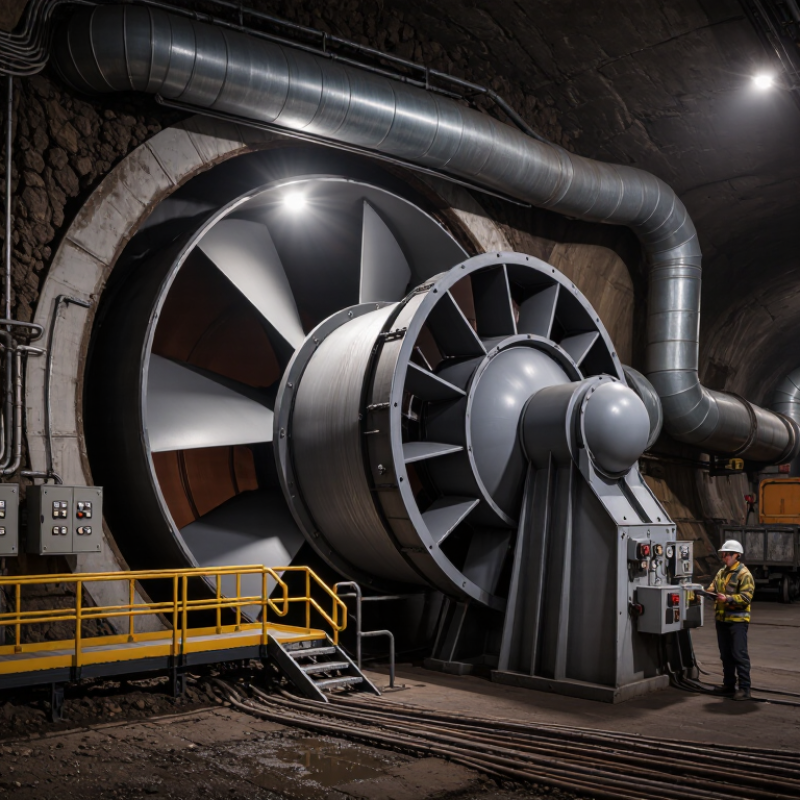
A mine exhaust fan is more than a large rotating machine. It controls airflow, pressure, heat, dust, and contaminants along working routes. Before selecting equipment, map each heading, shaft, intake, and return airway. Record airflow demand, static pressure, operating hours, and seasonal changes. These figures should come from competent ventilation surveys, not guesswork. A fan that performs well at the surface may struggle underground.
Tip: Define the ventilation duty. Calculate airflow for workers, equipment, heat removal, and clearance needs. Include leakage and future production changes. Small assumptions create serious performance gaps.
Tip: Match the fan curve to the mine system. Review volume, pressure, efficiency, stall margin, and controllability together.
Tip: Check the function. Main exhaust fans create pressure differences, while auxiliary fans support development headings. Reversible units may help during emergencies, but reversal time requires testing.
Tip: Examine the installation. Fan diameter, duct transitions, silencers, dampers, and discharge geometry can cause unexpected losses. I have seen a reliable fan underperform because a short, turbulent transition was overlooked.
Tip: Prioritize monitoring. Install sensors for airflow, pressure, vibration, temperature, and motor load.
Tip: Plan maintenance around bearings, impellers, drives, and controls. Dust builds quickly.
Tip: Verify performance after commissioning. Compare measurements with the ventilation plan and investigate deviations. No calculation stays perfect underground. Conditions change. Independent review by qualified ventilation engineers adds confidence as the mine expands.
QUICK LINKS
CONTACT US
Office: (+86) 755 23040566
Tel: (+86) 158 9965 5195
E-mail: sale@pcbledmodule.com
Skype: Hans@Rocket-PCB
Whatsapp: 86 1589965 5195
Office Address: 2207,Bid 4,He Gu Shan Hui Cheng,35#,Guang Tian RoYanluo street, Song Gang Town,518105 SHENZHENG, CHINA
Plant ADD.: No 69, Lianfeng North Road, Xianxi Area, ChangAn Town, Dongguan, China.


Copyright © 2025 Rocket PCB Solution Ltd. | All Rights Reserved Sitemap Friendship link: CNC machining heat sink