
English


Choosing the right Ec Meter in 2026 requires more than comparing screen size, price, or advertised accuracy. Global buyers must match the meter type with the testing environment, sample range, and daily workload. A pocket meter suits quick checks in hydroponic tanks or small laboratories. A handheld model offers stronger protection for field inspections. Benchtop units provide stable readings beside a quality-control workstation. Inline systems support continuous monitoring in treatment lines, aquaculture facilities, and manufacturing processes.
Conductivity specialist Dr. Andrew J. Cole offers a practical reminder: “A meter reports a number; the user must confirm what that number means.” This principle remains important because temperature, electrode condition, cell constant, and calibration solution can change the result. Even a premium Ec Meter can produce questionable data when its probe is dirty or poorly stored. Small details matter.
This guide compares the leading Ec Meter types for global buyers, including pocket, handheld, benchtop, inline, and multiparameter designs. It considers measurement range, automatic temperature compensation, IP protection, calibration flexibility, display usability, and long-term maintenance. No single model fits every market. A rugged handheld unit may outperform a laboratory meter outdoors, while an inline meter may be unsuitable for occasional sampling. Buyers should also verify regional service support, documentation quality, and replacement-probe availability. The best choice is not always the most advanced one. It is the meter that delivers dependable readings under real working conditions.
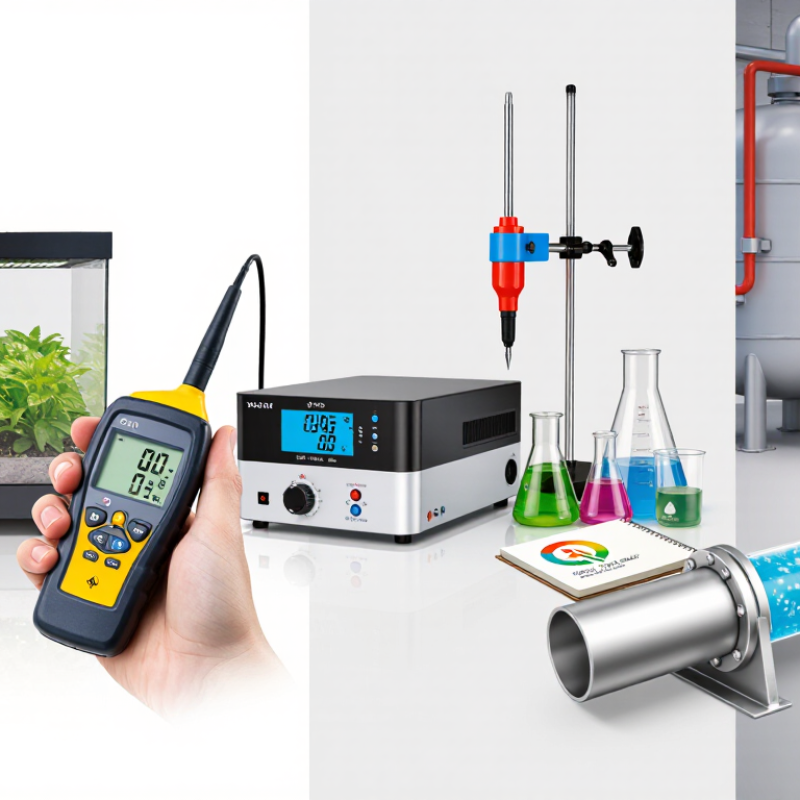
An EC meter measures electrical conductivity in water or another liquid. Conductivity rises when dissolved ions increase. Common ions include calcium, magnesium, sodium, nitrate, and chloride. The meter does not identify each ion. It reports conductivity, usually in µS/cm or mS/cm. Many devices also estimate TDS or salinity. These values are useful, but they are not direct chemical analyses. Readings can change with temperature, electrode condition, and sample contamination.
Global buyers usually choose among pen-style, portable, benchtop, and inline EC meters. Pen meters suit quick checks in irrigation tanks or nutrient solutions. Portable units offer stronger housings and replaceable probes for field work. Benchtop models provide stable readings for laboratories and water-testing rooms. Inline meters monitor flowing water continuously, reducing manual sampling. For international purchasing, confirm voltage, connector standards, measurement range, temperature compensation, and calibration support. A broad range is not automatically better.
Reliable use depends on calibration with suitable standard solutions. Rinse the probe with clean water, remove droplets gently, and avoid touching the sensing surface. Wait for the reading to stabilize. Small habits matter. A meter may show impressive precision while the sample itself is poorly mixed. That is an uncomfortable limitation. Buyers should also check IP protection, probe replacement costs, data records, and operating instructions. In practice, the best EC meter is the one staff can calibrate correctly and use consistently.
QUICK LINKS
CONTACT US
Office: (+86) 755 23040566
Tel: (+86) 158 9965 5195
E-mail: sale@pcbledmodule.com
Skype: Hans@Rocket-PCB
Whatsapp: 86 1589965 5195
Office Address: 2207,Bid 4,He Gu Shan Hui Cheng,35#,Guang Tian RoYanluo street, Song Gang Town,518105 SHENZHENG, CHINA
Plant ADD.: No 69, Lianfeng North Road, Xianxi Area, ChangAn Town, Dongguan, China.


Copyright © 2025 Rocket PCB Solution Ltd. | All Rights Reserved Sitemap Friendship link: CNC machining heat sink

