2026 Top Magnetic Track Pendant Lights Buying Guide
A well-chosen Magnetic Track Pendant Light should do more than fill a ceiling gap. It should put useful light where people read, cook, gather, or work. In 2026, buyers can choose from compact spot-style pendants, wide shades, and adjustable models. But appearance is only part of the decision. Track compatibility, beam angle, brightness, color temperature, dimming support, and installation details all affect the result. A pendant that looks elegant in a product photo may feel harsh above a dining table. Details matter.
Architect Louis Kahn observed, “The sun never knew how great it was until it hit the side of a building.” His words concern architecture and light, not magnetic track products, but they offer a useful lens: light changes how a space feels when it meets a surface. That principle guides this buying guide. We will examine how pendant placement, shade shape, and light direction can create a softer pool over a table or a clearer task area over a counter. Small changes can matter.
The practical checks deserve equal attention. Confirm the track system and electrical specifications before buying; magnetic systems are not automatically interchangeable. Compare the fixture’s stated output with the room’s needs, and review whether the driver and dimmer are compatible. Product listings can be vague. Treat them carefully. This guide aims to help you compare options with confidence, while recognizing that real rooms rarely match showroom photos. Expect trade-offs, and measure the space before choosing.
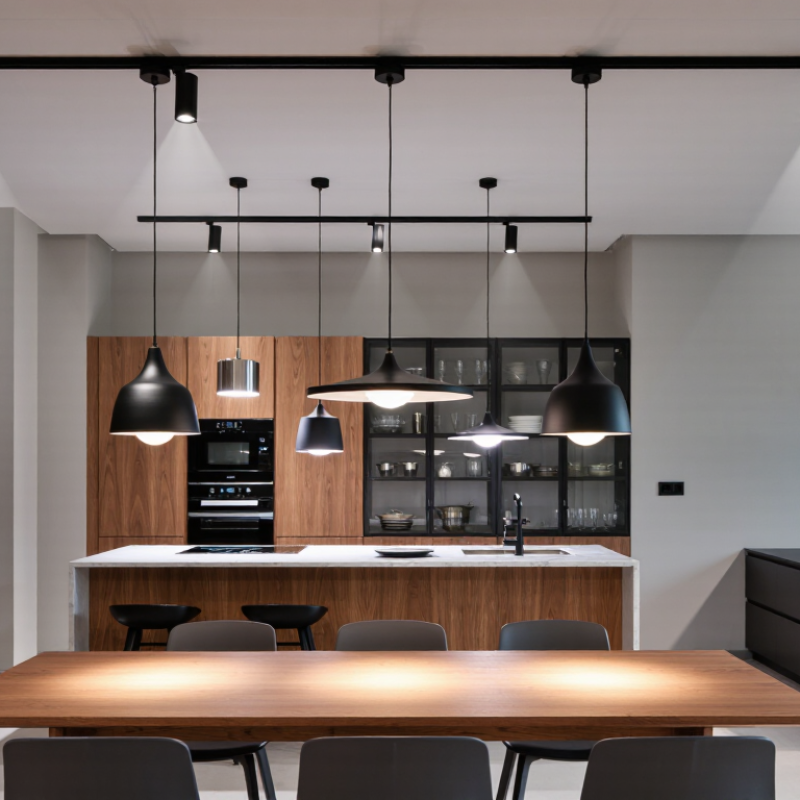
Understanding Magnetic Track Pendant Lights
Magnetic track pendant lights combine a slim powered rail with pendants that connect through magnetic adapters. The rail supplies power; the adapter holds the fixture and makes repositioning easier than fixed wiring. Systems differ, though. Some use low-voltage rails, while others have different electrical requirements, so check the rail and pendant specifications together. A magnet alone does not guarantee compatibility. Turn off power before adjusting fixtures, and use a qualified electrician for installation.
Think about the light on the actual surface: a pendant above a kitchen island should illuminate the worktop without shining directly into someone’s eyes. Check its beam angle, lumen output, dimming compatibility, and hanging height. The U.S. Department of Energy’s LED guidance says LEDs use at least 75% less energy and can last up to 25 times longer than incandescent bulbs; those figures are a comparison, not a promise for every fixture. The International Energy Agency’s Energy Efficiency 2023 report estimates buildings use about 30% of global final energy, making efficient lighting choices relevant. Small detail. I still find glare easy to overlook when judging a pendant from a product photo. Review the installation sheet and, where possible, test the light at night.
How Magnetic Track Pendant Systems Work
A magnetic track pendant system uses a powered rail and a pendant fitted with a compatible magnetic adapter. Inside the rail, conductors carry low-voltage electricity from a driver. When the adapter meets the track, magnets help hold it in place while electrical contacts complete the circuit. The pendant can then receive power without a separate ceiling connection at that point.
It sounds simple. In practice, compatibility matters. Track voltage, adapter type, and pendant wattage must match the system’s specifications. A pendant may attach securely yet fail to light if its electrical contacts are incompatible. Check the manufacturer’s technical documents before buying, and confirm the driver can support the combined load of all connected fixtures. For ceiling wiring or driver installation, use a qualified electrician.
Once powered, many systems let you reposition a pendant by releasing its adapter and moving it along the rail. This can bring light closer to a kitchen island or shift it above a dining table. Keep the rail clean and inspect adapters for looseness or visible wear. One limitation is easy to overlook: moving a pendant changes its position, but not the rail’s power capacity or the room’s underlying wiring. Magnets make placement flexible, not universal.
Types of Magnetic Track Pendant Lights and Their Uses
2026 Top Magnetic Track Pendant Lights Buying Guide: Types and Their Uses
Magnetic track pendant lights suit kitchens, dining areas, and work zones because their positions can be adjusted along the track. Slim linear pendants spread light across an island or long table. Small directional pendants create focused pools of light over a counter or reading chair. Opal-glass or diffused-cylinder styles soften glare and work well above dining tables. The right choice depends on beam direction, suspension height, and whether the fitting is compatible with your track’s voltage and connector system.
A pendant can still feel too low, even when its measurements look right on paper. IEA reporting puts buildings at about 30% of global final energy use, making efficient lighting choices worthwhile. The U.S. Department of Energy says LEDs use at least 75% less energy than incandescent lamps. They can also last up to 25 times longer. Check whether the pendant uses an integrated LED or replaceable lamp; replacement access can matter years later.
Tips: Test the light at your usual working height before fixing the layout. Over an island, space pendants evenly and keep them clear of cabinet doors. Choose dimmable fittings only when the driver, track, and control are confirmed compatible. A glossy shade may look elegant, but it can reflect sharply on a polished countertop.
How to Choose the Right Pendant for Your Space
Choosing a magnetic track pendant starts with the room, not the fixture. Note the ceiling height, table size, and the people using the space. Above a dining table, a pendant should light the surface without blocking faces. In a kitchen, consider whether it will cast shadows on work areas. Measure twice. A quick sketch can reveal awkward spacing before installation.
Next, check that the pendant is compatible with your specific magnetic track system. Systems may differ in track design, electrical rating, and fixture connection, so confirm the specifications rather than relying on appearance alone. Consider adjustable height and beam direction, too. A narrow beam can highlight a reading chair, while a wider spread may suit a kitchen island. Warm light often feels comfortable in living areas, but color preference is personal.
Think about brightness, dimming, and maintenance. A dimmable option gives you flexibility for meals, focused tasks, and softer evening light, provided the track and control support it. Small details matter. Look at the shade material and how easily it can be cleaned, especially near cooking areas. Then picture the pendant switched off; its shape and finish remain part of the room. It is easy to over-focus on style, and I would still revisit the measurements before choosing.
2026 Top Magnetic Track Pendant Lights Buying Guide — How to Choose the Right Pendant for Your Space
Use color temperature as a starting point when choosing a pendant. The ranges below are common design guidance, not fixed requirements.
Warm white (about 2700–3000 K) often suits relaxed residential spaces, while neutral-to-cooler white (about 3500–5000 K) can work well in focused work areas. Check that the pendant’s color temperature suits the room and other lights, and compare brightness, beam spread, dimming compatibility, and track-system compatibility before buying.
Installation, Compatibility, and Safety Considerations
Magnetic track pendants look simple, but the track, driver, and fixture must work as one system. Check the manufacturer’s stated voltage, connector type, polarity, and maximum load before buying; magnetic tracks that look alike may not be interchangeable. Confirm that the pendant’s driver supports your dimmer, too. A mismatch can cause flicker, poor dimming, or overheating. Small details matter.
Installation needs more than a neat ceiling cutout. The track must be secured to suitable framing or an approved mounting system, and mains wiring should be handled by a qualified electrician. The National Fire Protection Association’s Home Electrical Fires report found an average of 46,700 home structure fires involving electrical failure or malfunction each year from 2015 to 2019. That figure covers many electrical products, not magnetic lights specifically, but it underscores why careful wiring and load checks matter. Keep the driver accessible for inspection, and follow its ventilation clearances. A hidden driver is convenient—until it needs service. Before energizing the system, verify connections and confirm that the total fixture load stays within the track and driver ratings.






