
English


In hazardous industrial settings, lighting is not a decorative choice. It is part of the equipment workers rely on to see valves, walkways, loading bays, and maintenance points. The International Labour Organization’s 2023 report, A Call for Safer and Healthier Working Environments, estimates nearly three million work-related deaths and 395 million non-fatal work injuries worldwide each year. These figures cover many causes, not lighting alone. Still, they underline why dependable visibility and careful equipment selection matter.
For buyers comparing a 2026 explosion-proof led floodlight, the product name is only a starting point. Check the certification and hazardous-area marking against the actual site classification. Review ingress protection, temperature limits, beam distribution, mounting options, and driver performance. A bright beam can still leave deep shadows behind pipework. A rugged housing can still be the wrong fit for a corrosive washdown area. Small details matter.
This guide looks at what buyers should verify before choosing a model, from optical performance to installation needs and long-term maintenance. IEC 60079 standards provide an important framework for equipment used in explosive atmospheres, but requirements vary by location and application. Confirm suitability with qualified site personnel and the relevant certification documents. Do not rely on marketing language alone. A label is not enough. Even a well-documented specification can miss a site-specific issue, so the final choice deserves a second look.
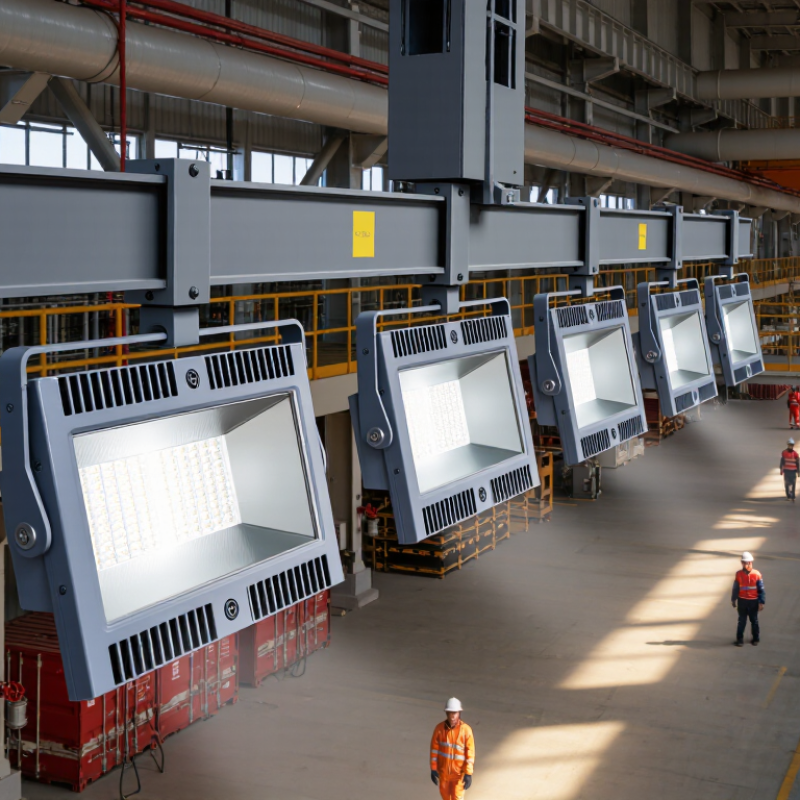
Explosion-proof LED floodlights are industrial luminaires designed for locations where flammable gases, vapors, or combustible dust may be present. In common flameproof designs, a strong enclosure contains an internal ignition, while carefully engineered joints cool escaping gases before they reach the surrounding atmosphere. The protection method depends on the product. The label alone is not enough.
These lights are used in fuel processing areas, chemical plants, paint rooms, and some grain or dust-handling facilities. A floodlight can illuminate a loading bay, pipe rack, or maintenance walkway from a fixed mounting point. Workers need clear visibility around valves, platforms, and equipment. Dusty or damp conditions also make enclosure sealing and corrosion resistance important. Not every site is alike.
Buyers should match the luminaire’s certification to the area’s gas or dust classification, temperature limits, and installation requirements. Check beam spread, mounting height, ambient temperature, and maintenance access before choosing a model. A wide beam may reduce dark patches, but it can also create glare on shiny pipework. That detail is easy to miss. Site conditions change, too, so a product suitable for one zone may not be appropriate nearby. Review the area assessment and product documentation with a qualified safety professional.
QUICK LINKS
CONTACT US
Office: (+86) 755 23040566
Tel: (+86) 158 9965 5195
E-mail: sale@pcbledmodule.com
Skype: Hans@Rocket-PCB
Whatsapp: 86 1589965 5195
Office Address: 2207,Bid 4,He Gu Shan Hui Cheng,35#,Guang Tian RoYanluo street, Song Gang Town,518105 SHENZHENG, CHINA
Plant ADD.: No 69, Lianfeng North Road, Xianxi Area, ChangAn Town, Dongguan, China.


Copyright © 2025 Rocket PCB Solution Ltd. | All Rights Reserved Sitemap Friendship link: CNC machining heat sink

