
English


Choosing the 2026 best Screw Centrifuge requires more than comparing catalogue capacity. Global buyers face stricter discharge limits, rising energy costs, and unstable sludge characteristics. A machine that performs well in Germany may struggle with abrasive sand, tropical humidity, or limited maintenance support elsewhere.
The evidence points toward careful, application-based selection. The UN World Water Development Report 2024 highlights growing pressure on freshwater resources and wastewater management. Its findings strengthen the case for efficient solids separation and higher water recovery. Reports from Grand View Research and MarketsandMarkets also indicate continued expansion in industrial centrifuge and wastewater treatment equipment. However, market forecasts differ by methodology. Treat them as direction, not proof.
Real operating data matters more.
An experienced buyer should examine feed solids, particle size, polymer demand, torque, noise, power consumption, and cake dryness. A 1,000-millimeter bowl may appear impressive, yet an undersized drive can reduce reliability under heavy loading. Energy performance deserves close attention. The U.S. Department of Energy consistently identifies motor systems as major industrial energy users, making drive efficiency commercially important. Safety and documentation matter too. ISO 12100 principles, guarding, emergency stopping, and service access should be verified before purchase.
The best Screw Centrifuge in 2026 will therefore depend on duty conditions, not marketing language. Supplier references, factory testing, spare-parts availability, and local technicians can reveal more than a polished brochure. This approach is not perfect. Laboratory results may not represent a full-scale plant. Still, transparent testing and honest performance limits create a more reliable buying decision for global projects.
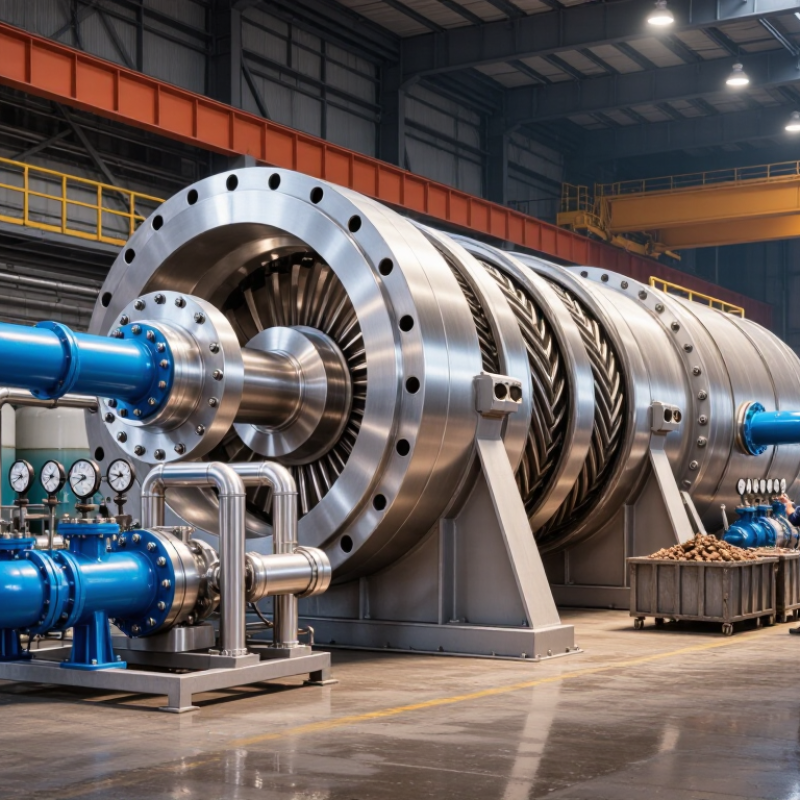
For global buyers in 2026, understanding a screw centrifuge matters more than choosing a fashionable specification. A screw centrifuge, often called a decanter centrifuge, separates solids from liquids through continuous rotation. It commonly handles wastewater sludge, mineral suspensions, food residues, and industrial process mixtures.
Inside the machine, a bowl spins at high speed. Centrifugal force pushes heavier particles toward the bowl wall. A slowly rotating screw conveyor moves the settled solids toward the conical discharge end. Clarified liquid travels in the opposite direction and leaves through adjustable outlets. This differential speed controls residence time, cake dryness, and solids recovery. Small changes matter.
Feed consistency changes everything. A unit tested with steady laboratory sludge may perform differently in a cold plant. I have seen operators focus on motor power while overlooking polymer preparation, vibration, or wear protection. That is a practical mistake. Buyers should request real feed trials, torque data, noise limits, and cleaning procedures. They should also check wetted materials and maintenance access.
It is not universal.
A reliable selection considers flow rate, particle size, moisture targets, temperature, corrosion risk, and local service capability. Automatic controls can stabilize operation, but they cannot repair poor feed preparation. Even experienced engineers can misjudge performance when seasonal solids vary. Verification should continue after installation through cake analysis, vibration checks, and operating records.
QUICK LINKS
CONTACT US
Office: (+86) 755 23040566
Tel: (+86) 158 9965 5195
E-mail: sale@pcbledmodule.com
Skype: Hans@Rocket-PCB
Whatsapp: 86 1589965 5195
Office Address: 2207,Bid 4,He Gu Shan Hui Cheng,35#,Guang Tian RoYanluo street, Song Gang Town,518105 SHENZHENG, CHINA
Plant ADD.: No 69, Lianfeng North Road, Xianxi Area, ChangAn Town, Dongguan, China.


Copyright © 2025 Rocket PCB Solution Ltd. | All Rights Reserved Sitemap Friendship link: CNC machining heat sink

